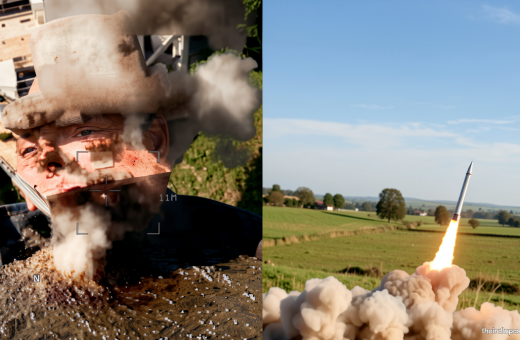
‘1000 missiles locked and loaded’: Trump’s warning to Iran amid alleged calls for his killing during Khamenei’s funeral
Trump Warns Iran with 1000 Missiles as Mourners Call for His Killing at Khamenei's Funeral Trump's Threat to Iran Theindiapostdaily.com – Following the solemn funeral of Iran’s Supreme Leader Ayatollah…
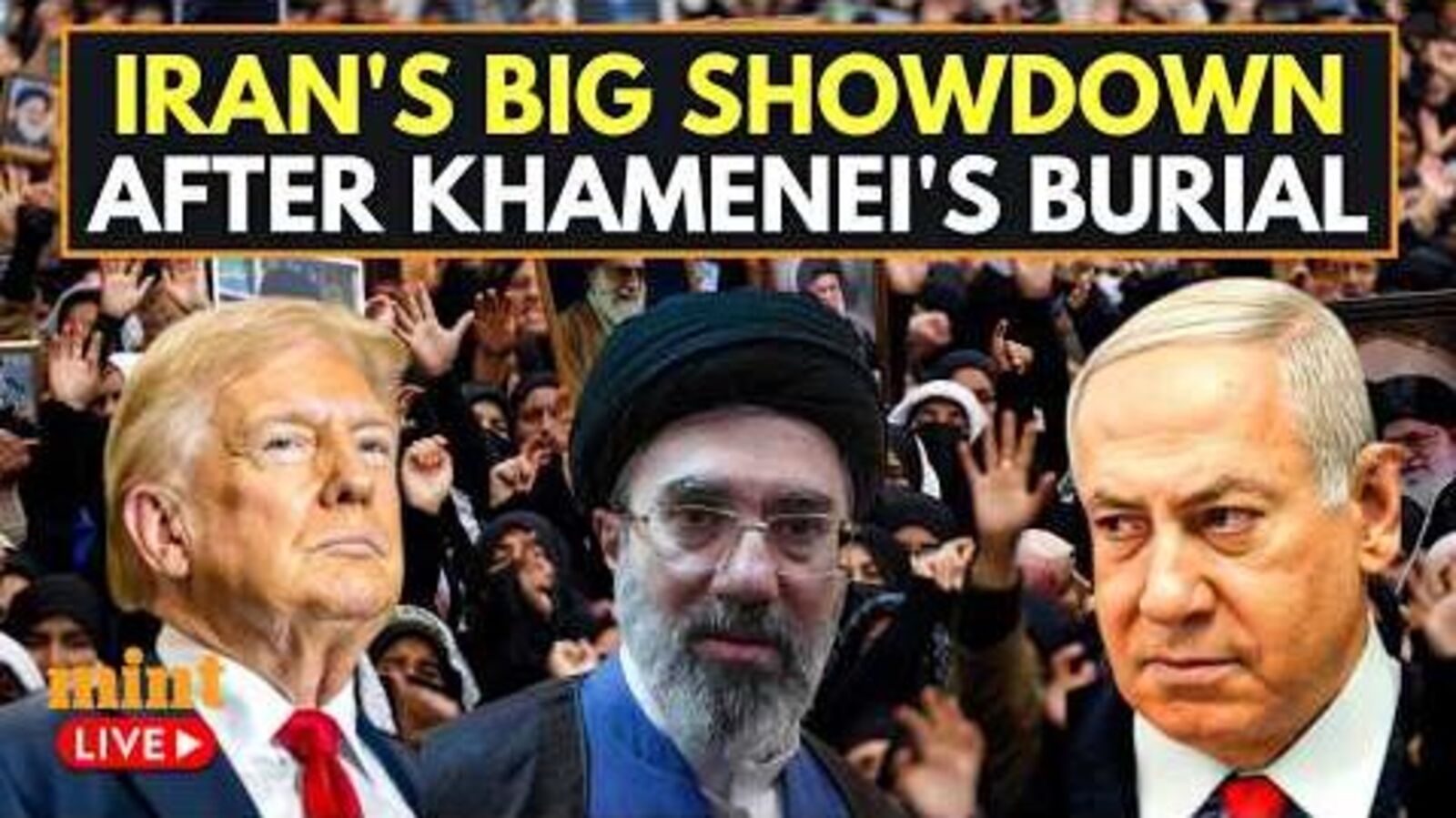
Trump Warns Iran with 1000 Missiles as Mourners Call for His Killing at Khamenei’s Funeral
Trump’s Threat to Iran
Theindiapostdaily.com – Following the solemn funeral of Iran’s Supreme Leader Ayatollah Ali Khamenei, U.S. President Donald Trump issued a pointed warning to Tehran, asserting that 1000 missiles are “locked and loaded” and ready to strike. His remarks, posted on Truth Social, underscored a readiness for military action in response to any perceived aggression from the Islamic Republic. Trump emphasized that the threat of retaliation is not just a hypothetical scenario but a calculated strategy to deter Iran from escalating tensions further.
“1,000 missiles are primed and aimed at Iran, with thousands more prepared to follow if the Iranian government moves forward with its global threats to eliminate me,” Trump stated. His declaration came amid heightened anxiety, as reports suggested that Iranian officials had discussed possible assassination plots during the mourning ceremonies in Mashhad. The U.S. leader’s message served as a clear signal of his administration’s preparedness for a potential conflict, even as the country honored its late leader.
Iran’s Mourners and Their Radical Rhetoric
As Iranians gathered in Mashhad to pay tribute to Ayatollah Ali Khamenei, the atmosphere in the city reflected both grief and anger. During the funeral procession, a group of mourners under a bridge launched stones at a billboard depicting Trump with a bullet through his head, chanting slogans like “The U.S. killed our father” and “We won’t let you go!” The display of hostility highlighted the deepening divide between the two nations, with Iranians expressing their resentment toward U.S. actions in the region.
Women in black chadors held red banners emblazoned with “KILL TRUMP” in bold English, while others carried posters of Trump, Vice President JD Vance, Defense Secretary Pete Hegseth, and Israeli Prime Minister Benjamin Netanyahu, all framed in the crosshairs of rifles. The imagery of these protest signs reinforced the idea that the U.S. was a target for Iran’s revolutionary fervor. The event marked a rare moment of public dissent against Trump, even as the nation mourned its leader.
Escalation of U.S.-Iran Tensions
The recent surge in hostilities between the United States and Iran has intensified in the wake of the Islamic Revolutionary Guard Corps (IRGC) attacking commercial vessels in the Strait of Hormuz. This move, which disrupted global oil trade, prompted Washington to retaliate with airstrikes on Iranian military and infrastructure targets. The U.S. claimed the operation was a direct response to Iran’s aggressive actions, but the conflict also raised concerns about the stability of the region and the risk of a broader war.
“The U.S. is cutting off the financial lifelines that sustain Iran’s ruling elite,” said State Department spokesman Tommy Pigott. “By targeting these networks, we’re limiting their access to foreign currency and international transactions.”
Treasury Secretary Scott Bessent added that the department would “continue using all available tools” to isolate Khamenei and other top officials from the global financial system. These measures are part of a broader effort to weaken Iran’s economy and pressure its leadership into diplomatic concessions. The combination of military readiness and economic sanctions has created a dual-pronged strategy to counter Iran’s influence.
Historical Context of U.S.-Iran Rivalry
The current standoff between the U.S. and Iran is rooted in decades of geopolitical rivalry, with Trump’s administration taking a hardline stance since taking office. His repeated calls for military action against Iran reflect a long-standing policy of confrontation, particularly in response to perceived threats to national security. The 2020 U.S. strike that killed General Qasem Soleimani, a key figure in Iran’s military operations, has been a recurring point of contention in recent months.
Trump’s assertion that Iran has “consistently targeted him” since that incident underscores the personal dimension of the conflict. The missile threats and assassination plots are framed as a direct challenge to U.S. leadership, with Trump positioning himself as the central figure in this ongoing rivalry. This narrative has been reinforced by the recent funeral activities, where the late Khamenei’s legacy was used to rally support for actions against the American president.
Global Implications of the Threat
The 1000 missiles locked and loaded by the U.S. are not just a symbolic gesture but a strategic move with far-reaching implications. Analysts suggest that Trump’s emphasis on military readiness is designed to deter Iran from pursuing its regional ambitions, particularly in the Middle East. The presence of such a large arsenal serves as a reminder of the U.S. military’s capability to respond swiftly to any provocation.
Meanwhile, the call for Trump’s assassination during Khamenei’s funeral has sparked discussions about the potential for cross-border retaliation. Iranian officials have historically used such moments to unify their population against foreign adversaries, and the display of public anger during the ceremonies indicates that the threat is not merely hypothetical. This has raised concerns among policymakers about the possibility of a military escalation that could draw in allies or trigger unintended consequences.
Public Reaction and Media Analysis
News of the 1000 missiles locked and loaded by the U.S. has ignited mixed reactions across the globe. While some analysts view Trump’s threats as a necessary display of strength to maintain pressure on Iran, others caution against the risk of miscalculation. The rhetoric surrounding the missile buildup has been amplified by social media, with many users highlighting the potential for conflict in the region.
International observers have noted that the timing of Trump’s warning—just days after the funeral and amid rising tensions—could have strategic significance. The combination of military posturing and public demonstrations of anger suggests a calculated effort to shape both domestic and international perceptions of the conflict. As the situation unfolds, the focus on the 1000 missiles locked and loaded remains a central theme in the ongoing narrative of U.S.-Iran relations.