Viral video: After Honeymoon Coach controversy, priests perform puja in train; Railways gets slammed over response
The latest viral video has reignited debates about religious practices on Indian Railways, following the
Viral Video: Priests Perform Puja in Train Amid Honeymoon Coach Controversy
Theindiapostdaily.com – The latest viral video has reignited debates about religious practices on Indian Railways, following the earlier uproar over the Honeymoon Coach incident. Footage showing priests conducting a puja inside a train compartment has sparked widespread criticism, with passengers and officials questioning the railway’s response to the event. The video, which has been shared extensively on social media, highlights how religious rituals can blur the lines between tradition and modern infrastructure.
Religious Ceremony in a Train Saloon
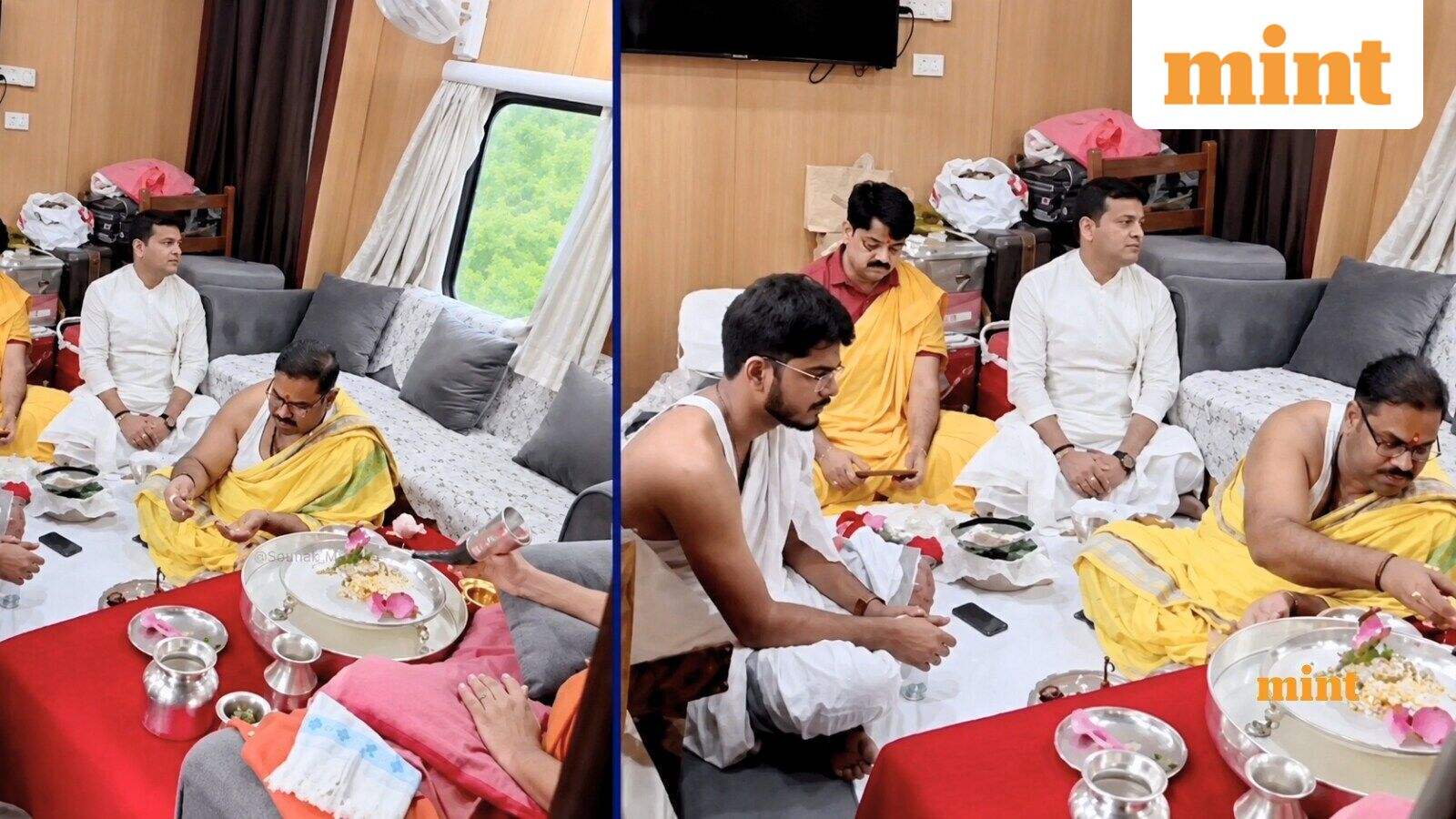
The viral footage captures a priest, dressed in a yellow dhoti, performing a puja in the private saloon of Train No. 12926, the Paschim Express. The compartment, reserved for commercial use, was booked by a group via IRCTC on 8 July 2026. The ceremony includes traditional items like silver plates and bowls, and the event takes place on the same train that departed from New Delhi to Mumbai on 10 July 2026. The scene, filmed by a passenger, quickly went viral, prompting a flurry of reactions online.
Railways officials clarified that the saloon was booked under IRCTC guidelines, with an advance payment of ₹3,08,580. They emphasized that the compartment had been allocated for commercial purposes and that all operational checks were completed before the event. A railway spokesperson stated, “No injuries occurred during the puja, and the priest used the reserved saloon as per the booking party’s request,” adding that the agency adheres to its core responsibilities like passenger safety and punctuality.
Public Outcry and Safety Concerns
The response from Northern Railways has drawn sharp criticism, with many arguing that the incident underscores a lack of protocol. Users questioned whether the booking process allowed unrestricted access to train compartments, raising concerns about safety and fire hazards. The Jan Vishwas Act, which governs the use of inflammable items, was cited as a key issue, with one commenter noting, “Massive fire hazard. Under the Jan Vishwas Act, carrying or using inflammable items can lead to up to a year of jail time.”
Some highlighted the potential for misuse, suggesting that the same viral video scenario could apply to other events. “What if a group books a saloon for a cooking demonstration using oil lamps?” another user wondered. This debate reflects growing public scrutiny over how commercial activities are integrated into public transportation, with many calling for stricter guidelines to prevent similar controversies.
Broader Implications and Religious Equality
The incident has also sparked discussions about religious equality on Indian Railways. While the puja in the saloon car was seen as a cultural celebration, critics pointed out that other faiths might face similar scrutiny. “So Muslim religious groups can also book a saloon for namaaz and azaan?” one user asked, highlighting the perceived inconsistency in how different traditions are treated. This raises questions about whether the railway is accommodating all faiths or prioritizing specific practices.
Analysts suggest that the viral video has become a catalyst for broader conversations about public spaces and religious expression. Some argue that allowing rituals in compartments could be a way to enhance passenger experience, while others warn that it might set a precedent for unregulated activities. The incident also brings to light the role of social media in amplifying such issues, with the video acting as a focal point for public outrage and calls for accountability.
Previous Controversy and Historical Context
The current debate mirrors a prior controversy involving the Honeymoon Coach on the Nandigram Express. In that case, a couple hired an event stylist to transform their First AC coupe with balloons, flower garlands, and rose petals, sparking similar discussions about safety and decorum. While the railways defended their actions by emphasizing that they fulfilled their core duties, the incident led to questions about the need for stricter permissions for such activities.
Despite the railways’ defense, the viral video has intensified the pressure on authorities to address the issue. Some users have called for a review of IRCTC guidelines, arguing that the booking process should include safety protocols. “Was the ritual approved under IRCTC guidelines? If so, under what rules?” one user inquired, underscoring the demand for transparency. The suspension of a ticket inspector in a related case has further fueled doubts about the railway’s commitment to enforcing decorum in all compartments.
As the controversy continues to trend, it remains a topic of discussion on social media platforms. The viral video not only captures the attention of passengers but also serves as a reminder of how public institutions must balance tradition with modern safety standards. With the railways under scrutiny, the next steps in addressing these concerns will be closely watched by both the public and officials. The incident could shape future policies on religious practices in train compartments, ensuring that such events align with both cultural values and regulatory compliance.