European shoppers strip shelves bare of portable ACs amid severe heatwave; French recollect ‘People went MENTAL’ | Video
As Europe experiences its worst heatwave in decades, the demand for cooling
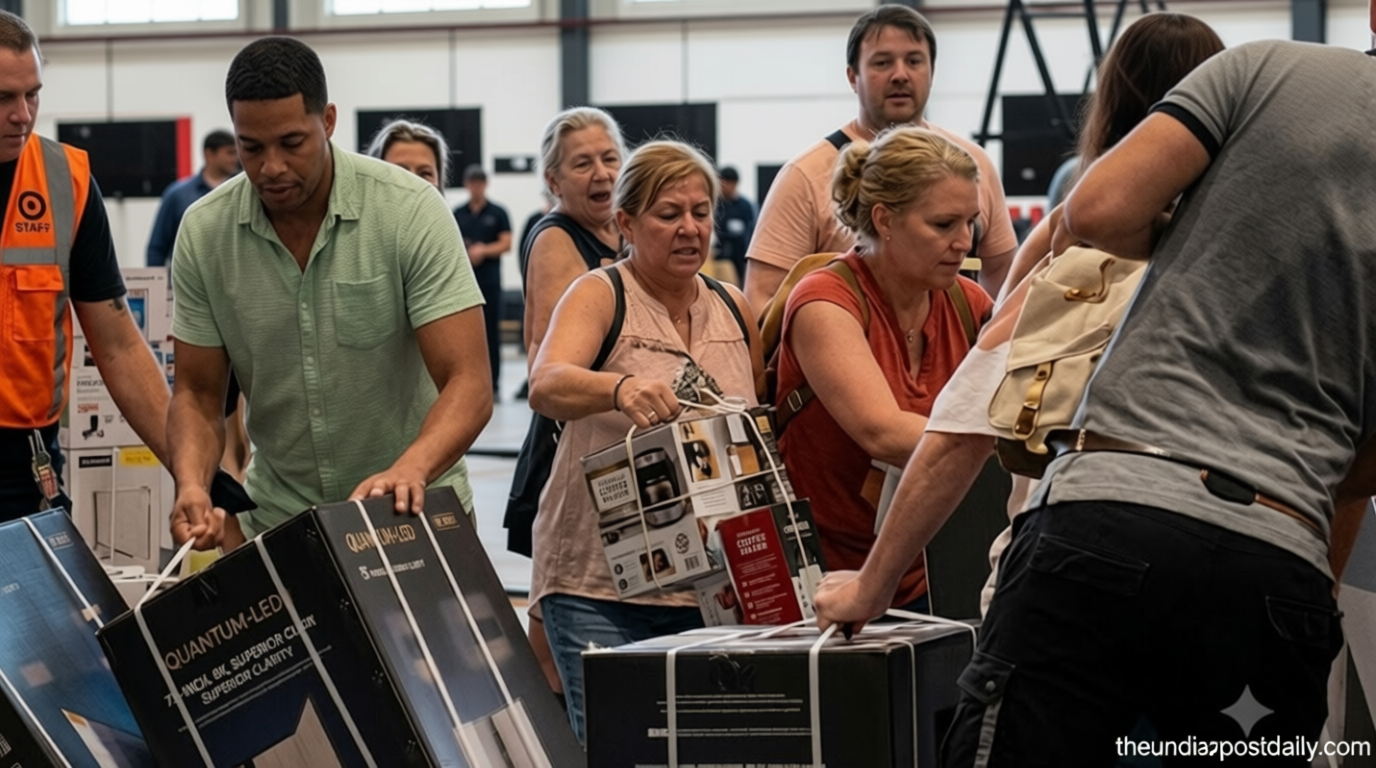
European Shoppers Strip Shelves Bare Amid Severe Heatwave
Theindiapostdaily.com – As Europe experiences its worst heatwave in decades, the demand for cooling appliances has surged to unprecedented levels. European shoppers strip shelves bare of portable ACs and fans, creating chaotic scenes in stores across the continent. In France, for instance, customers flooded retail outlets in Chambray-lès-Tours, racing to purchase these items before they were sold out. The frenzy, captured in a viral video, highlighted how rising temperatures have driven consumers to prioritize immediate relief, with many reporting that they “went MENTAL” over the competition.
The relentless heat has not only strained supply chains but also reshaped consumer behavior. With temperatures in parts of Western Europe exceeding 104°F (40°C), portable air conditioners have become the go-to solution for those seeking respite from the sweltering conditions. Retailers, struggling to keep up with demand, have seen stocks vanish within hours of opening, forcing some to ration products or even charge premium prices. This phenomenon, which has sparked widespread attention, underscores the urgency with which European shoppers strip shelves bare to secure cooling devices.
Heatwave’s Impact on Health and Safety
The heatwave has claimed lives and caused alarming health emergencies. French officials reported at least 55 drowning incidents linked to the extreme temperatures, as people sought relief in water sources. In one tragic case, a three-year-old boy was found trapped in a family car after his father asked him to take a nap. The vehicle’s child-lock system activated, sealing the child inside as temperatures soared beyond 85°F. Emergency responders arrived 45 minutes later, but the boy’s condition had deteriorated too much to save him, highlighting the deadly consequences of the heatwave.
“The child entered the family’s parked car after his father asked him to take a nap,” officials stated, explaining the incident in Saint-Gratien, near Paris. The vehicle’s child-lock system activated, trapping the three-year-old as temperatures exceeded 85 degrees Fahrenheit.
In addition to drowning incidents, heat-related hospitalizations have spiked. Paris hospitals faced overwhelming pressure, prompting authorities to impose temporary restrictions on alcohol sales to reduce the risk of dehydration and heatstroke. These measures, though controversial, reflect the government’s efforts to manage the crisis as European shoppers strip shelves bare, leaving retailers scrambling to meet the demand.
Supply Chain Struggles and Consumer Behavior Shifts
The demand for portable cooling devices has created a ripple effect across the supply chain. Manufacturers are working overtime to produce more units, but distribution networks are struggling to keep pace. Reports indicate that some stores have had to close early due to empty shelves, while others have extended hours to accommodate the influx of customers. This has led to long queues and aggressive competition, with shoppers resorting to tactics like hoarding multiple units or waiting in line for hours to buy a single fan.
Consumer behavior has also shifted dramatically. In cities like Marseille and Barcelona, portable ACs are now being sold as luxury items, with prices doubling in some cases. Experts suggest that the heatwave has forced people to rethink their cooling strategies, moving away from traditional methods like fans to more potent solutions. As European shoppers strip shelves bare, the market is witnessing a surge in sales of both portable and window-mounted units, indicating a long-term change in how households prepare for extreme weather.
Disruptions to Daily Life and Economic Impact
Extreme heat has disrupted daily routines, affecting everything from education to tourism. In France alone, over 8,000 schools had to close temporarily, with students and teachers scrambling to adapt to the heat. Some districts reported heat-related illnesses among staff, while others implemented early dismissal policies to protect children. Meanwhile, tourist attractions like the Eiffel Tower and Notre-Dame Cathedral saw reduced visitor numbers as people opted to stay indoors, leading to financial losses for local businesses.
Agri-businesses have also been hit hard, with reports of livestock deaths and crop damage due to prolonged high temperatures. In Spain, at least 212 fatalities have been linked to the heatwave, according to health authorities. The economic toll is significant, with industries like agriculture, transportation, and hospitality facing unprecedented challenges. As European shoppers strip shelves bare, the crisis has revealed how vulnerable the continent’s infrastructure is to extreme weather conditions.
Public Response and Government Measures
The public has responded with a mix of panic and resilience. In France, social media platforms are abuzz with videos and photos of shoppers battling for cooling devices, while some residents have taken to using fans in creative ways to maximize airflow. Meanwhile, governments have rolled out emergency measures to address the crisis. In Paris, the city council introduced a ban on alcohol sales between noon on Friday and 7 a.m. on Saturday, aiming to reduce heat-related incidents and ease the burden on healthcare facilities.
Such policies have sparked debate, with some arguing they are necessary to protect public health, while others criticize the restrictions as overly harsh. Despite the controversy, the measures have been effective in slowing down the rate of hospital admissions. As European shoppers strip shelves bare, the heatwave continues to test the limits of both consumer behavior and governmental response, leaving experts to predict its long-term effects on the region’s economy and infrastructure.
Broader Implications for the European Market
The current heatwave is not just a short-term crisis but a glimpse into a future where extreme weather becomes the norm. Analysts warn that the demand for cooling appliances could outpace supply, leading to potential shortages and higher prices in the coming months. This has raised concerns about energy consumption, as the increased use of air conditioners strains power grids and accelerates climate change.
As European shoppers strip shelves bare, the situation has prompted calls for long-term solutions. Governments are now exploring investments in renewable energy and green technology to reduce dependency on fossil fuels. Meanwhile, consumers are adapting by stockpiling cooling devices, using energy-efficient models, and investing in outdoor cooling solutions like shade structures and water features. The crisis has not only reshaped daily life but also forced a reckoning with the environmental costs of the heatwave.