Centre may delay E25 petrol rollout amid backlash over higher ethanol blending: Report
Centre May Delay E25 Petrol Rollout Amid Backlash Over Higher Ethanol Blending: Report Government's Plan and Public Reaction Centre may delay E25 petrol
Centre May Delay E25 Petrol Rollout Amid Backlash Over Higher Ethanol Blending: Report
Government’s Plan and Public Reaction
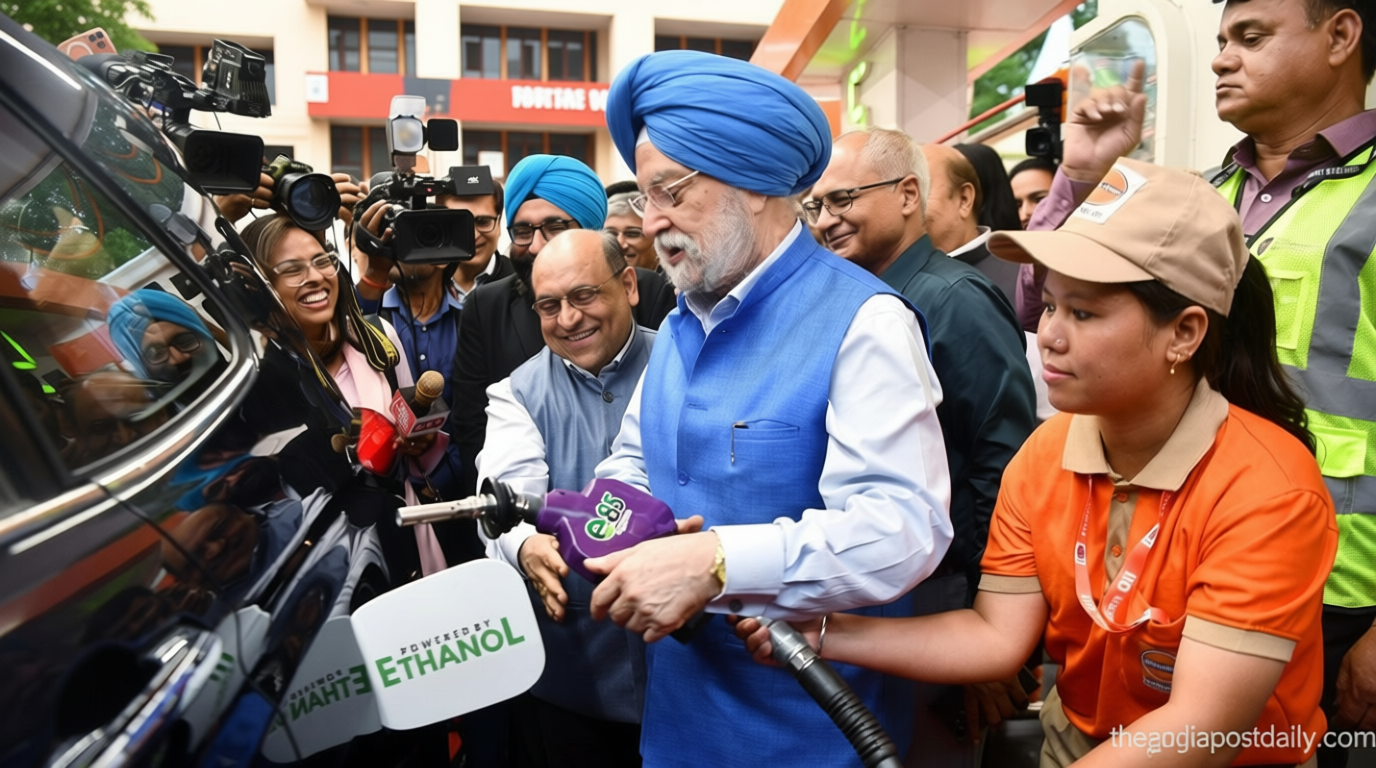
Theindiapostdaily.com – The Indian government is reportedly considering delaying the rollout of E25 petrol, a blend containing 25% ethanol, as backlash against higher ethanol content in fuel intensifies. According to a recent report by The Indian Express, the decision follows growing public and industry resistance to the rapid shift from E10 to E20 petrol, which was initially scheduled to be introduced by 2030. While the government aims to reduce oil dependency and cut fuel import costs, concerns over the impact of increased ethanol blending on vehicle performance and consumer expenses have prompted a reassessment of the timeline.
Ethanol blending has been a cornerstone of India’s energy policy, with the goal of achieving a 20% ethanol mix in petrol by 2030. This initiative, part of a broader push to promote renewable energy, has faced challenges as drivers in urban centers like New Delhi report issues such as engine knocking and reduced fuel efficiency. The backlash has been amplified by recent policy changes, including the excise tax exemption for ethanol-blended fuels and updated Bureau of Indian Standards (BIS) regulations. These adjustments have raised questions about the readiness of the automotive sector and the affordability of E25 for the average consumer.
Escalating Concerns and Industry Backing
Public dissatisfaction reached a critical point after the government announced a 22–30% ethanol blend for certain fuels, sparking fears of compatibility problems with existing vehicles. Industry experts and vehicle owners argue that a phased approach would have been more effective, allowing time for manufacturers to adapt and consumers to transition smoothly. Political analyst Tehseen Poonawalla, who organized protests in Delhi, highlighted the economic burden on middle-class households, stating, “A car is the second-most expensive thing the middle class buys. The government has forced E20 on citizens who use E10-compatible vehicles, and they are now paying the price.”
The Indian Express report notes that the government’s high-level meeting last week emphasized the need for a “scientific approach” to address complaints. Officials acknowledged the growing sentiment among drivers and urged stakeholders to collaborate on solutions. This marks a shift from the original plan, which prioritized rapid implementation over gradual adaptation. Industry leaders, however, remain supportive of ethanol blending as a means to achieve energy security and lower carbon emissions. They argue that the challenges faced during the E20 transition are temporary and that the long-term benefits of renewable fuel are worth the short-term adjustments.
Protests and Consumer Impact
Protests in New Delhi have become a focal point of the debate, with drivers demanding clarity on the implications of E25 petrol. Demonstrators argue that the sudden increase in ethanol content could damage engines, particularly in older models not designed for higher blends. Some have also raised concerns about the cost of ethanol, which is more expensive than conventional gasoline, potentially leading to higher fuel prices. These issues have sparked a broader conversation about the trade-offs between environmental goals and economic practicality.
Experts warn that the transition to ethanol-blended fuels requires infrastructure upgrades, including the production of compatible fuel and the modification of existing vehicle models. While some automakers have already adapted to E20, others are still adjusting their supply chains. This uncertainty has left consumers wary, with many questioning whether the government is prepared to address the potential fallout. The protests also underscore the importance of communication in policy implementation, as drivers feel caught off guard by the rapid changes.
Industry Perspectives and Technical Challenges
Industry representatives have expressed cautious optimism about the ethanol initiative, acknowledging its environmental benefits but emphasizing the need for better coordination. Puneet Anand, associate vice president at Hyundai Motor India, noted that the biofuel program has “not observed any major issues” on social media, though he admitted that the transition requires patience. Rahul Bharti of Maruti Suzuki India highlighted that E20 vehicles have been available since 2025 and are compatible with older E10-certified models, suggesting that the E25 rollout could follow a similar path with minimal disruption.
Vikram Gulati, head of Toyota Kirloskar Motor, pointed out that a viral incident involving a Toyota Innova Hycross was linked to contaminated fuel, not ethanol blending itself. This distinction is crucial, as it highlights that while ethanol is part of the problem, it is not the sole factor. The industry’s mixed response reflects the complexity of the issue, with some companies advocating for a gradual increase in ethanol content and others pushing for immediate implementation. The government’s strategy to reduce fuel imports, particularly in the face of geopolitical tensions, remains a key driver of the ethanol policy, even as challenges persist.
Policy Reassessment and Future Outlook
The decision to delay the E25 petrol rollout is seen as a strategic move to address immediate concerns while maintaining long-term environmental objectives. Industry leaders and government officials are now working to balance the need for renewable energy with the practical realities of the market. The report suggests that the delay will allow for further research into ethanol’s impact on engines and fuel costs, ensuring a smoother transition for consumers. This period of reassessment also provides an opportunity to enhance public awareness and education about the benefits of ethanol blending.
Analysts warn that the success of the ethanol program hinges on addressing the root causes of public resistance. These include the need for better communication, infrastructure development, and vehicle compatibility. The government is expected to revisit the timeline for E25 petrol, potentially extending the phased rollout to allow for more testing and adaptation. Meanwhile, the debate continues, with stakeholders weighing the environmental advantages of ethanol against the economic challenges for drivers and manufacturers. The outcome will likely shape India’s energy policy for years to come.