3,000 LPG cylinders floating in Mumbai floodwaters recreate Pushpa scene, internet reacts — ‘It’s not sandalwood, it’s…’
3,000 LPG Cylinders Float in Mumbai Floodwaters, Mimicking Pushpa Scene Theindiapostdaily.com – The recent flooding in Mumbai has sparked a unique online reaction as 3,000 LPG cylinders were seen floating…
3,000 LPG Cylinders Float in Mumbai Floodwaters, Mimicking Pushpa Scene
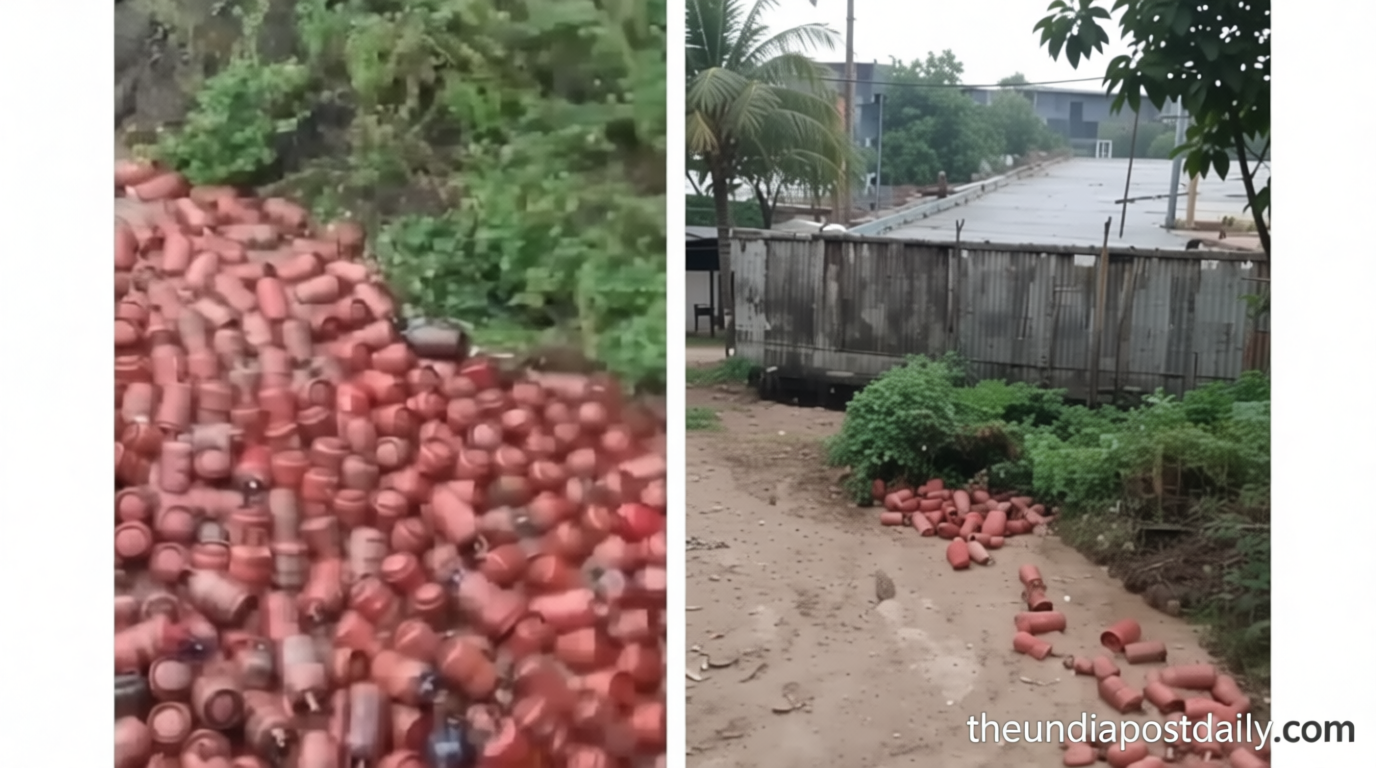
Theindiapostdaily.com – The recent flooding in Mumbai has sparked a unique online reaction as 3,000 LPG cylinders were seen floating in the Patalganga River, evoking the iconic Pushpa movie scene. The incident occurred at the HPCL LPG bottling plant in Chavane, Panvel taluka, following a collapse of a protective wall due to intense rainfall in Raigad district. This dramatic event, captured on social media, has led to widespread comparisons between real-life chaos and cinematic moments, highlighting the surreal nature of the situation.
Virality of the Scene and Public Concerns
“This looks like a scene from *Pushpa*, but it’s not sandalwood—it’s LPG cylinders,” remarked a social media user, referencing the film’s famous scene of cylinders floating down a river. The viral video, showing hundreds of gas cylinders drifting along the floodwaters, has drawn attention to both the incident’s absurdity and its potential dangers.
“3,000 gas cylinders in a river. The advisory tells people to avoid touching them. Makes sense. But the bigger issue is why a bottling plant floods so easily, emptying its yard into the water?” another user questioned, emphasizing the need for better infrastructure planning.
“How careless,” said a third comment, reflecting on the lack of preventive measures during the downpour.
Residents and online users alike are now discussing the incident, with some highlighting the risks posed by the floating cylinders. The floodwaters, which have been intensifying due to continuous rainfall in Khalapur taluka, not only disrupted daily life but also created an unusual spectacle. The sight of the cylinders—used for household cooking and heating—adrift in the river has raised awareness about the vulnerability of critical infrastructure in extreme weather conditions.
Administrative Response and Safety Measures
Authorities have issued urgent alerts to the public, urging caution when encountering floating LPG cylinders. Raigad District Collector Kishan Jawale confirmed the incident to local media, stating that the cylinders, both filled and empty, were carried into the Patalganga River by the flood. “If any gas cylinder is seen in the river or along its banks, do not touch or move it. Doing so could cause a leak or explosion,” he warned, stressing the importance of immediate reporting to prevent accidents.
Meanwhile, the Khalapur Police Inspector Abhijit Bhujbal confirmed the event to ANI, adding that the floodwaters had overwhelmed the plant’s drainage system. The administration has also launched a coordinated search operation to retrieve the cylinders, involving the Disaster Management Department and HPCL officials. This effort aims to minimize the risk of gas leaks and ensure the safety of nearby communities, especially those living along the riverbanks.
Additional measures include the distribution of safety guidelines to residents. The district information office shared an alert on X, stating: “Due to heavy rainfall, approximately 3,000 LPG cylinders have been washed into the Patalganga River from the HPCL Patalganga LPG Bottling Plant. Citizens are advised to avoid handling them and report any sightings to HPCL dealers or local authorities.” These steps reflect a growing concern about the environmental and safety risks associated with the incident.
Experts have pointed out that such an event underscores the importance of disaster preparedness. The flooding in Mumbai, which has been a recurring issue in recent years, highlights the need for improved drainage systems and better flood management strategies. While the immediate focus is on retrieving the cylinders, the incident has also sparked a broader conversation about the resilience of industrial facilities in the face of climate-related challenges.
The sight of 3,000 LPG cylinders floating in the floodwaters has become a symbol of the unpredictability of natural disasters. As authorities work to recover the cylinders and assess the damage, the public continues to share reactions on social media, with many drawing parallels to the cinematic imagery of *Pushpa*. This unique blend of reality and fiction has captured the imagination of internet users, making the incident not just a local crisis but a global conversation about the intersection of technology, environment, and human activity.