‘Why no highway surveillance cameras?’ Supreme Court questions NHAI, flags parked vehicles and encroachments
The apex court has turned its attention to a question that, until now, had received little institutional urgency: why India's national highways remain largely
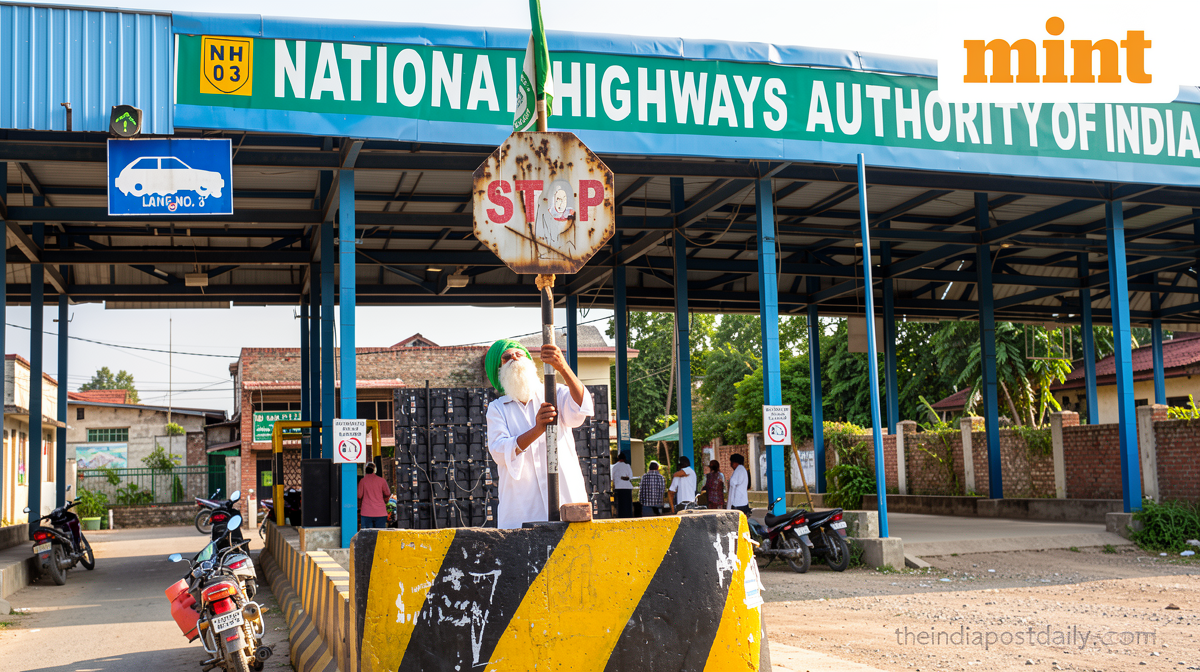
Supreme Court Presses NHAI on Highway Camera Networks After Fatal Rajasthan Crash
Theindiapostdaily.com – The apex court has turned its attention to a question that, until now, had received little institutional urgency: why India’s national highways remain largely blind to the vehicles parked illegally along their carriageways. In a suo motu proceeding tied to a deadly collision in Rajasthan, a two-judge bench pressed the National Highways Authority of India on Thursday to explain why it has not deployed a camera-based surveillance architecture spanning toll plazas and monitoring rooms capable of detecting stationary vehicles and roadside encroachment in real time.
The Trigger: A Tempo Traveller Meets a Parked Trailer
The matter traces back to November 2, last year, when a tempo traveller travelling from Kolayat temple near Bikaner toward Jodhpur struck a stationary trailer truck parked on the Bharat Mala Highway close to Matoda village in Phalodi district. Fifteen people lost their lives in the impact. The court took notice of the incident on its own motion, converting a single tragedy into a systemic inquiry into highway safety governance.
By April 13, the bench had already issued a sweeping set of interim directions. Among them: no heavy or commercial vehicle may park or stop on any national highway carriageway or paved shoulder except within a designated bay, lay-bye, or wayside amenity. Construction or operation of new dhabas, eateries, or commercial structures within the right of way of any national highway was prohibited outright. The Ministry of Road Transport and Highways and NHAI were further ordered to catalogue accident blackspots and critical stretches, then publish a comprehensive inventory for public scrutiny.
“Why Can’t You Think of Having a Camera Surveillance System?”
On Thursday, Justices Vikram Nath and Sandeep Mehta returned to the file with a pointed question aimed squarely at NHAI’s operational posture. The bench identified two persistent hazards — encroachment onto the carriageway and vehicles left stationary on the highway — as the dominant drivers of fatal collisions on these corridors.
“Why can’t you think of having a camera surveillance system? You can have monitoring rooms at all toll plazas,” the bench said.
The NHAI counsel responded that the authority had already circulated internal circulars mandating periodic inspection and patrolling to detect unauthorised parking. The court, however, appeared unsatisfied with a reactive, manpower-dependent model and pressed for a technology-driven, continuously monitored alternative.
Amicus Curiae Highlights the Parking Problem
Senior advocate ANS Nadkarni, assisting the court as amicus curiae, underscored that illegal parking of vehicles along highway shoulders and medians constitutes one of the principal precursors to road accidents. His intervention reinforced the bench’s view that periodic spot-checks, however well-intentioned, cannot substitute for persistent electronic oversight.
Compliance Gaps and Deadlines
The bench observed that three key respondents — the Ministry of Road Transport and Highways, the Ministry of Home Affairs, and the Tamil Nadu state government — had yet to file their compliance affidavits detailing steps taken under the earlier directions. Two weeks were granted to both ministries to place their affidavits on record. The Tamil Nadu government was separately directed to file its affidavit before the next listed date.
The matter was posted for October 6, keeping the proceeding alive and signalling that the court intends to track implementation rather than issue directions and move on.
Why the Numbers Demand Structural Change
The court’s earlier observations in the matter carried a statistic that frames the stakes: national highways represent roughly two per cent of India’s total road length yet account for close to thirty per cent of all road fatalities. The bench had warned that a high-speed expressway must not become “a corridor of peril due to administrative lethargy or infrastructural gaps.”
That framing matters because it shifts the conversation from individual driver error to systemic design failure. A parked trailer on a 100-kilometre-per-hour carriageway is not merely a traffic nuisance; it is a fixed obstacle that, at night or in poor visibility, becomes nearly impossible to avoid. Camera networks at toll plazas — points where vehicles already slow and where infrastructure exists — offer a comparatively low-cost entry point for continuous monitoring without requiring a wholesale rebuild of the highway estate.
Broader Implications
The direction, if implemented, would effectively create a digital watchtower at every toll collection point along India’s national highway grid. Monitoring rooms staffed to review live feeds could flag a stationary vehicle within minutes, dispatch enforcement, and log the incident for pattern analysis. Over time, such data would feed directly into the blackspot-mapping exercise the court has already mandated, closing the loop between detection, enforcement, and infrastructure remediation.
For the millions of intercity travellers who depend on these corridors daily, the question the bench posed is less about technology than about institutional will: whether the agencies charged with keeping highways safe will treat electronic surveillance as a baseline obligation rather than an optional upgrade. The October 6 hearing will reveal how quickly that posture shifts.
Related Reading
Frequently Asked Questions
What is Why no highway surveillance cameras Supreme?
Why no highway surveillance cameras Supreme is the main topic of this guide. The article explains the context, practical details, and next steps readers should understand.
Why does Why no highway surveillance cameras Supreme matter?
Why no highway surveillance cameras Supreme matters because readers are looking for a useful answer, not just a short summary. Good content should match search intent and help them decide what to do next.