‘Whole world agreed on protecting gig workers’: Shashi Tharoor calls Centre’s abstention at ILO vote ‘national disgrace’
Congress leader Shashi Tharoor has strongly criticized the Indian government's decision to abstain from voting at the International Labour Organization
Tharoor: ‘Whole world agreed on protecting gig workers’ after ILO vote
Theindiapostdaily.com – Congress leader Shashi Tharoor has strongly criticized the Indian government’s decision to abstain from voting at the International Labour Organization, calling it a “national disgrace.” The former minister emphasized that the whole world agreed on protecting gig workers through new international standards for the platform economy. This landmark resolution establishes baseline protections for digital platform employees globally.
Global Consensus on Platform Worker Rights
At the ILO’s 114th session in Geneva on June 12, delegates approved the first-ever international framework specifically designed for digital platform workers. The historic decision passed with 406 votes in favor and only eight against. Thirty-six member nations, including India, chose to abstain from the crucial vote on platform worker protections.
“The Indian government’s decision to abstain on the ILO’s Convention on ‘decent work in the Platform Economy’, which establishes minimum conditions for gig workers and which Indian employers and workers both voted to support, is a national disgrace,” Tharoor stated in his X post.
The Congress leader argued that India should have actively supported globally recognized standards rather than remaining neutral. He stressed that such international frameworks deserve to be incorporated into national legislation to benefit millions of platform workers.
India’s Rapidly Expanding Gig Economy
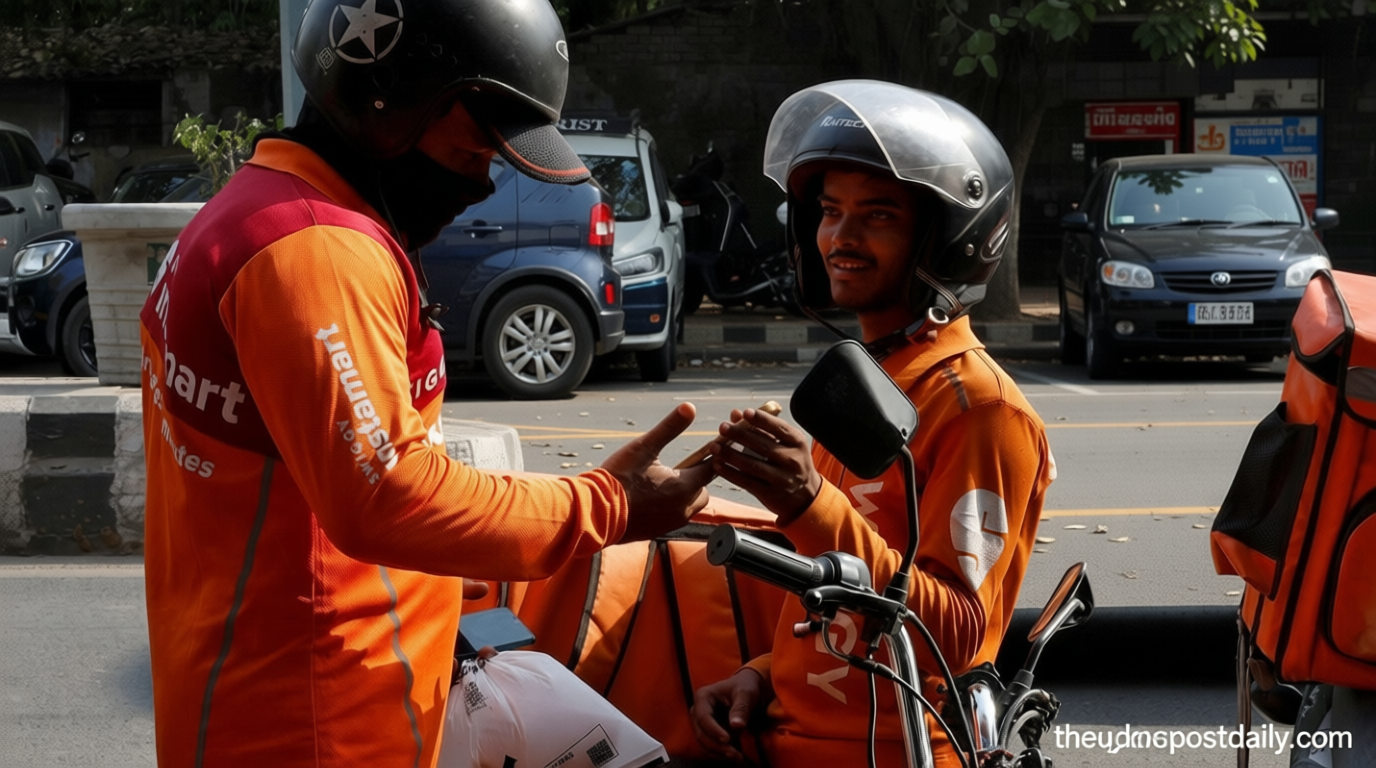
Human Rights Watch reports that platform-based employment continues accelerating across transportation, food delivery, caregiving, and digital services sectors. The World Bank estimates that approximately 435 million people worldwide now earn income through digital labor platforms.
India stands as one of the world’s largest gig markets. Economic Survey data shows the sector employed 120 lakh workers in fiscal year 2025, up significantly from 77 lakh in FY21. This marks a remarkable 55 percent growth rate over four years, demonstrating the sector’s rapid expansion.
“The gig economy, encompassing delivery, ridesharing, and freelancing, has witnessed structural growth, transitioning informal jobs into ecosystem-integrated roles.”
Several factors drive this expansion, including smartphone adoption among more than 80 crore users and monthly UPI transaction volumes reaching 15 billion. Gig employment currently accounts for over 2 percent of India’s total workforce, with projections indicating non-agricultural platform roles could reach 6.7 percent by 2029-30.
“From 77 lakh workers in FY21, the sector witnessed a 55 per cent increase to 120 lakh workers in FY25, driven by smartphone penetration among over 80 crore users and 15 billion UPI transactions per month. Now representing over 2 per cent of the total workforce in India, growth of gig workers outpaces overall employment, with non-agricultural gigs projected to constitute 6.7 per cent of the workforce by 2029-30, contributing ₹2.35 lakh crore to GDP,” the Economic Survey document noted.
Persistent Worker Concerns Despite Growth
While platform work offers flexibility, Indian gig employees continue facing numerous challenges. Common complaints include unpredictable income streams, sudden account suspensions, insufficient insurance coverage for medical emergencies and accidents, and demanding performance targets.
“As the gig economy expands, its impact on employment and economic growth will become increasingly evident. While it offers unprecedented opportunities for revenue generation and economic diversification, addressing its challenges is crucial to ensuring long-term, equitable growth,” it added.
Tharoor characterized the government’s abstention as evidence of institutional insensitivity toward younger demographics. He specifically highlighted the hundreds of thousands of workers who barely survive through app-based employment, noting that the whole world agreed on protecting such vulnerable workers.
“This is one more example of the establishment’s tone-deafness to the needs of young Indians, in this case the lakhs who earn a bare living through an app,” the Congress leader said.
The Labour Codes have already provided formal recognition for platform and gig workers, creating mechanisms for expanded social security benefits, welfare fund access, and improved benefit portability across different employment arrangements.