Who was Kanwar Pal Singh aka KPS Gill? Career and controversies of Punjab’s ‘super cop’ amid ‘Satluj’ row
Who Was Kanwar Pal Singh AKA KPS Gill? Career and Controversies of Punjab’s 'Super Cop' Amid 'Satluj' Row Who was Kanwar Pal Singh aka KPS - The release of
Who Was Kanwar Pal Singh AKA KPS Gill? Career and Controversies of Punjab’s ‘Super Cop’ Amid ‘Satluj’ Row
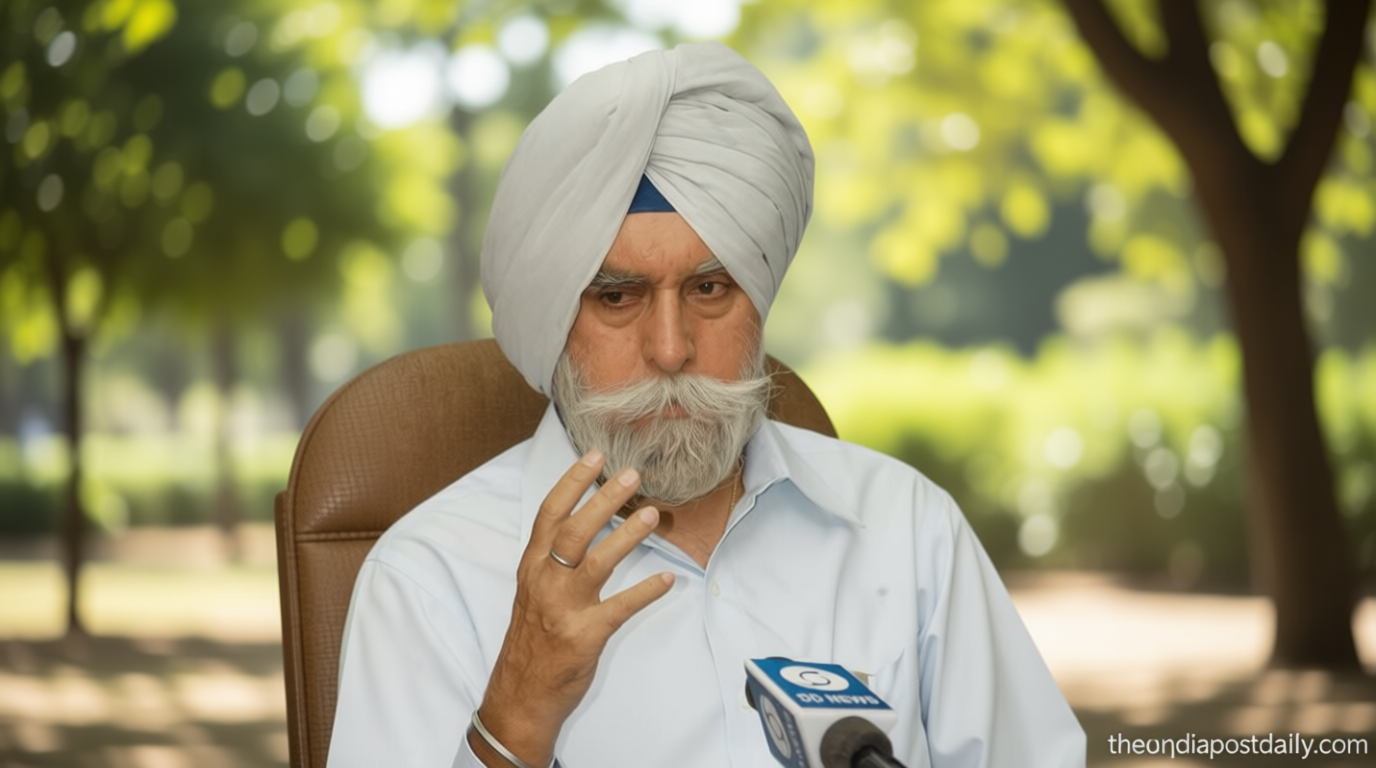
Theindiapostdaily.com – The release of Diljit Dosanjh’s film *Satluj* has reignited discussions about Kanwar Pal Singh Gill, the former Punjab police chief known as KPS Gill. The movie, which recently premiered on Zee5 before being removed, has sparked a debate on whether Gill was a hero of law enforcement or a figure representing systemic control in Punjab.
Early Career and Key Roles
KPS Gill assumed leadership of Punjab’s police force in 1988, a time marked by the Khalistan separatist movement. His tenure followed the aftermath of Operation Blue Star in 1984 and the assassination of Prime Minister Indira Gandhi later that year. The Golden Temple complex in Amritsar had been a focal point of the military operation to neutralize Jarnail Singh Bhindranwale, a key Khalistani leader.
During his first term as Director General of Police (DGP), Gill faced the challenge of curbing escalating violence. He introduced a counter-terrorism strategy to tackle the insurgency, which became central to his reputation. His second stint as DGP began in 1991, supported by then-Chief Minister Beant Singh, and saw him shift toward more assertive tactics.
Operation Black Thunder-II and Its Impact
In May 1988, Gill launched Operation Black Thunder-II, which PTC News highlighted as a pivotal moment in his career. Unlike Operation Blue Star, this operation involved surrounding the Golden Temple, engaging in dialogue with militants, and minimizing damage to the shrine. The approach was seen as a strategic balance between military action and protection of religious sites.
Gill emphasized intelligence-driven methods, strengthening local police units, and applying pressure on insurgent groups. By the mid-1990s, Punjab saw a significant decline in militant activity, with many crediting him for restoring stability. Supporters hailed him as a policing icon, capable of dismantling the Khalistani threat.
Controversies and Human Rights Concerns
Despite his achievements, Gill faced criticism for alleged human rights abuses during the anti-militancy campaign. Organizations accused the Punjab Police of fake encounters, custodial deaths, and secret mass cremations. Torture and disappearances were also reported as part of the broader crackdown.
Gill defended these actions, stating that exceptional circumstances justified extraordinary measures. “There was never a clearly defined movement for Khalistan,” he told India Today in 1993.
“Even Bhindranwale rarely said so clearly. He would make a statement [for Khalistan], then deny it, and then deny the denial. Bhindranwale and his ideologues used the Two-Nation Theory, the same verbiage.”
Jaswant Singh Khalra’s Disappearance
A major controversy in Gill’s career was the murder of human rights activist Jaswant Singh Khalra, whose case became the film *Satluj*’s central narrative. Khalra, a former bank manager, had exposed thousands of secret cremations of unidentified bodies by security forces during the militancy years.
He was kidnapped from his Amritsar home on September 6, 1995, and later killed, according to claims. The Punjab Police was accused of orchestrating his disappearance. A CBI inquiry later confirmed he was unlawfully detained and executed, though his remains were never recovered. This incident remains emblematic of the tension between law enforcement and civil liberties during his tenure.
Legacy and Ongoing Debate
Gill’s career is often viewed as a turning point in Punjab’s history. While some celebrate his role in ending the insurgency and securing peace, others argue that his methods led to widespread state-sponsored violence. The film *Satluj* and human rights accounts present contrasting portrayals, reflecting the enduring debate over his legacy as a ‘super cop’ or an authoritarian figure.