Who is Taslima Nasreen? Why is the Bangladeshi author’s return to Kolkata after 19 years relevant in Bengal politics?
Who is Taslima Nasreen Why is her return to Kolkata after 19 years generating such significant attention in Bengal politics? The celebrated Bangladeshi author
Taslima Nasreen Returns to Kolkata: Bengal Politics Revisited
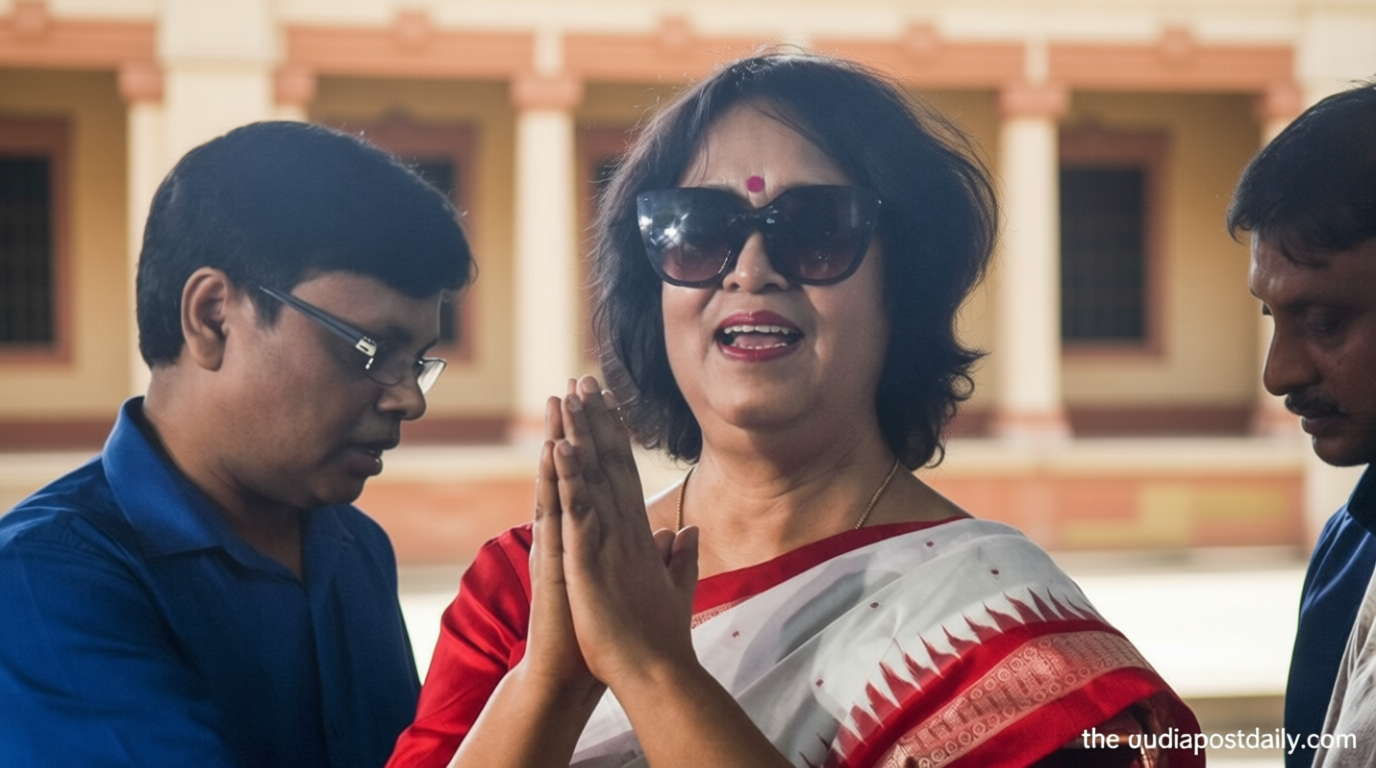
Theindiapostdaily.com – Who is Taslima Nasreen Why is her return to Kolkata after 19 years generating such significant attention in Bengal politics? The celebrated Bangladeshi author and activist has finally come back to the city that once became her home. During her emotional arrival at the airport, Nasreen greeted well-wishers with folded hands, describing this visit as a profound “emotional homecoming.” This marks her first visit to Kolkata since November 2007, when she was asked to leave following violent demonstrations that erupted in the city.
Her return arrives at a politically significant moment, just before a major literary gathering scheduled for August 1. The anti-fundamentalism programme at Rabindra Sadan has taken on considerable political weight under West Bengal’s newly formed BJP administration. According to PTI reports, Nasreen is scheduled to recite poetry at this public event, with Chief Minister Suvendu Adhikari and noted author Shirshendu Mukhopadhyay expected to be present. This gathering represents more than a literary celebration—it symbolizes a shift in how Bengal approaches questions of free expression and religious sensitivity.
A City That Feels Like Home
Though the occasion is primarily literary, political undertones are unmistakable. The event follows months of heightened debate regarding free expression and secularism in the state. Religious sensitivities continue to face scrutiny as the government navigates these complex issues. Nasreen has consistently characterized Kolkata as a place that feels like home, despite the political complications that have marked her relationship with the city over the decades.
I feel as though I am returning to my own country. Bengal has never been divided in my heart by a border or a barbed-wire fence. The door to the eastern part of Bengal remains closed to me, so for now, this part of Bengal is my home.
While Bangladesh—the historical eastern portion of Bengal—has remained permanently inaccessible to her, this western part has always held special significance. Her connection to Kolkata transcends mere geography; it represents a deep emotional bond forged through years of living, writing, and fighting for her beliefs in the city.
From Exile to Return: The Journey
Taslima Nasreen’s story began in 1994 when she fled Bangladesh following death threats against her novel “Lajja.” The work offered a highly critical examination of various aspects of Islam, prompting Islamic fundamentalists to demand her execution. During her years in exile, she lived in multiple countries including Sweden, Germany, France, and the United States, where she continued her literary work and activism.
Her autobiographical work “Dwikhandito” faced a ban from the CPI(M) government in West Bengal during this period. She eventually established herself in Kolkata in 2004, though her controversial memoir continued generating discussion despite the prohibition. Her literary contributions during this time earned her international recognition and numerous awards for her courage in addressing controversial topics.
Her refuge came to an abrupt end in November 2007 when violent protests erupted in the city. Authorities deployed the Army to restore calm, and the Buddhadeb Bhattacharjee administration subsequently requested her departure. She relocated first to Jaipur and then to Delhi before eventually moving abroad, despite her repeated desire to return to the city she loved.
Political Implications of Her Return
For nearly twenty years, her return remained frustratingly out of reach. Even the Mamata Banerjee administration maintained the 2007 decision as essential for public order. Critics interpreted this stance as part of the TMC’s alleged appeasement politics toward Muslim communities, while supporters argued it was necessary to maintain communal harmony in a diverse state.
The matter resurfaced last year through parliamentary action. BJP MP Samik Bhattacharya called upon the Centre to facilitate her return, describing Nasreen as a fearless voice against fundamentalism. The BJP now characterizes her comeback as a correction of previous governmental failures and a demonstration of their commitment to free speech. Who is Taslima Nasreen Why is this political shift significant? It represents a broader realignment in Bengal’s approach to controversial figures and issues.
Opposition parties in Bengal, however, perceive the development differently. They view it as a provocation to minority sentiments and allege it represents an attempt to instigate reactions within the community. As Bengal prepares for this historic moment, the question of who is Taslima Nasreen Why is her return matters remains at the center of political discourse, with implications that extend far beyond literature into the heart of Bengali identity and politics.