West Bengal police to have same operational freedom as UP, Gujarat, says Dilip Ghosh
West Bengal Police to Match Operational Autonomy of Gujarat and Uttar Pradesh West Bengal police to have same operational freedom as UP, Gujarat.
West Bengal Police to Match Operational Autonomy of Gujarat and Uttar Pradesh
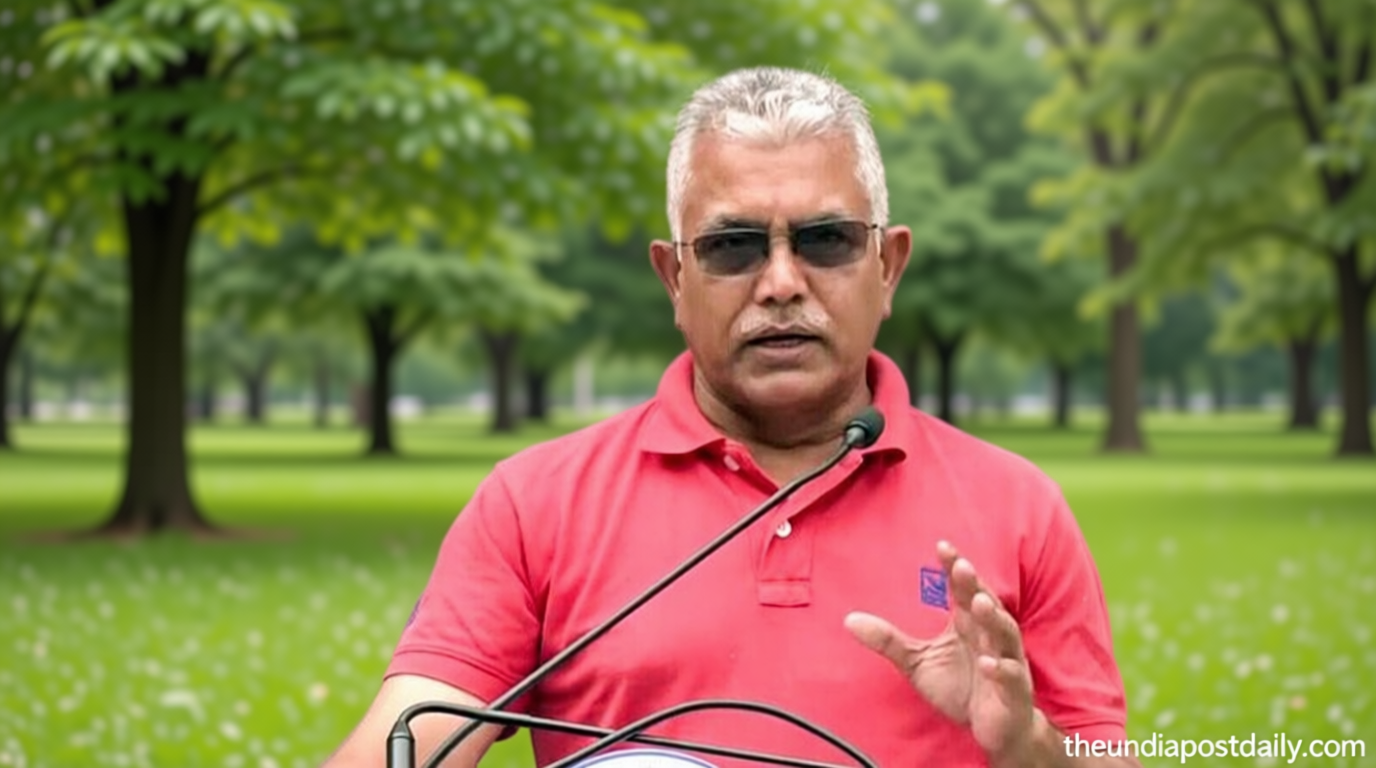
Theindiapostdaily.com – West Bengal police to have same operational freedom as UP, Gujarat. The recent police encounter in Baruipur, which resulted in the death of the prime accused, has prompted West Bengal Minister Dilip Ghosh to assert that the state’s law enforcement will now operate with equal autonomy to agencies in Gujarat, Maharashtra, Uttar Pradesh, Bihar, Assam, and Madhya Pradesh, as reported by ANI. Ghosh’s statement marks a pivotal moment in the state’s approach to policing, emphasizing a shift toward greater independence in handling critical law enforcement operations.
“We are committed to a zero-tolerance policy for crime and criminals. Necessary measures to reestablish law and order will be executed without hesitation,” Ghosh declared during a press briefing, highlighting the government’s intent to empower the police force in its operational decisions.
Context of the Baruipur Incident
The incident that sparked Ghosh’s remarks involved the killing of Prabhas Mondal, the main suspect in the alleged rape and murder of a 12-year-old girl in Baruipur, South 24 Parganas. According to police officials cited by ANI, Mondal was killed during a crime scene reconstruction exercise, which is a standard procedure to verify the details of a crime. This operation was conducted as part of the investigation into the tragic case that has since garnered national attention.
During the encounter, Mondal attempted to grab a service weapon from an officer and opened fire. The police team responded swiftly, leading to critical injuries for Mondal, who later died at the Baruipur subdivision hospital. The case has been a focal point for discussions on the efficiency and autonomy of law enforcement agencies in addressing violent crimes.
Political Endorsement and Public Sentiment
West Bengal BJP State President Shamik Bhattacharya, a Rajya Sabha MP, publicly endorsed the police action, aligning with Ghosh’s statements. He reiterated the state government’s promise to “Fear out, Trust in,” a Bengali phrase that translates to “Bhoy out, Bhorosa in,” symbolizing the commitment to safety and justice. Bhattacharya’s support underscores the growing political consensus on the need for independent policing to combat rising crime rates.
“No criminal will escape justice. The police operation in Baruipur was a decisive step in fulfilling our manifesto and resolution letters, which pledged to protect the women of West Bengal,” Bhattacharya emphasized in an interview with ANI. His comments reflect the broader narrative of the state’s resolve to ensure that law enforcement can act swiftly and decisively, akin to the practices in Uttar Pradesh and Gujarat.
Meanwhile, Mondal’s family members arrived at the hospital to view his body, which was temporarily kept there. A postmortem examination is pending, and the case continues to draw public scrutiny. The incident has sparked debates on the balance between police autonomy and accountability, with critics and supporters alike weighing in on the decision to use lethal force during the operation.
Implications for Law Enforcement Reforms
The decision to grant West Bengal police greater operational freedom is part of a larger reform agenda aimed at modernizing the state’s law enforcement mechanisms. Similar measures have been adopted in states like Uttar Pradesh and Gujarat, where police teams have been given more authority to conduct operations without excessive bureaucratic delays. This approach has been credited with improving response times and outcomes in high-profile cases.
“By aligning West Bengal’s police autonomy with that of Uttar Pradesh and Gujarat, we are setting a new standard for operational efficiency,” Ghosh explained. The reforms are expected to enhance the police’s ability to tackle complex and time-sensitive situations, such as the Baruipur incident, where quick action was crucial to resolving the case.
Analysts note that this move could have long-term implications for the state’s policing strategy. With increased freedom, police forces may become more proactive in addressing criminal activities, potentially leading to a reduction in violent crimes. However, it also raises questions about the need for oversight to prevent misuse of power. The debate is likely to continue as the state implements these changes.
Public Reaction and Legal Proceedings
Public reactions to the police action have been mixed. While many citizens have praised the swift resolution of the case, others have raised concerns about the use of force and the potential for civilian casualties. The Baruipur incident has become a symbol of the tension between rapid intervention and due process, with legal experts calling for thorough investigations to determine the validity of the police’s actions.
“The police must act with both speed and precision. However, the legal framework needs to support their decisions to ensure they are justified,” said a local legal analyst. This sentiment reflects the broader discourse on how to balance operational independence with the rule of law, especially in cases involving minors and high-profile crimes.
As the postmortem examination proceeds, the case will serve as a key reference point for evaluating the effectiveness of the new operational policies. The West Bengal police’s decision to adopt a model similar to Uttar Pradesh and Gujarat may set a precedent for other states to follow, depending on the outcomes of this and similar cases. The reform is not just about immediate actions but also about redefining the role of law enforcement in maintaining public order and safety.