Vikram-1 rocket successfully places tech payloads, postcards from astronauts, PM Modi into orbit
Vikram-1 Rocket Marks Private Sector Entry Into Orbital Launch Market Theindiapostdaily.com – India’s first privately developed orbital rocket, Vikram-1, achieved a milestone by successfully placing multiple technology payloads, including postcards…
Vikram-1 Rocket Marks Private Sector Entry Into Orbital Launch Market
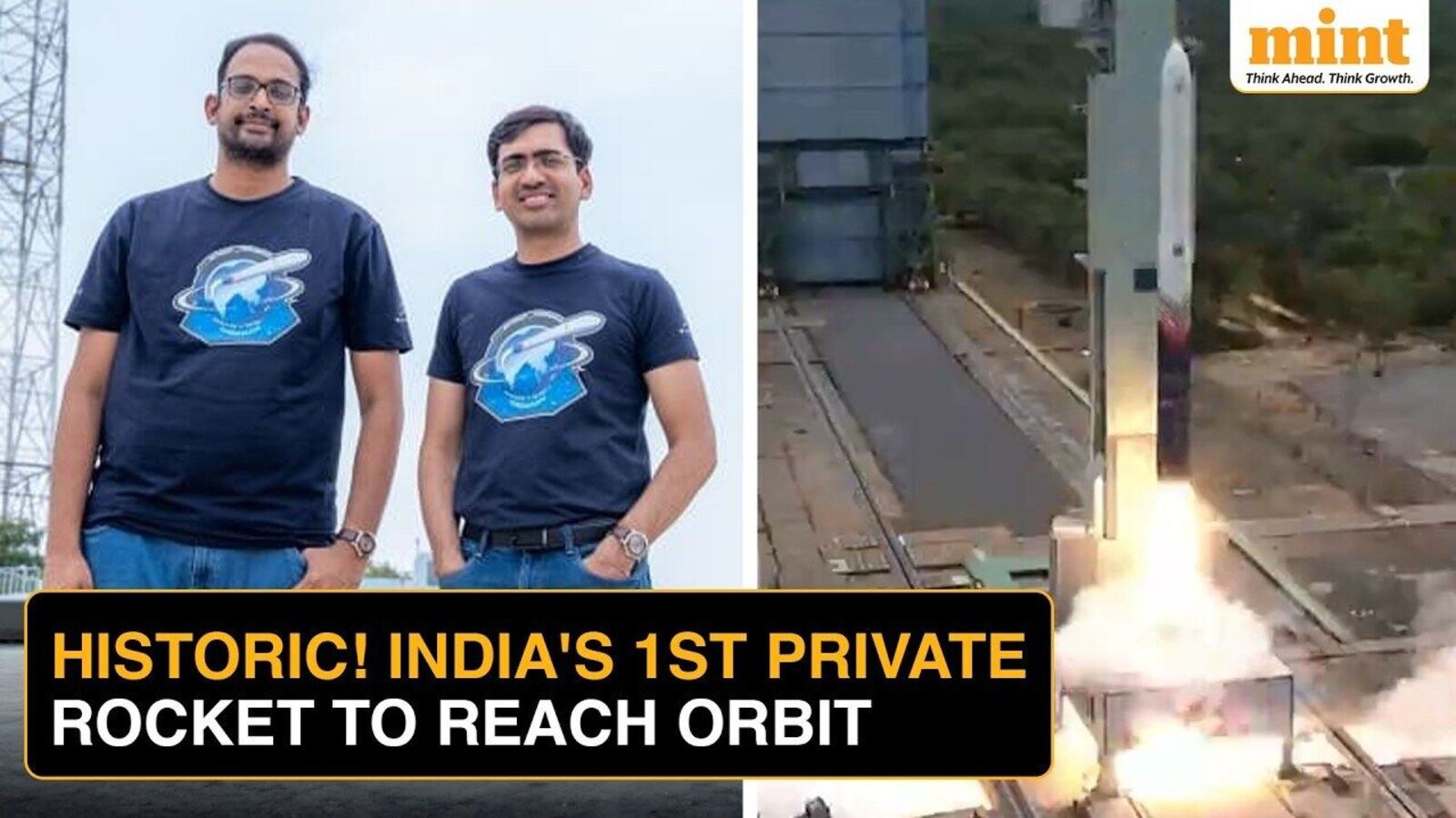
Theindiapostdaily.com – India’s first privately developed orbital rocket, Vikram-1, achieved a milestone by successfully placing multiple technology payloads, including postcards from astronauts and a message from Prime Minister Narendra Modi, into low Earth orbit on Saturday. The mission, named “Mission Aagaman,” was reported by news agency PTI as a significant step for the nation’s private space industry.
Launch and Mission Team Presence
The four-stage, seven-storey rocket launched at 12:05 pm amid cloudy skies, generating dense plumes of orange smoke from the first pad. A planned hold due to navigation challenges initially delayed the flight, but the revised schedule allowed for a successful ascent. Skyroot founders Pawan Kumar Chandana and Naga Bharath Daka, former ISRO scientists, monitored the event from the Mission Control Center (MCC), joined by ISRO Chairman V. Narayanan, former ISRO chiefs, astronaut Shubhanshu Shukla, and Andhra Pradesh Minister Nara Lokesh.
Technical Innovations Verified
Skyroot Aerospace highlighted the mission’s validation of key technologies, including an all-carbon composite structure and 3D-printed engines, under real flight conditions. These advancements are described as first-of-their-kind in the industry. The data collected will now aid in refining the rocket’s guidance systems and enhancing future commercial satellite missions.
Diverse Payloads Demonstrated
The launch carried a range of payloads, from robotic arms designed for debris removal to compact satellites testing capabilities in low Earth orbit. Among the items was a micro-art payload featuring sculptures of India’s space pioneers, such as Vikram Sarabhai and Sir C. V. Raman, as well as an 18-karat gold rocket and handwritten postcards from Modi and other scientists.
“Skyroot proudly named its rockets and engines after these icons,” the company stated, adding that the micro-art payload was a tribute to three visionaries who shaped India’s scientific and space endeavors.
Modi’s message, “Vande Mataram,” was included on a postcard, symbolizing national pride. In a social media post, the Prime Minister praised Skyroot’s team, calling the mission a “defining moment” for India’s space journey. He emphasized how private sector growth is expanding frontiers and fostering innovation, inspiring young engineers to pursue ambitious goals.
Future Implications
The success of Vikram-1 follows the suborbital flight of Vikram-S in 2022, positioning Skyroot as a key player in the orbital launch market. The mission’s payloads, including Cosmic Bloom—a lab-grown diamond—and uD3PP and mD3RN from Germany-based DCubed, underscore the variety of technologies now accessible through private space initiatives.