Uttarakhand border clash: Who are the Nihang Sikhs, and why were they protesting?
The Uttarakhand border clash, which erupted on June 16, brought renewed attention to the Nihang
Uttarakhand Border Clash: Nihang Sikhs’ Protests
Theindiapostdaily.com – The Uttarakhand border clash, which erupted on June 16, brought renewed attention to the Nihang Sikhs, a revered sect within the Sikh community. Known for their martial traditions and distinct ceremonial dress, the Nihangs have long been associated with defending Sikh values and heritage. This incident, which unfolded at the Kulhal checkpoint in Vikasnagar, underscored the group’s resolve to assert their presence and address grievances tied to recent disputes in the region. As the Uttarakhand border clash intensified, the Nihang Sikhs demonstrated their commitment to their faith through a bold demonstration that captured national headlines.
The Nihang Sikhs: A Warrior Tradition
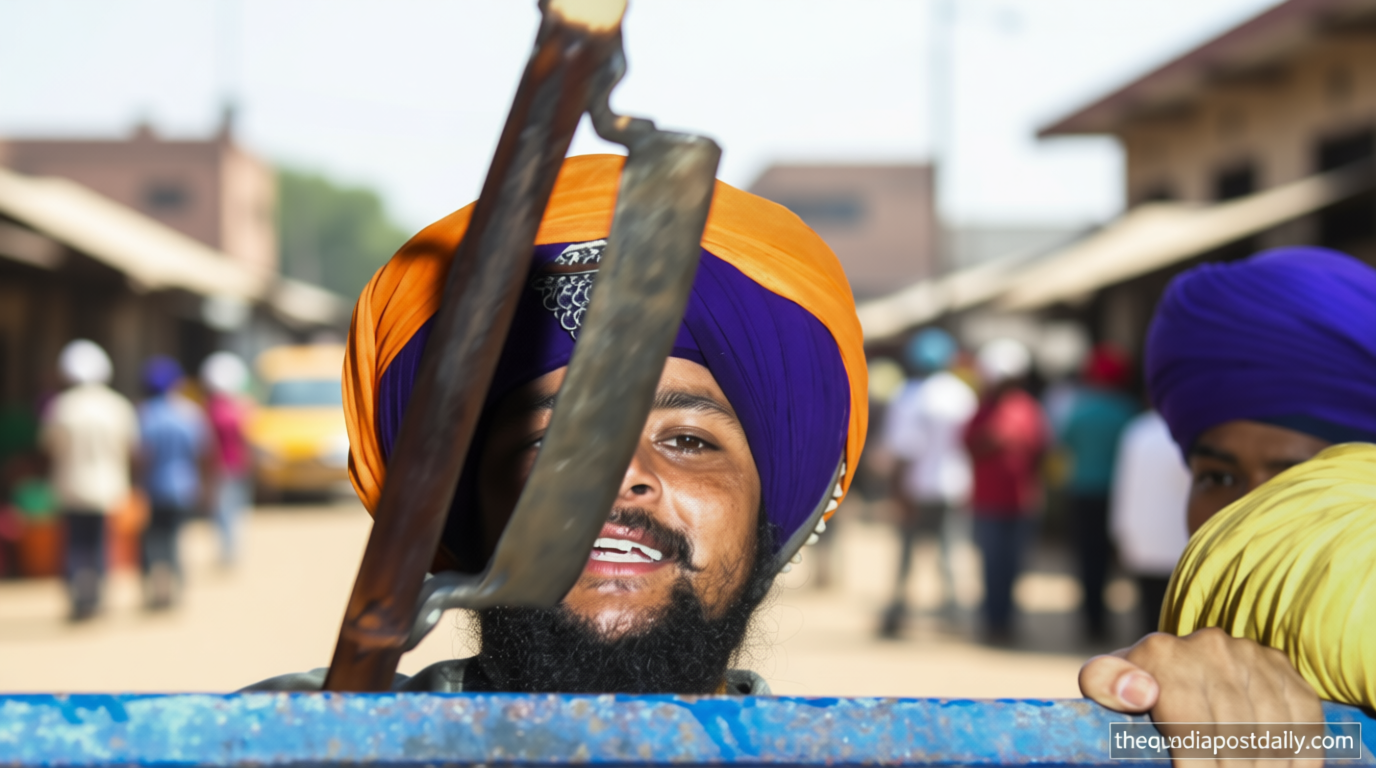
The Nihang Sikhs, often referred to as the Khalsa Swaroop, are a unique branch of Sikhism that emphasizes martial prowess and spiritual devotion. Their distinctive blue robes, a symbol of courage and sacrifice, are worn with pride, while their turbans—adorned with shastars (weapons) and Farla (a small flag)—reflect their historical role as protectors of the Sikh faith. These warriors are guided by the Khalsa code of conduct established by Guru Gobind Singh Ji, which blends religious discipline with a readiness to fight for justice. The Uttarakhand border clash highlighted how this ancient tradition continues to shape the group’s actions in modern times.
Historically, the Nihangs played a pivotal role in Sikh military history, particularly during the time of Guru Gobind Singh. They were instrumental in resisting Mughal, Afghan, and British forces, often serving as elite warriors in battles to safeguard Sikh sovereignty. Their practices, including the recitation of hymns and the use of ceremonial weapons, are rooted in the teachings of the Sikh Gurus and the tenets of the Khalsa Panth. The Uttarakhand border clash serves as a reminder of their enduring legacy and the cultural significance they hold within the Sikh community.
Tension at the Himachal-Uttarakhand Border
On June 16, the Uttarakhand border clash reached a critical point as a group of Nihang Sikhs attempted to cross into the state from Himachal Pradesh. The protest, which centered around the sacred Hemkund Sahib shrine, was sparked by a conflict at the Karnaprayag market in Chamoli and a dispute at a gurdwara in Nagrasu. The Nihangs, carrying swords and other sharp weapons, clashed with security forces at the Kulhal checkpoint, leading to a tense standoff that lasted several hours. This event marked a significant moment in the ongoing interactions between the Nihang Sikhs and local authorities.
Approximately 200 Nihang Sikhs, traveling from Chandigarh, arrived at the border to express their grievances. They were accompanied by banners and chants, emphasizing their demand for justice and the withdrawal of an FIR against four of their members who had been arrested in the earlier conflict. The Uttarakhand border clash not only disrupted daily life in the region but also drew attention to the group’s desire to resolve disputes through dialogue while asserting their rights. The presence of traditional blue robes and weapons during the protest added a visual and symbolic dimension to the confrontation.
Motivations Behind the Protest
The Uttarakhand border clash was a culmination of longstanding tensions between the Nihang Sikhs and local residents. The incident at the Karnaprayag market, where a Nihang member was injured, ignited a sense of urgency within the community. This led to the filing of a police case and the arrest of four individuals, prompting the group to take to the streets. A representative of the Nihangs, speaking to ANI, stated, “We aim to complete our pilgrimage without disturbance and wish to resolve the dispute with the locals through mutual understanding.”
“We aim to complete our pilgrimage without disturbance and wish to resolve the dispute with the locals through mutual understanding,” the representative stated.
Despite efforts to mediate, the protesters vowed to remain in Uttarakhand until the four arrested Nihangs were released. The Uttarakhand border clash thus became a symbol of the group’s dedication to protecting their community’s interests and upholding their traditions. The demonstration also highlighted the intersection of religious identity and regional governance in the state.
Broader Implications of the Uttarakhand Border Clash
The Uttarakhand border clash had broader implications for the relationship between the Sikh community and local authorities in the region. It sparked discussions about the role of religious groups in asserting their rights and the perception of them as both defenders and disruptors. The incident also drew comparisons to previous protests by the Nihangs, such as those during the 1984 Sikh riots, where their militant stance was a key factor. This time, the focus was on resolving a local dispute while maintaining their cultural and religious integrity.
As the Uttarakhand border clash unfolded, it became evident that the Nihang Sikhs are not just a historical entity but an active force in contemporary social and political discourse. Their presence at the border, armed with swords and determined to reclaim their place in the region’s narrative, demonstrated the depth of their commitment. The event also served as a reminder of the broader challenges faced by religious minorities in maintaining their traditions amidst changing societal dynamics.