US-Iran War: PM Modi chairs high-level security review meeting – What was discussed?
Prime Minister Narendra Modi on Thursday chaired a high-level meeting of the Cabinet Committee on Security (CSS) to assess developments related to the US Iran
US Iran War: PM Modi Reviews Security Situation
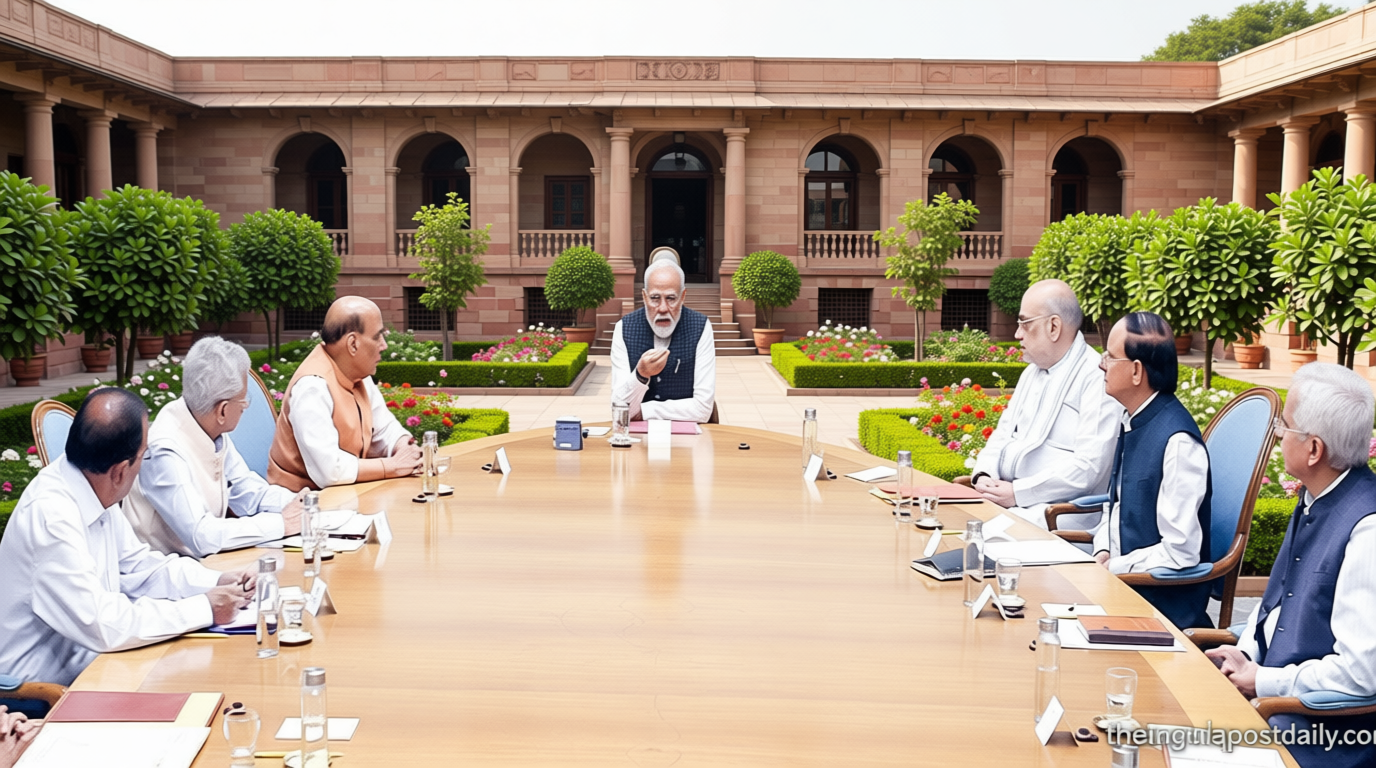
Theindiapostdaily.com – Prime Minister Narendra Modi on Thursday chaired a high-level meeting of the Cabinet Committee on Security (CSS) to assess developments related to the US Iran War and review measures being implemented across various ministries. This marked the fourth special CCS meeting dedicated to addressing the escalating crisis in West Asia. During the session, the Prime Minister examined the broader global security landscape and strategies to maintain uninterrupted supply chains despite disruptions in multiple conflict zones, including the Strait of Hormuz, the Black Sea, the Red Sea, and the Gulf of Aden.
Key Ministers Participate in Security Review
The extended Cabinet Committee on Security meeting, presided over by the Prime Minister, saw participation from permanent members including Defence Minister Rajnath Singh, Home Minister Amit Shah, External Affairs Minister S Jaishankar, Finance Minister Nirmala Sitharaman, alongside special invitees Chemicals and Fertilisers Minister JP Nadda, Commerce Minister Piyush Goyal, Shipping Minister Sarbananda Sonowal, and Petroleum Minister Hardeep Puri. According to official sources, the Prime Minister emphasized that a whole-of-government approach must continue to address challenges emerging from the US Iran War crisis.
The Press Information Bureau statement highlighted that the Prime Minister directed the establishment of a unified coordinated mechanism for regular monitoring of all developments. This mechanism aims to ensure expeditious implementation of appropriate measures to safeguard the interests of Indian citizens. The two-hour-long meeting at the Parliament House complex also focused extensively on protecting Indian citizens in conflict zones and ensuring the safety of seafarers navigating through volatile waters.
“He said that a unified coordinated mechanism be put in place for regular monitoring of all the developments to ensure expeditious implementation of appropriate measures to safeguard the interests of the citizens.”
The Prime Minister further directed that a mechanism be established to provide timely information, emergency assistance, and counselling to seafarers and their families. He stressed that all efforts must be made to protect both citizens and the Indian diaspora from the impact of this conflict. Additionally, to ensure energy independence, the Prime Minister emphasized the importance of renewable energy sources including solar energy and other non-fossil-fuel based alternatives.
India’s energy security faces significant challenges as the US Iran War continues. Before the conflict escalated, India’s 40 per cent energy import came through the Strait of Hormuz. With the conflict not ending permanently, India’s energy import from West Asia has been badly affected. The energy import through the Strait of Hormuz continues to remain at minimum levels due to intermittent attacks on oil and cargo ships. Last week, the Yemen-based Houthi militia announced that it would target Saudi Arabian tankers attempting to cross the Bab al-Mandab.
The group also targeted several ships following this announcement. The Bab al-Mandab connects the Red Sea to the Gulf of Aden and the Arabian Sea, serving as a critical chokepoint for global trade and energy supplies—similar to the Strait of Hormuz. According to available data, the impact is already visible as ship crossings through the Bab al-Mandab decreased to an average of 31 per day over the past three days, compared to 43 per day in the first half of July.
Besides maritime disruptions, Russian oil import through the Black Sea is also under pressure as the Russia-Ukraine war intensified. There have been several attacks on ships passing through the Black Sea in recent days. India depends on imports to meet its over 88 per cent energy requirements and also imports a large amount of fertilizers from various sources. Additionally, about one crore Indians live and work in West Asia, making this crisis particularly significant for India.
The Cabinet Secretary briefed the CCS about the present geo-political situation, discussing initiatives taken to ensure adequate supply of petroleum products, including LNG/LPG and fertilizers. He noted that sources for procurement of LPG have already been diversified and the overall stock and supply position of major petroleum products remain adequate. Availability of adequate crude oil has enabled Central Public Sector Enterprise refineries to operate at utilization levels exceeding 100 per cent, ensuring continued production of petrol, diesel, and other petroleum products.
Initiatives have also been taken to expand Piped Natural Gas connections, which have resulted in a substantial increase in PNG connections. The Government is facilitating industrial substitution of LPG through expansion of the National Gas Grid, augmentation of LNG import and regasification infrastructure, expansion of City Gas Distribution networks, and time-bound pipeline and last-mile connectivity approvals. These measures collectively aim to strengthen India’s energy security amid the ongoing US Iran War and related global disruptions.