UN not a forum for ‘biased and false narratives’ on Kashmir: India tells Pakistan
India Says UN Not a Forum for Biased Kashmir Narratives as it Condemns Pakistan's Remarks Theindiapostdaily.com – India has asserted that the United Nations is not a suitable platform for…
India Says UN Not a Forum for Biased Kashmir Narratives as it Condemns Pakistan’s Remarks
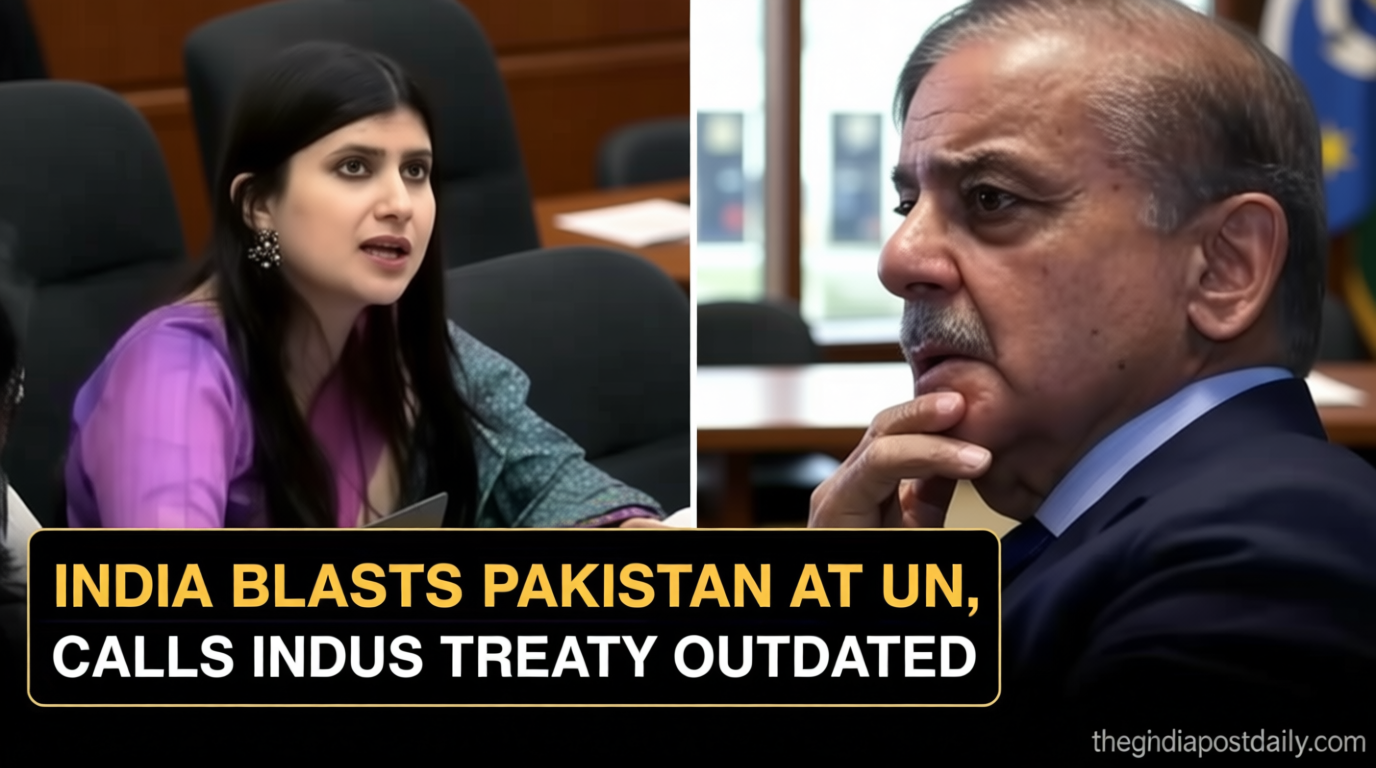
Theindiapostdaily.com – India has asserted that the United Nations is not a suitable platform for disseminating ‘biased and false narratives’ regarding the Jammu and Kashmir region, directly addressing Pakistan’s recent attempts to frame the issue as an international dispute. During a speech at the UN General Assembly, India’s Permanent Representative, Parvathaneni Harish, emphasized that the region remains an internal matter for India and should not be used by Pakistan to advance its own political agenda. His comments underscored the need for the UN to uphold impartiality and avoid becoming a stage for one-sided arguments about the Kashmir conflict.
UN’s Role in Kashmir Dispute Under Scrutiny
Pakistan’s Permanent Representative, Asim Iftikhar Ahmad, had previously raised the Kashmir issue during the Security Council’s annual report discussion, a move that India’s Harish called ‘unwarranted.’ This marks the second time this year that Pakistan has leveraged the UN to spotlight its stance on the region, which it considers an unresolved territorial dispute. Harish pointed out that Pakistan’s consistent use of UN forums reflects a broader strategy to position the issue as a matter of global concern, despite its core being a domestic matter for India.
“The unwarranted reference by Pakistan to a matter strictly internal to India, the Union Territory of Jammu and Kashmir, has compelled me to respond,” Harish stated. His remarks highlight India’s frustration with Pakistan’s persistent efforts to use international platforms to push its narrative, which India claims is both biased and historically inconsistent. The country’s argument is rooted in its assertion that Jammu and Kashmir has been an inseparable part of India since its integration in 1947, a position it has consistently defended in bilateral and multilateral discussions.
Harish criticized Pakistan for misusing the UN’s global influence to spread ‘biased and false narratives’ about Kashmir, arguing that such actions undermine the organization’s credibility. He stressed that the Security Council, as a key body for addressing global issues, should not be exploited to serve the interests of a single nation. India’s stance is further supported by its historical narrative, which emphasizes the region’s status as an integral part of India, with the government maintaining control since 1947.
Security Council Reform and India’s Call for Fair Representation
In addition to criticizing Pakistan’s approach, Harish also addressed the need for reforming the UN Security Council, which he believes still reflects the geopolitical dynamics of the 1945 post-WWII era. He argued that the current structure, with five permanent members holding veto power, has failed to adapt to the modern world and is no longer representative of the global community. India has long advocated for expanding the Council’s membership to include more countries, particularly those from the Global South, to ensure balanced representation.
“The current structure reflects geopolitical realities of 1945. Retaining the status quo has so far not enabled effective functioning of the Security Council and cannot do so in future,” Harish remarked. This statement aligns with India’s broader push for Security Council reform, which includes increasing the number of permanent members from five to 11 and non-permanent members from 10 to 14 or 15. The G4 nations—India, Brazil, Germany, and Japan—have championed this reform, arguing that it would make the Council more democratic and responsive to contemporary challenges.
Harish’s remarks also drew attention to Pakistan’s pattern of using the UN to highlight issues it deems critical to India’s sovereignty. While Pakistan claims the Kashmir dispute is a matter of international interest, India contends that it is a domestic issue that should be resolved through internal mechanisms. The debate highlights the tension between the two nations over the region’s status and underscores the importance of the UN maintaining neutrality in such discussions.
India’s call for the UN to avoid becoming a ‘forum for biased and false narratives’ has gained traction in recent years, especially with the region’s political landscape evolving. The government has emphasized its commitment to resolving the Kashmir issue through dialogue and development, while accusing Pakistan of obstructing progress through persistent UN interventions. Harish’s speech at the General Assembly serves as a reminder of India’s strategic use of international platforms to assert its position and challenge what it perceives as unfair representations of its sovereignty.
As the debate on Kashmir continues, the UN’s role in mediating the dispute remains contentious. India’s stance that the region is an internal matter has been reinforced by its historical claims and ongoing efforts to secure international support for its position. Meanwhile, Pakistan’s reliance on the UN to bolster its narrative reflects its broader geopolitical strategy to frame the issue as a matter of global concern. The discourse highlights the importance of maintaining a balanced and fact-based approach in international diplomacy, especially when addressing sensitive territorial disputes.