Three Indian-flagged oil tankers clear Strait of Hormuz before closure by Iran
Three Indian-Flagged Oil Tankers Clear Hormuz Before Iran Closure Theindiapostdaily.com – Three Indian-flagged oil tankers successfully navigated the Strait of Hormuz before its closure by Iran, marking a critical moment…
Three Indian-Flagged Oil Tankers Clear Hormuz Before Iran Closure
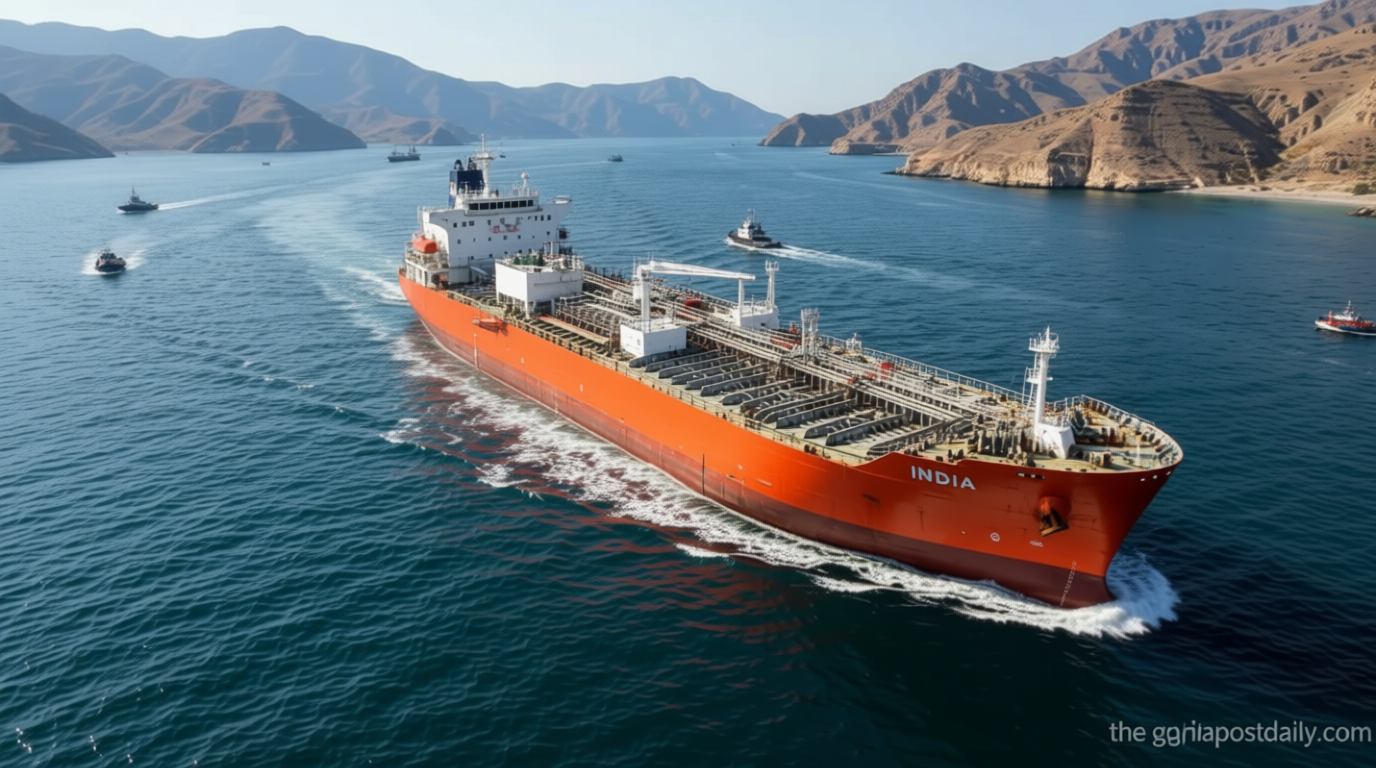
Theindiapostdaily.com – Three Indian-flagged oil tankers successfully navigated the Strait of Hormuz before its closure by Iran, marking a critical moment in the region’s volatile maritime dynamics. The vessels—Desh Vaibhav, Desh Vibhor, and Sanmar Herald—transited the strategic waterway ahead of its temporary shutdown, ensuring the safe passage of over 8.6 million tonnes of crude oil and 94 Indian crew members. The timing of their departure highlights the importance of maintaining open shipping lanes during heightened geopolitical tensions. These tankers are expected to arrive at Indian ports between June 24 and July 1, with Desh Vaibhav reaching Vadinar Port on June 24, Desh Vibhor docking at Sikka Port the same day, and Sanmar Herald arriving at Paradip on July 1.
Strategic Significance of Hormuz Closure
The Strait of Hormuz, a vital chokepoint for global oil and gas trade, was briefly closed by Iran, raising concerns about disruptions to energy supply. The closure followed a U.S.-Iran agreement to end the conflict that began on February 28, but Tehran reversed its decision before the peace talks in Switzerland, citing Israeli military actions in Lebanon as a breach of the ceasefire. This move underscores the region’s fragility and the potential economic fallout for countries reliant on oil imports through the strait. The Three Indian flagged oil tankers’ timely transit offers a temporary reprieve, though the incident underscores the risks of geopolitical instability affecting global supply chains.
U.S. Central Command spokesperson Capt. Tim Hawkins reiterated that the strait’s passage remained “intact,” despite Iran’s closure. His statement emphasized the U.S. military’s role in safeguarding maritime traffic. “Iran does not control the Strait of Hormuz. Traffic continues to flow, and U.S. forces are monitoring the situation to ensure this remains the case,” Hawkins said. The agency also confirmed that 55 merchant ships, including oil tankers, transited the strait on Saturday, transporting over 17 million barrels of oil. This figure highlights the waterway’s role as a lifeline for international energy trade, even amid diplomatic disputes.
Iran’s Stance and the U.S. Response
Iran’s closure of the Strait of Hormuz was framed as a symbolic gesture to assert control over the region. Mohammad Mokhber, an advisor to Iran’s supreme leader Ayatollah Mojtaba Khamenei, criticized the U.S. for failing to enforce the first clause of its 14-point interim deal, which called for a ceasefire across all fronts. “As long as the agreement is only on paper, the flow of Middle East energy will remain halted,” Mokhber asserted. His remarks reflect Iran’s broader frustration with the U.S. commitment to the peace deal and its perceived reluctance to fully support regional stability.
Despite the closure, the Three Indian flagged oil tankers’ successful transit through the strait demonstrates the resilience of maritime operations. Indian officials, including Union Shipping Minister Sarbananda Sonowal, praised the effort to ensure the ships’ safe passage. “Three Indian-flagged crude oil tankers, Desh Vaibhav, Desh Vibhor, and Sanmar Herald, carrying over 8.6 lakh MT of cargo with 94 Indian crew members have successfully transited the Strait of Hormuz today and are en route to India,” Sonowal tweeted. The event also highlights the role of India as a key player in maintaining energy security amid regional conflicts.
The closure of the Strait of Hormuz has drawn international attention, with analysts warning of the ripple effects on global oil markets. The waterway, which connects the Arabian Gulf to the Gulf of Oman, is crucial for approximately 20% of the world’s oil exports. If the closure had persisted, it could have led to significant delays and increased costs for energy-dependent nations. However, the swift movement of the Three Indian flagged oil tankers before the shutdown suggests a coordinated effort to minimize disruption. This incident also serves as a reminder of the delicate balance between diplomacy and military action in the region.
While the Three Indian flagged oil tankers have successfully reached Indian waters, challenges remain for other vessels. At least one Indian-flagged cargo ship remains stranded on the opposite side of the strait, illustrating the broader impact of Iran’s decision. The stranded ship, which is still awaiting clearance, adds to the growing list of maritime issues stemming from the closure. This situation underscores the need for continued vigilance and cooperation between regional powers to ensure the free flow of trade and energy resources. As tensions persist, the Three Indian flagged oil tankers’ timely arrival becomes a symbol of hope for stable operations in the Strait of Hormuz.