‘They earned the required money’: Union minister questions Satluj’s removal, targets Diljit Dosanjh
Union Minister: 'They Earned the Required Money' Questions Satluj's Removal, Targets Diljit Dosanjh They earned the required money - Union Minister Ravneet
Union Minister: ‘They Earned the Required Money’ Questions Satluj’s Removal, Targets Diljit Dosanjh
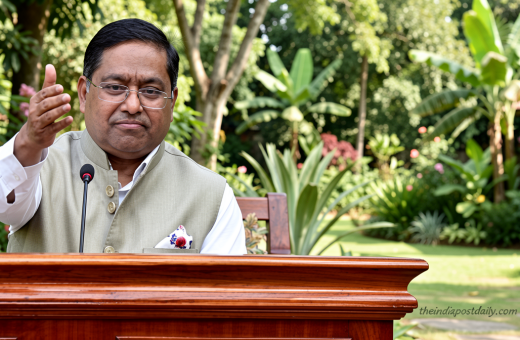
Theindiapostdaily.com – Union Minister Ravneet Singh Bittu recently sparked a debate by suggesting that the decision to remove the film *Satluj* from ZEE5 was driven by financial motives. He stated, “They earned the required money,” implying that the creators of the movie pulled it off the platform once they had secured the necessary financial returns. This remark came as a response to the swift takedown of the film just two days after its debut, which has raised questions about the transparency of the process and the role of political influence in content regulation.
Bittu’s comments directly targeted Diljit Dosanjh, who had been vocal about the film’s release on OTT platforms. He accused the actor of prioritizing profit over substance, arguing that his earlier statements about the film’s availability on ZEE5 hinted at a strategic withdrawal. “Why would they let it stream if they intended to withdraw it later?” the minister questioned, casting doubt on the narrative that the government had orchestrated the removal. His remarks have intensified scrutiny over Dosanjh’s involvement in the film and his perceived alignment with commercial interests.
Controversy Over Certification and Release
The Ministry of Information and Broadcasting claimed *Satluj* was released without completing its mandatory certification process, which typically involves a review of content for compliance with national standards. This raised concerns about the film’s eligibility for public screening and its potential to influence public opinion on Punjab’s history. ZEE5, the streaming platform, confirmed the film would remain inaccessible in India for now, pending further clarification. The delay has fueled speculation about whether the removal was a calculated move to align with political agendas or a genuine procedural oversight.
“If the Centre wanted to take it down, they wouldn’t have allowed it to air,” Bittu asserted. He emphasized that the film’s initial approval suggested no immediate threat to its content, and the subsequent removal appeared motivated by financial considerations. The minister also criticized Dosanjh for his lack of commitment to representing Punjab’s struggles, noting, “He’s living in luxury in LA—what does he know about the state he claims to represent?” These accusations have placed Dosanjh under increased pressure, both as an actor and as a cultural figure.
Public Reaction and Industry Concerns
The controversy has sparked a mixed reaction from the public and industry insiders. While some support Bittu’s argument that the film’s removal was a business decision, others argue that it reflects a broader trend of censorship. Critics point out that *Satluj* tackles sensitive historical issues, including the 1980s and early 1990s human rights abuses in Punjab, and its removal could be seen as a way to suppress dissenting narratives. Meanwhile, fans of the film and its director, Honey Trehan, have expressed disappointment, questioning whether artistic freedom is being compromised for commercial or political reasons.
“The film’s content is worth more than its profits,” said a viewer on social media, highlighting the growing sentiment that the removal undermines the importance of the story being told. Industry analysts have also weighed in, noting that such decisions could deter filmmakers from producing content that challenges established viewpoints. Bittu’s comments, however, have been met with both support and skepticism, as some view his critique as a timely defense of content regulation, while others see it as an attempt to shift blame onto Dosanjh for the government’s actions.
With inputs from agencies
Historical Context of the Film’s Plot
*Satluj* is based on the real-life story of Jaswant Singh Khalra, a human rights advocate from Punjab who allegedly uncovered illegal killings and secret cremations during the late 1980s and early 1990s. The film’s title references Khalra’s mysterious disappearance in 1995, with his body later found near Harike Bridge on the Sutlej River. This historical backdrop has made the movie a focal point in discussions about Punjab’s past, particularly its turbulent years marked by political strife and human rights violations.
Produced by RSVP and MacGuffin Pictures, the film features a stellar cast including Arjun Rampal, Kanwaljit Singh, Suvinder Vicky, and Geetika Vidya Ohlyan. The director, Honey Trehan, has defended the project as a necessary exploration of Punjab’s history, emphasizing its role in bringing attention to overlooked issues. Despite its thematic significance, the film’s rapid removal has left many wondering whether its message will reach audiences or if it will be forgotten before its impact is fully realized.
Political and Cultural Implications
Bittu’s targeting of Dosanjh has broader implications for the actor’s political standing. As a prominent Punjabi figure, Dosanjh has often used his platform to voice opinions on regional and national issues. However, Bittu’s criticism suggests that his actions in *Satluj* have drawn scrutiny, with the minister implying that the actor’s priorities are misaligned with the state’s interests. This has led to discussions about how celebrities are perceived as influencers of public opinion and whether their participation in films can be politically charged.
“Diljit Dosanjh only cares about money,” Bittu reiterated, drawing a connection between the film’s removal and the actor’s perceived lack of dedication to Punjab’s cause. His remarks have also reignited debates about the role of media in shaping historical narratives and the balance between artistic expression and government oversight. As the situation unfolds, the film’s fate and Dosanjh’s response will likely remain central to the conversation, underscoring the tension between profit, politics, and public memory.