Sonam Wangchuk urges people to join his hunger strike for a day at Jantar Mantar: ‘If you can’t come here..’
Sonam Wangchuk Calls for Nationwide Hunger Strike at Jantar Mantar Over NEET Exam Controversy Sonam Wangchuk urges people to join - Ladakh-based activist
Sonam Wangchuk Calls for Nationwide Hunger Strike at Jantar Mantar Over NEET Exam Controversy
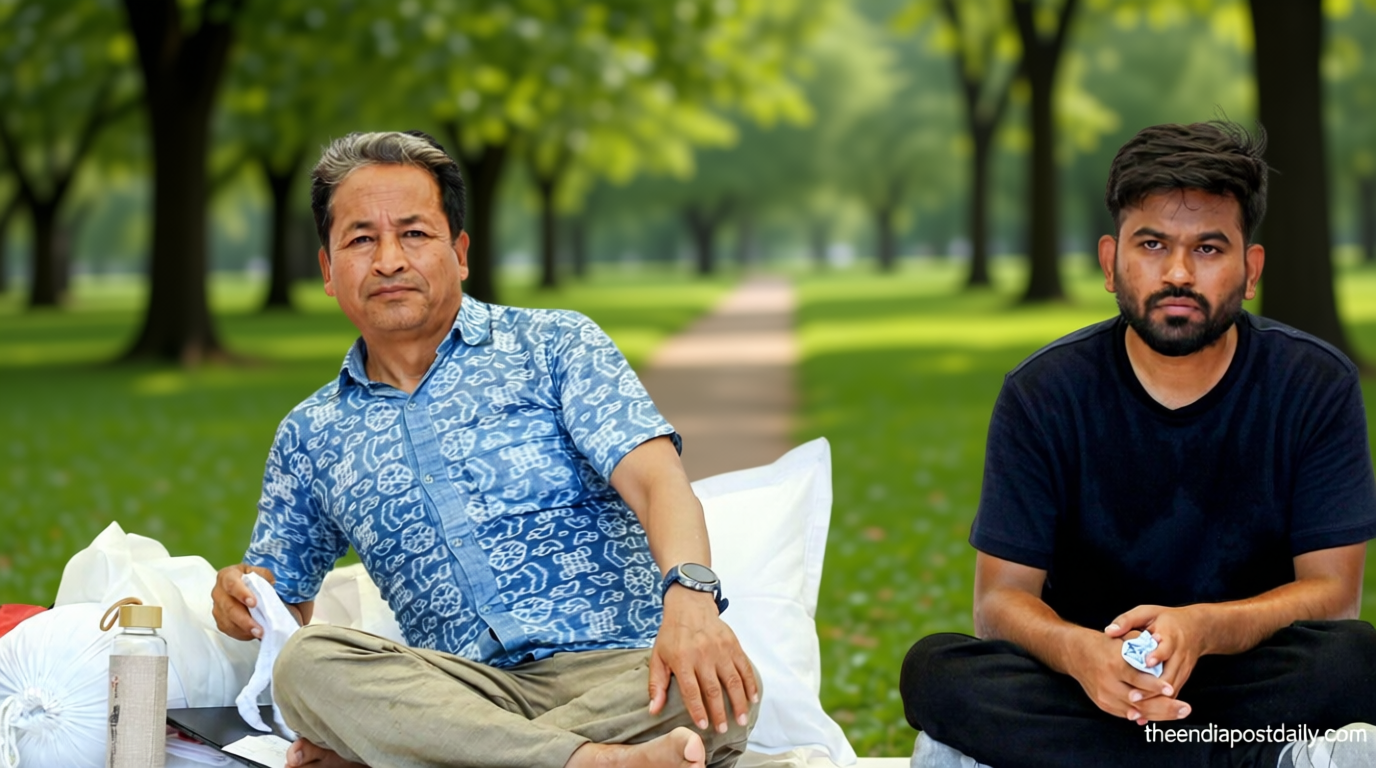
Theindiapostdaily.com – Ladakh-based activist Sonam Wangchuk has launched a powerful appeal to the public, urging people to join his one-day hunger strike at Jantar Mantar in Delhi as part of the ongoing protests against alleged NEET exam paper leaks. The movement, led by the Cockroach Janata Party (CJP), has gained momentum since June 20, when concerns about irregularities in the Union Public Service Commission (UPSC) exam sparked widespread outrage. Wangchuk’s call to action emphasizes the urgency of demanding accountability from Union Education Minister Dharmendra Pradhan, who has faced mounting pressure over the scandal. “If you can’t come here, please support our cause in any way you can,” Wangchuk declared, highlighting the need for collective solidarity in the fight for transparency and justice.
The Roots of the NEET Paper Leak Protests
The controversy began when leaked NEET (National Eligibility cum Entrance Test) question papers were widely circulated, raising fears of unfair advantage for certain candidates. Sonam Wangchuk urges people to join the protests, which have grown from a localized outcry to a national movement. The CJP, founded by Abhijeet Dipke, has positioned itself as a vocal critic of systemic flaws in India’s education sector, linking the NEET issue to broader governance concerns. Dipke emphasized that the hunger strike is not merely a reaction to exam irregularities but a symbolic stand for accountability across all levels of government. “This is a moment to demand reforms that ensure equity in education and environmental policies alike,” he added, underscoring the interconnectedness of the movement’s goals.
The strike, which commenced on June 29, includes a two-minute silence at Rajghat to honor Mahatma Gandhi before the fast begins. This ritualistic approach reflects Wangchuk’s philosophy of peaceful resistance, a method he has long championed in Ladakh. The protest has drawn participants from across the country, with many expressing frustration over the perceived lack of transparency in the UPSC process. By choosing Jantar Mantar—a historic site for democratic protests—as the venue, Wangchuk urges people to join a cause that resonates with the nation’s spirit of collective action. “The hunger strike is a call to unity, a way to remind leaders that we are watching and will not tolerate injustice,” he stated.
Wangchuk’s Commitment to Education and Environmental Causes
Sonam Wangchuk urges people to join the movement not only as a response to the NEET scandal but as a continuation of his lifelong dedication to education and environmental preservation. Over the past five to six years, he has spearheaded initiatives in Ladakh to promote sustainable development and cultural heritage, often placing himself at the forefront of grassroots campaigns. His leadership in the statehood movement has made him a symbol of resilience and determination, qualities he now channels into the hunger strike. “Education and the environment are the pillars of my work, and this strike is another step toward ensuring both are protected,” Wangchuk explained, underscoring the depth of his commitment to the cause.
The CJP’s protests have also sparked discussions about electoral reforms, with Dipke advocating for the introduction of electronic voting machines (EVMs) and the modernization of voter roll management systems. These demands highlight the movement’s broader ambitions beyond the immediate issue of the leaked NEET papers. By uniting education and governance concerns, the protests aim to address systemic inefficiencies that have long been criticized by civil society. “The NEET leak is just one incident, but it reflects deeper issues in how we manage public institutions,” Dipke noted, urging the public to join in demanding structural changes.
Impact of Wangchuk’s Detention on the Movement
Sonam Wangchuk’s experience with detention under the National Security Act (NSA) in March 2026 has shaped his current strategy. After nearly six months of imprisonment, he was released when the NSA was revoked by authorities, a move he views as a testament to the power of collective pressure. This incident reinforced his belief in the effectiveness of nonviolent protest as a tool for achieving justice. “Even in the face of government restrictions, we must persist in our efforts to hold leaders accountable,” Wangchuk said, reflecting on the lessons learned from his earlier ordeal. His return to the streets has galvanized supporters, who see his resilience as a rallying point for the movement.
The hunger strike at Jantar Mantar is expected to draw thousands of participants, with activists emphasizing the symbolic weight of the location. As the protest unfolds, the public is being encouraged to join in either physically or through social media campaigns. The movement’s leaders have also highlighted the importance of media coverage in amplifying their message, urging journalists to document the event and share it with a wider audience. “Every day we spend fasting is a day we fight for the future of our children and the integrity of our institutions,” Wangchuk asserted, rallying participants to the cause. With the NEET paper leak controversy intensifying, the hunger strike represents a critical moment for the CJP and its allies.