Revised green card rules, H-1B visa fee hike, social media vetting forcing Indians to rethink about American dream?
Revised green card rules H 1B changes and stricter screening are prompting many Indian students, professionals and families to reassess their plans for the
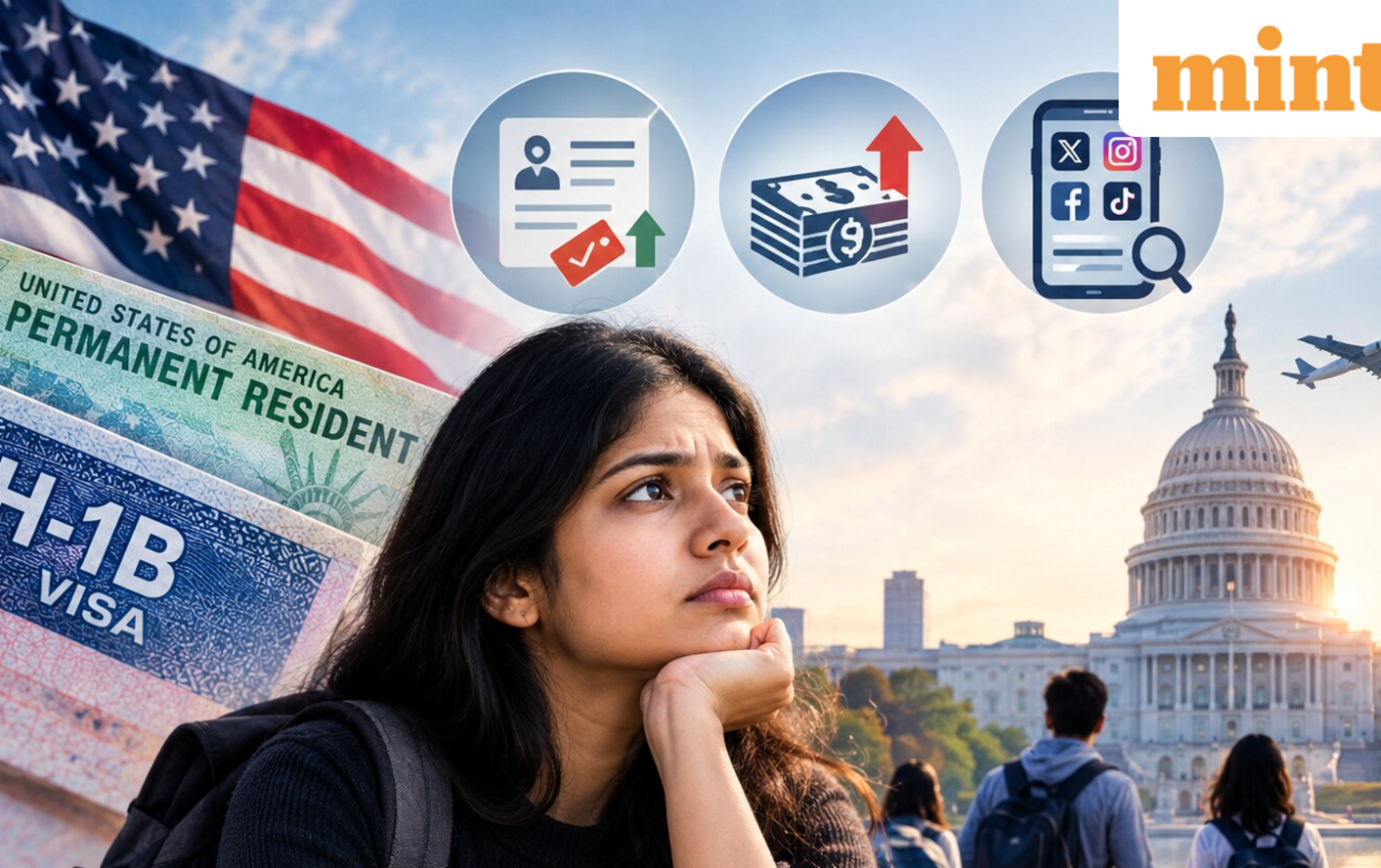
Indian professionals rethink the American dream amid tougher visa rules
Theindiapostdaily.com – Revised green card rules H 1B changes and stricter screening are prompting many Indian students, professionals and families to reassess their plans for the United States. For decades, the US has represented a route to world-class education, higher-paying jobs and, for some, eventual permanent residency. That route now appears costlier and less predictable.
The shift does not mean that Indians are abandoning the US altogether. Instead, they are increasingly comparing immigration prospects, education costs and long-term career stability before choosing a country for study, work or investment.
Green Card applicants face broader public-charge scrutiny
Updated guidance from US Citizenship and Immigration Services, effective from 18 September, requires most people applying to adjust their status to undergo a public-charge assessment. The review considers whether an applicant could become dependent on certain public benefits.
The policy affects a wide range of family-based applicants, including spouses, children and parents of US citizens or lawful permanent residents. Fiancés of US citizens and other eligible relatives may also fall within its scope.
Employment-based applicants are included as well. The affected groups can include priority workers, professionals with advanced degrees or exceptional ability, skilled workers, professionals, general workers, investors, religious workers and diversity visa applicants.
For Indian families, the revised green card rules H 1B environment adds another planning challenge to a process already shaped by sponsorship requirements, long waiting periods and changing administrative policies.
Higher H-1B costs increase uncertainty
The US immigration landscape has also become more difficult for skilled workers. A $100,000 fee on new H-1B visa applications has raised concerns for employers and prospective applicants, particularly in technology and other sectors that have historically hired large numbers of Indian professionals.
A wage-weighted H-1B selection system planned for fiscal year 2027 adds another consideration. If selection is more closely linked to wage levels, employers may reassess which jobs they sponsor and how they structure compensation for foreign hires.
Applicants are also dealing with increased social-media vetting. While closer checks may be intended to strengthen screening, they can make visa timelines feel more uncertain for students and workers preparing major life decisions.
Students weigh the full cost of a US education
For Indian students, a US degree still offers academic and professional appeal. However, the decision now extends well beyond university rankings. Families must consider tuition fees, living costs, post-study employment opportunities, visa eligibility and the chances of securing long-term residency after graduation.
European destinations are receiving greater attention because tuition in several countries can be roughly 50% to 80% lower than in the United States. Lower everyday expenses can further improve the overall cost comparison.
Government data showed India’s overseas student outflow at about 626,000 in 2025, down from 908,000 in 2023. Rising costs and stricter visa conditions in major destinations form part of the broader context behind this change.
The revised green card rules H 1B developments therefore matter not only to people already working in America, but also to students deciding whether the US remains the best first step toward an international career.
A recalibration rather than a retreat
The appeal of the US has not disappeared, especially for experienced professionals seeking opportunities with leading global companies. Yet applicants are placing greater value on flexibility: alternative countries, clearer residency pathways, lower education costs and careers that are less dependent on one employer or visa category.
For many Indians, the changing US immigration environment represents a rethink rather than a complete abandonment of American opportunities.
In practice, applicants may need to plan for multiple outcomes. A student may compare universities across several countries; a worker may evaluate whether an employer can support a visa strategy; and a family may seek professional immigration advice before committing savings to a move.
FAQ for Indian applicants
What do the revised Green Card rules mean for Indian families?
They mean that many applicants for permanent residency may face a public-charge assessment in addition to the usual family, employment or eligibility requirements. Applicants should ensure that their documents, financial information and immigration records are complete before filing.
Will the H-1B fee affect every Indian worker in the US?
The reported $100,000 fee concerns new H-1B visa applications. Its practical effect can depend on an applicant’s circumstances, the employer’s sponsorship policies and the final implementation of the rules. Workers should confirm current requirements with their employer and a qualified immigration professional.
Should Indian students avoid applying to US universities?
Not necessarily. The US can still be a strong choice for a suitable course, career goal and financial plan. Students should compare the total cost of study, available scholarships, post-study work options and immigration uncertainty with alternatives in Europe and other destinations.
What is the practical response to revised green card rules H 1B uncertainty?
Applicants should build a realistic budget, keep immigration records organised, understand the conditions attached to their visa and avoid relying on a single pathway. Planning early can make it easier to respond if employer sponsorship, visa selection or residency rules change.