Radisson Blu Delhi under FSSAI scanner: Cockroaches, flies, fungal-affected vegetables among food safety lapses
The Food Safety and Standards Authority of India has issued an improvement notice to AB Hotels Limited, the company operating the Radisson Blu Hotel in New
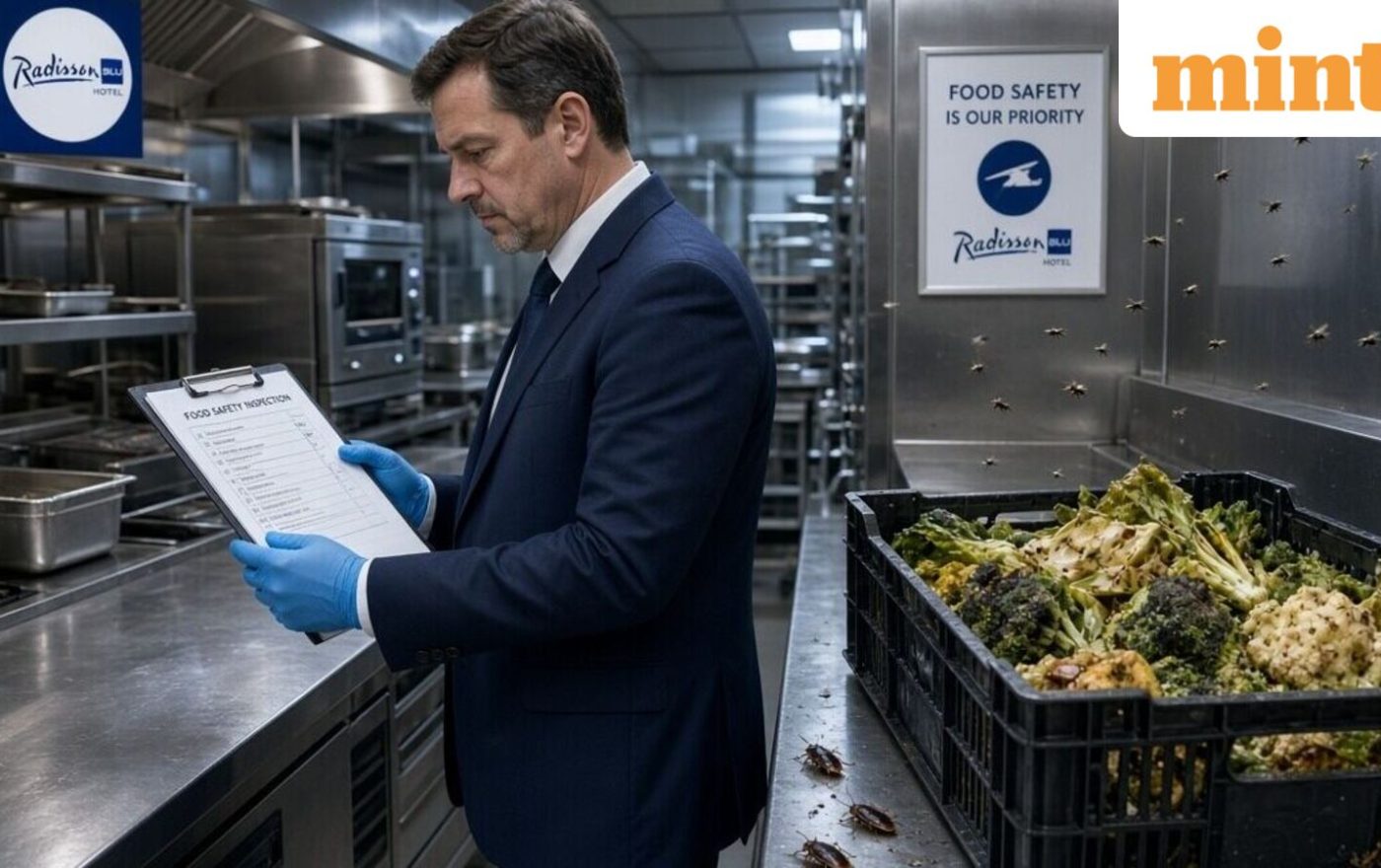
FSSAI Issues Improvement Notice to Radisson Blu Hotel Operator in New Delhi
Theindiapostdaily.com – The Food Safety and Standards Authority of India has issued an improvement notice to AB Hotels Limited, the company operating the Radisson Blu Hotel in New Delhi, after an inspection identified a range of alleged food safety and hygiene shortcomings.
The notice requires the hotel operator to make immediate corrections and file a detailed Action Taken Report, supported by documents and photographs where relevant. The regulator has warned that non-compliance may lead to additional action, including suspension of the establishment’s FSSAI licence.
Inspection Highlights Concerns Over Hygiene and Maintenance
The food safety inspection identified problems involving the upkeep of equipment and food-preparation areas. Rusted machinery, leakage from freezer units and shortcomings in refrigeration arrangements were among the issues noted.
Inspectors also pointed to concerns involving temperature monitoring, ventilation, flooring and lighting. These operational details are important in commercial kitchens because food must be stored, prepared and served under controlled conditions to limit the risk of spoilage or contamination.
Cleaning and sanitation procedures were also flagged. The notice cited inadequate sanitisation, stagnant water, drainage-related issues and improper handling of food waste. Such conditions can create an environment in which pests and food-borne hazards become more difficult to control.
Pest activity formed another major part of the findings. Cockroaches and flies were observed during the inspection, raising concerns over the effectiveness of pest-control measures at the premises.
Fungal Produce and Cooking Oil Use Under Scrutiny
The regulator also identified deficiencies in food procurement and receiving practices. Fruits and vegetables that appeared fungal-affected or deteriorated were among the items flagged during the inspection.
Receiving checks are a critical early stage in food safety management. Food businesses are expected to ensure that incoming ingredients are suitable for use before they enter storage or preparation areas. Produce showing visible spoilage can affect food quality and may need to be removed from the supply chain rather than retained for kitchen use.
The inspection further raised questions about whether the hotel was conducting required checks on cooking oil. Repeated heating can degrade oil, and Total Polar Compounds, commonly referred to as TPC, are used to assess that deterioration.
In the hotel’s NYC Kitchen, cooking oil with TPC readings of 31 and 24.4 was found in use. Under FSSAI standards, used oil with a TPC value above 25% cannot be used for cooking. The reading of 31 therefore exceeded the permitted threshold, while the 24.4 value remained below that limit.
Monitoring used cooking oil is intended to reduce the continued use of heavily degraded oil in commercial food preparation. The inspection notice stated that the required suitability assessments were not being carried out.
Food Segregation and Staff Hygiene Also Flagged
The notice listed shortcomings in the separation of different food categories. These included the segregation of raw and cooked foods, vegetarian and non-vegetarian items, allergenic and non-allergenic products, and food items from non-food materials.
Proper separation is a basic control in large kitchens, particularly where several menus, dietary requirements and preparation stations operate at the same time. It helps reduce the possibility of cross-contamination and supports clearer handling procedures for employees.
Personal hygiene practices among food handlers were another area of concern. Staff members were found working without gloves and hairnets. Inspectors also recorded instances involving jewellery and long nails, both of which can conflict with hygiene expectations for those handling food.
Food-service operators are expected to ensure that kitchen workers follow hygiene rules consistently, rather than only during formal inspections. Measures such as protective head coverings, clean hands, appropriate work clothing and controlled personal grooming are designed to reduce avoidable contamination risks.
Licence Display and Compliance Requirements
FSSAI also noted that the food licence was not prominently displayed. The notice referred to deficiencies connected to licence conditions and the extent of food business activities covered by the licence.
Displaying a valid FSSAI licence is part of the compliance framework for food businesses in India. It enables customers and regulators to identify the licensed operator and signals that the establishment falls within the food safety regulatory system.
The improvement notice places responsibility on AB Hotels Limited to address the listed deficiencies and demonstrate that corrective measures have been taken. The required Action Taken Report must include supporting material wherever applicable, including documentary and photographic evidence.
What an Improvement Notice Means
An improvement notice is a regulatory direction requiring a food business operator to correct specified failures within the applicable framework. It does not by itself determine the final outcome of the compliance process, but it places the operator under an obligation to respond and remedy the issues identified.
For hotel kitchens and other large food establishments, compliance extends beyond the quality of individual dishes. It includes storage temperatures, equipment maintenance, waste disposal, pest prevention, employee conduct, ingredient inspection and the separation of foods during preparation and storage.
If the hotel operator does not comply with the directions, FSSAI may take further action. The notice specifically states that suspension of the hotel’s FSSAI licence remains a possible consequence.
The case underlines the importance of routine food-safety controls in hospitality businesses, where kitchen operations often involve high volumes of ingredients, multiple preparation areas and continuous service. The next step rests with the hotel operator’s response and its submission of the required Action Taken Report.
Related Reading
Frequently Asked Questions
What is Radisson Blu Delhi under FSSAI scanner?
Radisson Blu Delhi under FSSAI scanner is the main topic of this guide. The article explains the context, practical details, and next steps readers should understand.
Why does Radisson Blu Delhi under FSSAI scanner matter?
Radisson Blu Delhi under FSSAI scanner matters because readers are looking for a useful answer, not just a short summary. Good content should match search intent and help them decide what to do next.