PM Modi’s message at G7 — trust, humanity-first diplomacy and Vasudhaiva Kutumbakam push
Prime Minister Narendra Modi’s G7 message, delivered on June 16
PM Modi’s G7 Address: A Call for Trust and Humanity-First Diplomacy
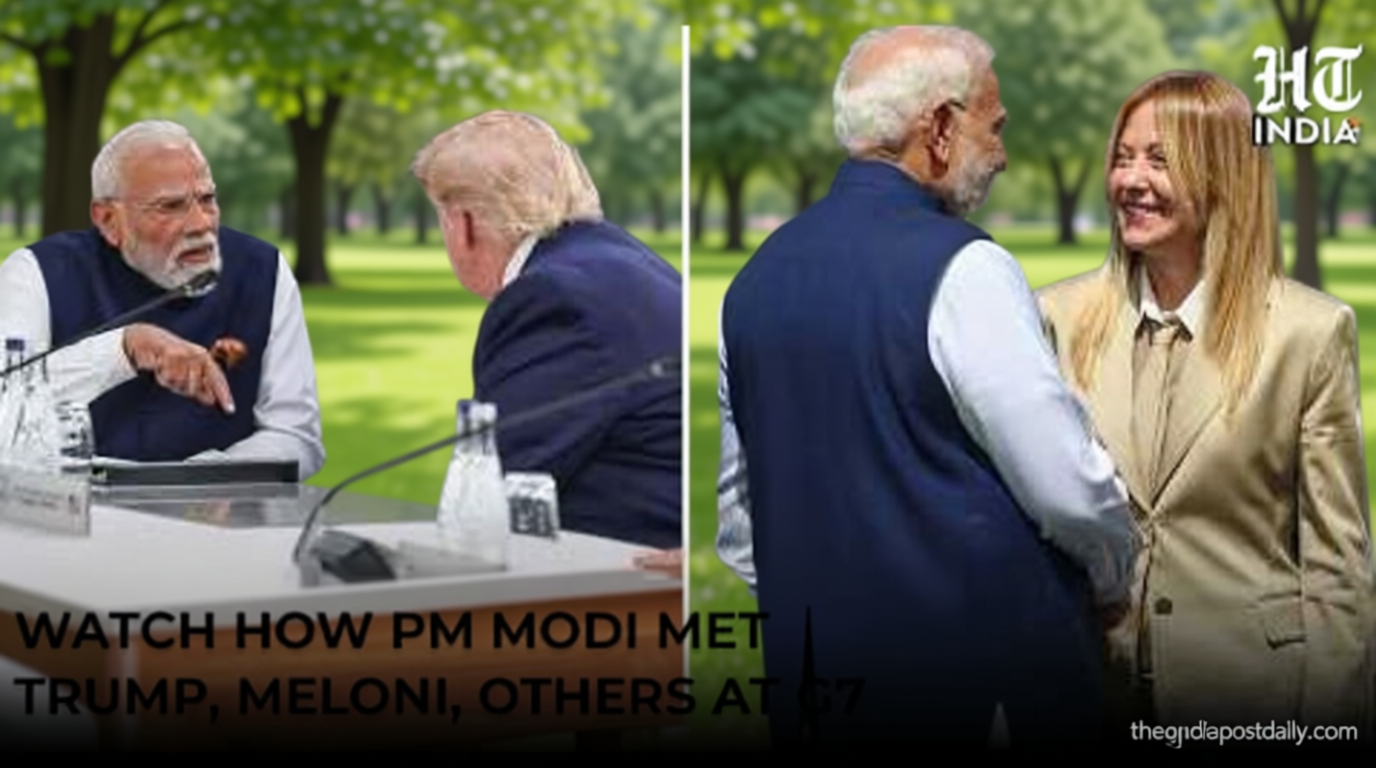
Theindiapostdaily.com – Prime Minister Narendra Modi’s G7 message, delivered on June 16 at the 52nd Summit in Evian, France, has emphasized the need for a transformative shift in international cooperation. His speech underscored the importance of trust, humanity-first diplomacy, and the ancient Indian philosophy of Vasudhaiva Kutumbakam, which translates to “the world is one family.” Modi’s address sought to position India as a key player in global governance by advocating for equitable partnerships and shared responsibilities among nations.
“The world must transition from donor-recipient frameworks to collaborative alliances built on shared values and equality,” said the Ministry of External Affairs (MEA), summarizing Modi’s vision during the outreach session. This statement encapsulates his core argument: that global challenges like climate change, economic inequality, and health crises demand collective action rooted in solidarity rather than hierarchical dominance.
India’s Proactive Role in Global Initiatives
Modi’s G7 message was framed around India’s leadership in multilateral efforts, particularly in initiatives such as the International Solar Alliance (ISA), Coalition for Disaster Resilient Infrastructure (CDRI), and Global Biofuel Alliance (GBA). These programs reflect India’s commitment to addressing climate change and sustainable development while promoting inclusive growth. By highlighting these projects, Modi aimed to reinforce the idea that human-first diplomacy is not just a moral imperative but a practical strategy for tackling global issues.
The ISA, launched in 2015, has already attracted over 100 countries, positioning India as a leader in renewable energy. Similarly, CDRI brings together nations to build resilient infrastructure against natural disasters, a cause Modi has championed since the 2018 G7 Summit. His G7 message reiterated that these initiatives align with the principles of Vasudhaiva Kutumbakam, which encourages a sense of global unity and shared purpose.
Challenging Traditional Power Dynamics
Modi’s G7 message directly addressed the traditional donor-recipient model of international relations, calling for a more balanced approach. He argued that rising economies like India should have an equal voice in shaping global policies, challenging the notion that wealthier nations alone dictate the terms of cooperation. This emphasis on equality resonated with many attendees, as the summit’s theme of “Global Partnership for Sustainable Development” aligned with Modi’s vision.
During his speech, Modi also highlighted the importance of multilateralism in an era of growing geopolitical tensions. He stressed that the G7, as a forum for the world’s most developed nations, must evolve to include emerging economies, ensuring that their priorities are not overlooked. This call for inclusivity has been a recurring theme in Modi’s diplomatic engagements, reflecting his belief that global solidarity is essential for progress.
Modi’s address at the G7 Summit was met with positive feedback from various leaders, including President Emmanuel Macron, who praised India’s contributions to global initiatives. The prime minister’s ability to articulate a vision that blends cultural heritage with contemporary global challenges has positioned him as a unique voice in international diplomacy. His focus on Vasudhaiva Kutumbakam, a concept dating back to ancient India, has been a powerful tool in reinforcing the idea of interconnectedness among nations.
As India’s 13th G7 participant, Modi’s consistent presence at the summit underscores the country’s growing influence in global affairs. His seventh consecutive year at the event has allowed him to build long-term relationships with leaders from across the world, furthering India’s diplomatic agenda. The proposed India-U.S. trade agreement, discussed in a bilateral meeting following the summit, is a testament to the potential of humanity-first diplomacy in fostering economic cooperation.