Petrol, diesel prices today — 26 July: Fuel rates in Delhi, Mumbai, Bengaluru, Kolkata as US pauses strikes on Iran
```html Petrol Diesel Prices Today 26 July: Delhi Mumbai Bengaluru Kolkata Rates
Theindiapostdaily.com – “`html
Petrol Diesel Prices Today: Indian Fuel Rates Remain Stable Amid Global Uncertainty
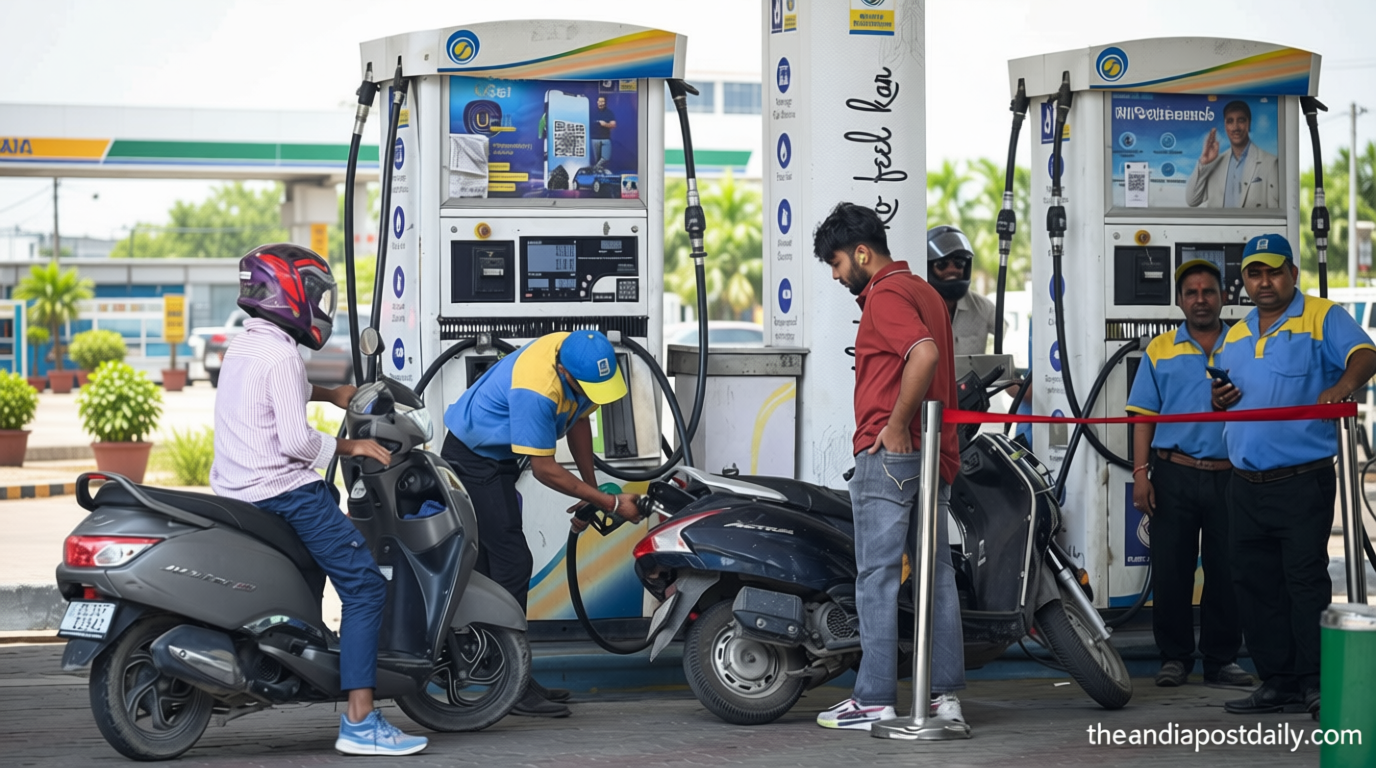
Petrol diesel prices today on 26 July continue to show remarkable stability across major metropolitan cities in India. Retail fuel costs in Delhi, Mumbai, Bengaluru, and Kolkata have remained virtually unchanged since the last significant revision on 25 May. During that adjustment period, government-owned oil marketing companies raised prices by Rs2.61 to ₹2.71 per litre for both petrol and diesel. This pricing mechanism provides Indian consumers with a buffer against volatile international energy markets, ensuring that domestic fuel costs remain predictable for millions of households and businesses.
International Oil Markets Respond to Middle East Developments
The global oil market has experienced considerable turbulence in recent weeks, with Brent crude oil prices surging approximately 27% over a fourteen-day period. This dramatic increase followed heightened military confrontations between the United States and Iran. According to Bloomberg reports, the benchmark crude oil closed at $96.78 per barrel on Friday, reflecting ongoing concerns about supply disruptions in the region.
Both nations are engaged in a strategic competition for control over the Strait of Hormuz, which serves as a vital maritime corridor handling twenty percent of worldwide oil and gas trade. Although a ceasefire agreement was established on 17 June, analysts suggest that a full recovery in market confidence remains distant. Recent escalations in hostilities have caused oil tanker movements through the Persian Gulf to experience significant delays and interruptions.
Adding to regional complexities, Yemen’s Iran-aligned Houthi forces have opened a secondary front of conflict, generating additional pressure on energy supply chains through the Red Sea shipping route. This multi-dimensional challenge has kept international oil prices elevated despite various diplomatic efforts.
India’s Strategic Position in Global Energy Markets
Concerns regarding energy security prompted India’s Ministry of Petroleum and Natural Gas to release an official statement on 25 July. The ministry emphasized that the nation operates twenty-three refineries capable of processing crude oil into diverse petroleum products. These critical facilities serve transportation networks, aviation companies, manufacturing sectors, agricultural operations, and millions of residential consumers across the country.
A follow-up communication posted on X highlighted India’s emergence as a leading refining hub. The country not only meets growing domestic energy demands but also exports high-quality petroleum products to numerous international destinations. This dual capability enhances global energy security and reinforces India’s position within the international energy framework.
Washington’s Military Pause and Regional Implications
In a notable development, American military forces suspended bombing operations against Iran for the first time in fourteen days. This temporary halt came even as Houthi rebels targeted Saudi oil facilities at two locations along the Red Sea coast. Reuters reports revealed that Saudi Aramco installations in Jizan and Yanbu sustained damage during Saturday’s attacks.
The Saudi-led coalition swiftly retaliated by striking Houthi military positions later on the same day, as reported by Yemen TV. This counteroffensive targeted the port that serves as the main base for Houthi maritime operations. In response, the rebels announced plans to limit access to Saudi ports and successfully attacked two oil tankers linked to Saudi interests in the Red Sea waters.
President Donald Trump directed armed forces on Friday to avoid further attacks on Iran, according to Axios. White House communications director Steven Cheung clarified the administration’s position in an official statement. He explained that while the president favors diplomatic engagement, Washington retains all necessary options if Iran continues aggressive activities in the Strait of Hormuz or targets allied nations, Bloomberg confirmed.
“President Trump has consistently said he prefers a diplomatic solution, but he continues to retain all options if Iran continues terrorist activities in the Strait of Hormuz or against allies.”
For the most accurate and up-to-date petrol diesel prices today, readers can visit Good Returns to check fuel rates specific to their city on 26 July. These rates reflect the current market conditions and help consumers make informed decisions about their fuel purchases during this period of international uncertainty.
“`