Passport gets costlier from 1 July: Centre raises fees after 14 years, check new rates
The Indian government has announced a notable increase in passport fees, effective from 1
Passport Fees Rise on 1 July: Centre Hikes Costs After 14-Year Gap
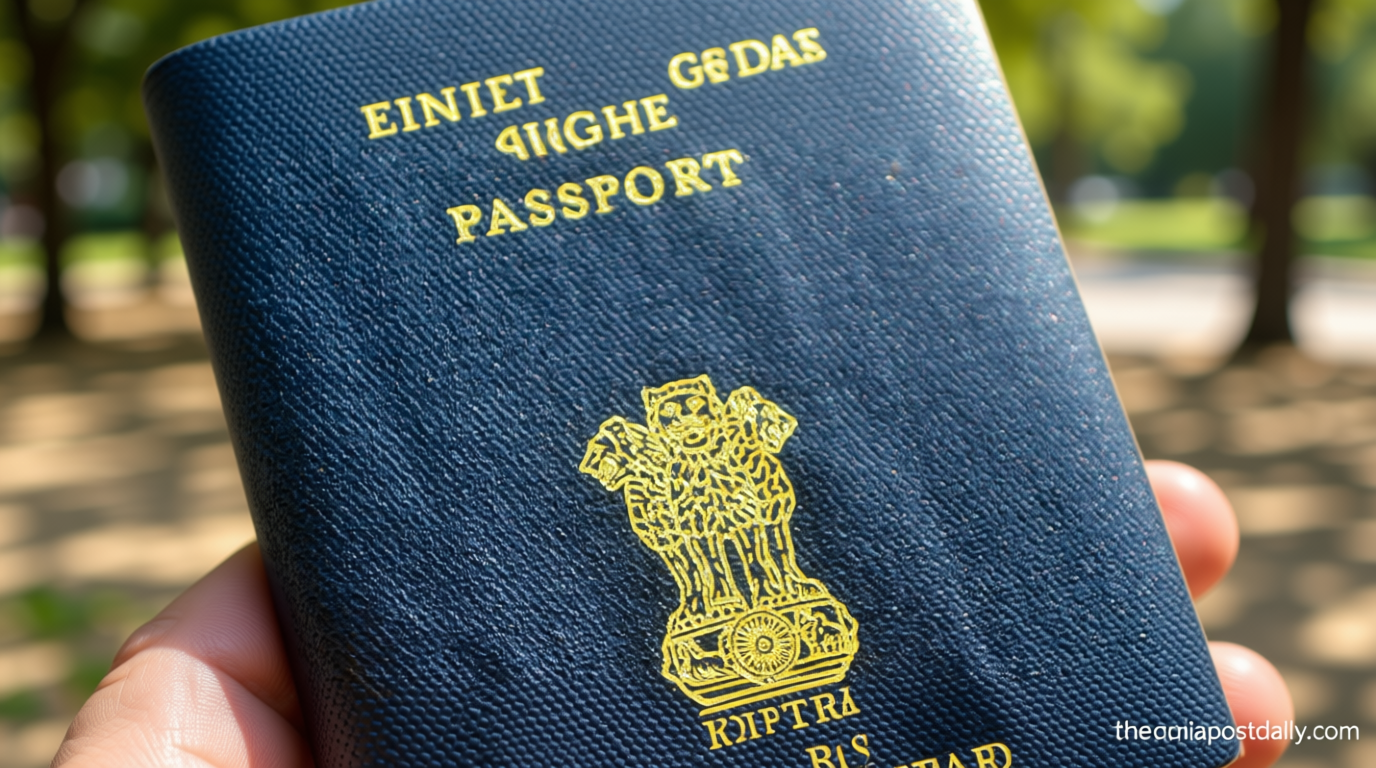
Theindiapostdaily.com – The Indian government has announced a notable increase in passport fees, effective from 1 July, marking the first adjustment in 14 years. This change impacts all applicants, with the cost of a standard 36-page fresh passport rising to ₹2,500 under the regular scheme and ₹5,000 for the expedited Tatkaal option. For 60-page passports, the normal fee is now ₹3,500, while the Tatkaal rate has surged to ₹6,000. Lost or damaged passports also see higher prices, with 60-page versions priced at ₹6,000 (normal) and ₹8,500 (Tatkaal), and 36-page versions at ₹5,000 (normal) and ₹7,500 (Tatkaal). The increase applies to both adults and minors, with children’s fresh passports costing ₹1,750 (up from ₹1,000) and Tatkaal at ₹4,250 (from ₹2,000). This marks a significant shift in the cost of obtaining a passport, raising concerns among citizens and opposition parties.
Clarification on Citizenship and Passport Functionality
On the eve of the fee hike, the Ministry of External Affairs (MEA) clarified that a passport is primarily a travel document, not an official proof of citizenship. The statement, aligned with the Passports Act, 1967, emphasized that citizenship is established through other means, such as birth certificates or naturalization. This clarification, which coincided with the observance of the 14th Passport Seva Divas, sparked debates over the implications for citizens’ rights and identity documentation. Opposition leaders, including Kapil Sibal, highlighted that the government’s stance could create ambiguity in legal matters, as a Bureau of Linguistic Oriental (BLO) might challenge someone’s citizenship status if the passport is not considered a definitive proof.
“A passport is a travel document, and not a document of citizenship. Which document, then, is proof of citizenship?”
These concerns underscore the broader discussion about how the government defines and uses passports as a key identifier for Indian citizens. While the fee increase is separate from this clarification, the two issues have been linked in public discourse, with critics arguing that the rising costs may further complicate access to essential travel documents. The MEA’s statement aims to distinguish the passport’s role in international mobility from its legal status as a citizenship certificate, though the practical implications remain a point of contention.
Fee Adjustments Across Passport Categories
The new fee structure applies to various types of passports, with notable changes for different categories. For adults, the standard fresh passport now costs ₹2,500 (up from ₹1,500), while the Tatkaal service charges ₹5,000 (from ₹2,000). For 60-page passports, the normal fee has been raised to ₹3,500 (previously ₹2,000), and the expedited version to ₹6,000 (up from ₹4,000). Lost or damaged passports for 60 pages are now priced at ₹6,000 (normal) and ₹8,500 (Tatkaal), compared to ₹3,500 and ₹5,500 before. Similarly, 36-page lost or damaged passports cost ₹5,000 (normal) and ₹7,500 (Tatkaal), exceeding previous rates of ₹3,000 and ₹5,000. Minors’ fresh passports now require ₹1,750 (from ₹1,000) under the normal scheme, with Tatkaal at ₹4,250 (up from ₹2,000). Reissuing lost or damaged children’s passports costs ₹4,250 (normal) and ₹6,750 (Tatkaal), reflecting the broader trend of higher fees across all applicant groups.
“The costlier passport fees now affect even minors, with significant increases in both normal and expedited services.”
Alongside the passport fee hike, the government also raised the cost of other related documents. Police clearance certificates in India now cost ₹750, up from ₹500. Emergency Certifications are free domestically but charge $15 for overseas applicants. Certificates of Identity are priced at ₹1,000 in India and $50 abroad, while Surrender Certificates and Global Entry Program verification carry fixed fees of ₹750 in India and $40 internationally. These adjustments highlight the central government’s effort to standardize and streamline the cost of identity and travel-related services, though the impact on citizens remains a subject of scrutiny.
Legal Precedents and Rationale Behind the Hike
The fee increase aligns with a 2013 Bombay High Court ruling that established the passport as a travel document rather than an automatic proof of citizenship. This legal precedent has been cited by the MEA to justify the decision, emphasizing the need to clarify the document’s purpose. The government’s rationale for the hike includes covering operational expenses, inflationary pressures, and the demand for faster service through the Tatkaal scheme. Officials argue that the costlier passport fees ensure the sustainability of passport services and reflect the growing complexity of international travel requirements. However, critics suggest the increase could disproportionately affect lower-income applicants, especially those needing expedited processing.
“The legal basis for the fee hike lies in a 2013 court ruling, which underscores that a passport is not synonymous with citizenship.”
Despite the clarification, the public continues to debate the balance between cost and accessibility. The revised fees have been welcomed by some as a necessary step to modernize the passport system, while others argue that the costlier passport fees may strain the process for frequent travelers and families seeking to obtain documents for their children. As the changes take effect, the Ministry of External Affairs is expected to monitor the impact and address any widespread concerns about affordability and service quality.