Parliament cost to taxpayers: Govt refuses to reveal details in RTI reply. Here’s what it said | Mint Special
Every minute the Houses fail to sit, public money continues to drain into salaries, utilities, security, and administrative overhead. Yet when a Right to
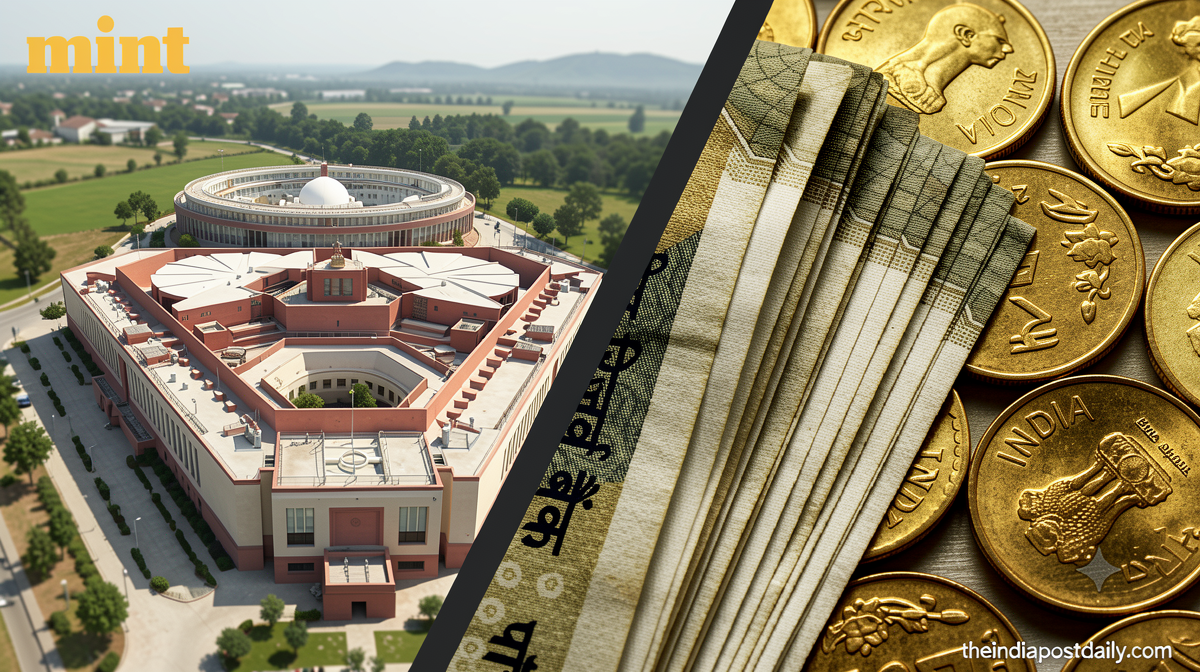
Parliament Cost to taxpayers: Govt Stays Silent
Theindiapostdaily.com – Every minute the Houses fail to sit, public money continues to drain into salaries, utilities, security, and administrative overhead. Yet when a Right to Information applicant pressed the Centre for a hard number on the Parliament cost to taxpayers lost through disruption, the government answered with a single definitional dodge. The episode, unfolding in late summer 2026, has reignited a transparency debate that has simmered since the RTI Act was enacted in 2005.
The trigger was straightforward. On August 13, 2026, an RTI seeker asked the Rajya Sabha Secretariat: “What was the total money lost/wasted due to disruption/loss of sitting time in each of the last 10 Rajya Sabha sessions?” The reply arrived on September 2, routed through the Ministry of Parliamentary Affairs, and contained exactly one substantive sentence:
“The information sought does not constitute ‘information’ under Section 2(f) of the RTI Act, 2005.”
A parallel query sent to the Lok Sabha Secretariat had not been answered as of the time of writing. In effect, the government declined to quantify the Parliament cost to taxpayers associated with wasted sitting hours, choosing instead to argue that no such record exists in its files.
The Definitional Shield
Section 2(f) of the RTI Act casts a wide net: it covers records, documents, memos, e-mails, opinions, advices, press releases, circulars, orders, logbooks, contracts, reports, papers, samples, models, and electronically stored data, plus information about private bodies that a public authority can access under other statutes. By classifying a cost calculation as outside that definition, the Secretariat treats the question as a request for an opinion or projection rather than for a document already in its possession. Transparency advocates have long cautioned that such interpretive shortcuts can convert a disclosure statute into a tool of selective silence.
What the Disruption Actually Cost in Time
The Monsoon Session of 2026 ran from July 20 to August 13. Its opening days were consumed by Opposition demands for an explanation of alleged police action against NEET protesters camped at Jantar Mantar, Delhi, on July 20. The confrontation spilled into the chamber, producing repeated interruptions and forced adjournments. Figures published on the Lok Sabha’s own website recorded 79 hours and 34 minutes of scheduled time lost to those disruptions. Total sitting time for the session — 17 hours and 32 minutes — was the lowest of all eight sessions held during the 18th Lok Sabha’s tenure.
Union Minister for Parliamentary Affairs Kiren Rijiju, addressing the aftermath, attributed the thin legislative output to the Opposition’s choice to stay off the floor. He noted that 11 of the 12 bills passed during the session cleared without a single member participating in debate. Overall productivity, by his account, stood at 19 per cent in the Lok Sabha and 39 per cent in the Rajya Sabha.
The ₹2.5 Lakh-a-Minute Figure and Its Unverifiable Lineage
In the post-session commentary, Supreme Court advocate Mahesh Jethmalani offered what he termed an “old conservative estimate”:
“By old conservative estimate, Parliament costs taxpayers ₹2.5 lakh every minute.”
He was not the first to invoke the number. In 2024, Rajya Sabha member Vikramjit Sahney had made a comparable claim, asserting that each minute of sitting consumes ₹2.5 lakh of public money. Think tank PRS, which has tracked parliamentary cost claims over the years, could identify no official budget document, audit report, or government publication as the origin of the figure. The earliest known data point PRS located was a 2008 discussion paper produced by the Lok Sabha itself, which estimated the cost at roughly ₹29,000 per minute — about one-eighth of the number now circulating in political rhetoric. Four years after that 2008 estimate, then Parliamentary Affairs Minister Pawan Bansal reportedly quoted the ₹2.5 lakh figure in public. PRS noted that no methodology, calculation sheet, or budgetary breakdown accompanied the claim.
FAQ
Why did the government refuse to answer the RTI question? The Rajya Sabha Secretariat stated that the information sought does not constitute “information” under Section 2(f) of the RTI Act, 2005, effectively treating the cost query as a request for an opinion rather than for a record in its possession.
How much sitting time was lost in the Monsoon Session 2026? According to data on the Lok Sabha’s website, 79 hours and 34 minutes of scheduled time was lost to interruptions and forced adjournments. Total recorded sitting time was 17 hours and 32 minutes, the lowest of eight sessions in the 18th Lok Sabha.
Where does the ₹2.5 lakh-per-minute figure come from? No official government source has been identified. PRS traces the earliest known estimate to a 2008 Lok Sabha discussion paper placing the cost at approximately ₹29,000 per minute. The higher figure entered public discourse around 2012 and has been repeated by politicians and advocates since, without a published methodology.
Is the Lok Sabha Secretariat reply available? As of the time of writing, the reply to the parallel query sent to the Lok Sabha Secretariat remained pending.