Over 200 academics criticise Priyanka Gandhi over ‘gaumutra’ remark on IIT professor: ‘Whether intended as sarcasm…’
Over 200 academics criticise Priyanka Gandhi for what they consider a dismissive characterization of a distinguished IIT professor. A coalition of 214
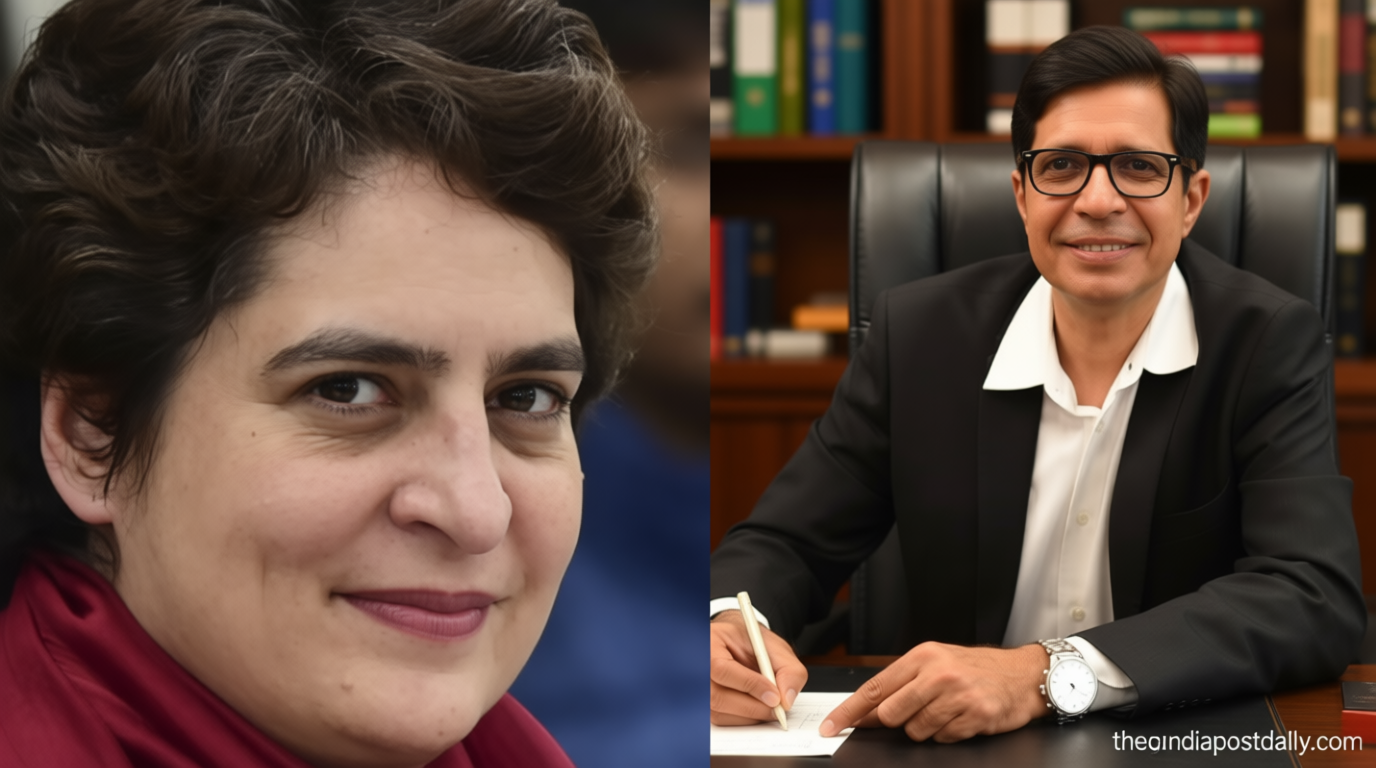
Over 200 Academics Criticise Priyanka Gandhi Over Gaumutra Remark
Theindiapostdaily.com – Over 200 academics criticise Priyanka Gandhi for what they consider a dismissive characterization of a distinguished IIT professor. A coalition of 214 scholars and researchers has issued a formal open letter expressing profound disappointment regarding Congress MP Priyanka Gandhi Vadra’s reference to IIT Madras Director V Kamakoti as a “gaumutra visheshagya” or cow urine specialist. The correspondence emphasizes that regardless of whether the statement was meant as sarcasm or political commentary, such labeling creates broader implications for academic discourse and public understanding of scientific expertise.
Context of the Parliamentary Remark
During Tuesday’s Lok Sabha proceedings concerning the Public Examinations (Prevention of Unfair Means) Amendment Bill, 2026, the Wayanad representative made an indirect reference to Professor Kamakoti. While avoiding explicit naming, her observation was broadly understood to target the academic, who serves as one of six domain specialists on a committee examining the National Testing Agency following the NEET examination controversy. The timing of her comment, coinciding with discussions on examination integrity, added another layer of significance to the remark.
“In this new committee, there is one ex-IB chief, one IT company owner, and one gaumutra expert!”
Gandhi delivered these words while addressing members of Parliament, drawing attention to the diverse backgrounds of committee members. The comparison, though seemingly innocuous, sparked immediate reactions from the academic community who viewed it as an oversimplification of Kamakoti’s extensive contributions to computer science and engineering.
Call for Dignified Parliamentary Discourse
The scholars’ letter, which Livemint obtained, advocates for maintaining Parliament as a space where intellectual exchange occurs with respect. They argue that evaluating individuals based on the quality of their reasoning rather than through reductive caricatures remains essential for democratic deliberation. The academics stressed that parliamentary debates should elevate rather than diminish public understanding of complex issues.
To dismiss a scholar through a label rather than engage with the substance of his views risks undermining the very scientific temper that our Constitution calls upon every citizen to develop.
They further noted that mockery cannot replace thoughtful engagement, particularly when discussing matters of national importance. The letter suggests that such remarks, while perhaps intended lightly, contribute to a culture where expertise is questioned rather than valued.
Professor Kamakoti’s Distinguished Credentials
The three-page correspondence highlights Kamakoti’s distinguished academic record with particular emphasis on his scholarly achievements. He holds both Master of Science and Doctor of Philosophy degrees in Computer Science and Engineering from IIT Madras. His scholarly contributions include more than 150 published research articles and participation in over 50 research and development initiatives spanning multiple decades.
Among his numerous recognitions are the DRDO Academic Excellence Award and the Indian Electronics and Semiconductor Association Techno Visionary Award. Additionally, he played a pivotal role in developing India’s inaugural industry-grade microprocessor. The letter describes him as “one of the country’s leading technology experts,” underscoring the disconnect between his credentials and the simplified characterization.
Notable Signatories to the Open Letter
The open letter bears signatures from distinguished academics and former government officials, demonstrating broad-based concern. These include Dr CSR Prabhu, former Director General of the National Informatics Centre; Dr Appa Rao Podile, ex-Vice-Chancellor of the University of Hyderabad; Dr Santishri Dhulipudi Pandit, Vice-Chancellor of Jawaharlal Nehru University; Dr RD Kulkarni, Vice-Chancellor of the University of Mumbai; Dr VR Desai, Director of IIT Dharwad; and Dr Alok K. Rai, Director of IIM Calcutta.
Equally troubling is the message such remarks send to India’s academic and research community. Our scientists, scholars and educators deserve to know that they can participate in public debate without fear of being reduced to dismissive labels.
The scholars urged that while arguments may be criticized and evidence challenged, scholarship itself should not be diminished. The collective voice of these academics represents a significant moment in Indian political discourse, highlighting the growing expectation for respectful engagement with expertise.
Background to the Gaumutra Controversy
Gandhi’s comments emerged against the backdrop of Kamakoti’s previous statements regarding the medicinal benefits of cow urine. In 2025, when defending his position to NDTV, he explained that scientific research has demonstrated the anti-fungal, anti-bacterial, and anti-inflammatory qualities of cow urine, with peer-reviewed publications from American journals providing supporting evidence. This scientific context, often overlooked in political commentary, adds depth to understanding why the academics felt compelled to respond.
The controversy also reflects broader tensions in Indian politics between traditional knowledge systems and modern scientific approaches. While Kamakoti’s research bridges these domains, the simplified “gaumutra expert” label failed to capture the nuance of his work. The academics’ intervention serves as a reminder that political rhetoric should not overshadow substantive contributions to knowledge and innovation.