Mumbai local train stabbing: Suspect arrested as question remains over passenger safety after second incident in June
Mumbai Local Train Stabbing: Suspect Arrested Amid Passenger Safety Concerns Theindiapostdaily.com – Mumbai’s local train system faced another alarming incident this month, with a suspect in the Mumbai local train…
Mumbai Local Train Stabbing: Suspect Arrested Amid Passenger Safety Concerns
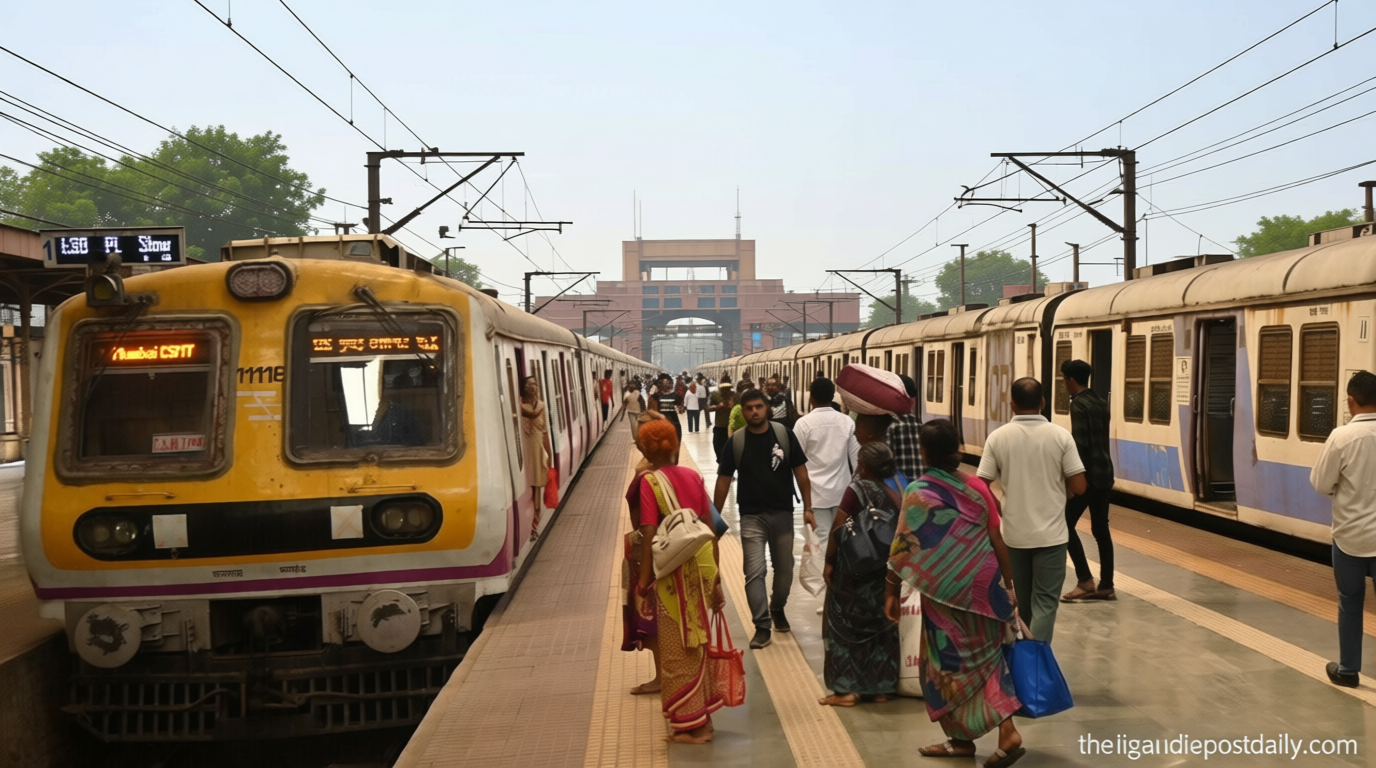
Theindiapostdaily.com – Mumbai’s local train system faced another alarming incident this month, with a suspect in the Mumbai local train stabbing case apprehended by authorities. The arrest came after a meticulous investigation involving over 400 CCTV cameras spread across key stations and surrounding areas, highlighting the growing concerns over safety on the city’s most-used transportation network. The 22-year-old victim, Mayank Lohar, was fatally injured during an attack in a first-class carriage, sparking fears of a potential pattern of violence.
Incident Triggered by Door Dispute
The Mumbai local train stabbing occurred on Tuesday evening as the train traveled between Andheri and Borivali stations. Witnesses reported a heated argument over whether to keep the doors open during a sudden rainstorm, which escalated into a violent confrontation. The accused, 30-year-old Sachin Ramesh Suvarna, allegedly brandished a sharp object called “sattu” and stabbed Lohar multiple times, including in the abdomen and chest, before fleeing the scene.
According to police, the altercation began at Andheri station when Suvarna, a local resident of Mira Road, confronted Lohar over the door disagreement. The attack took place as the train was moving, leaving passengers in shock. Suvarna’s swift actions resulted in the victim’s death, raising questions about the safety of Mumbai’s local trains and the need for improved security measures.
Tracking the Suspect to Panvel
Following the Mumbai local train stabbing, investigators quickly traced Suvarna’s movements using CCTV footage and witness statements. After exiting the train at Borivali station, he returned home and informed his father about the incident before leaving around midnight to evade capture. The police, working alongside technical experts, analyzed video clips from several stations and nearby entry points to piece together Suvarna’s path.
“Technical intelligence and additional clues helped identify the attacker from the video evidence and trace him to Panvel,” said a senior railway police official, citing the Press Trust of India. The weapon used in the attack, a sattu, remains missing, though Suvarna is currently undergoing interrogation to determine his motive and whether he acted alone.
Second Stabbing Incident in June
The Mumbai local train stabbing marks the second such attack on the city’s rail network this month. On June 12, a similar incident occurred when two men assaulted Satish Kumar Bolamani Pathak, a resident of Masjid Bunder, during a journey from Chhatrapati Shivaji Maharaj Terminus to Khopoli. The conflict started over a seat, leading to a knife attack and physical struggle that left the victim with severe injuries.
“Action will be taken against the individual responsible for the Mumbai local train stabbing, who has been arrested. The local train network is essential to Mumbai’s infrastructure. We cannot condemn the entire system due to one isolated incident, nor should its overall safety be questioned,” stated Maharashtra Minister Yogesh Kadam in response to the recent attacks.
Minister Kadam emphasized the need for a balanced approach, acknowledging the severity of the incidents while reassuring the public about ongoing efforts to enhance safety. The ministry has since announced plans to install additional surveillance systems and increase the number of security personnel on trains during peak hours.
Public Reaction and Safety Measures
The Mumbai local train stabbing has triggered widespread anxiety among commuters, with many calling for stricter safety protocols. Social media platforms have seen a surge in posts expressing fear and demanding accountability from the authorities. Passengers now report a noticeable increase in vigilance, with some carrying personal safety devices while traveling.
In light of the recent attacks, the Mumbai Suburban Railway has launched a review of its security measures. Officials are considering the deployment of more CCTV cameras, the introduction of emergency alarm systems, and the training of staff to handle such incidents swiftly. The focus is not only on preventing future Mumbai local train stabbings but also on ensuring a sense of security for the millions who rely on the network daily.
Additionally, local activists have called for a comprehensive safety audit, urging the government to address the root causes of violence on trains. They highlighted the need for increased awareness campaigns and community policing to foster a safer environment for all commuters.
Broader Implications for Urban Transport
The Mumbai local train stabbing serves as a stark reminder of the vulnerabilities in urban public transport systems. With over 4 million daily passengers, the local trains are a lifeline for Mumbai, but incidents like this raise concerns about the adequacy of current safety infrastructure. Experts warn that without proactive measures, such attacks could become more frequent, eroding public confidence in the city’s transportation network.
As the Mumbai local train stabbing investigation continues, authorities are also looking into patterns that might link the two incidents. Questions remain about the role of overcrowding, stress levels among commuters, and the potential for similar attacks in other parts of the city. The focus is now on how to prevent such tragedies and ensure that the safety of passengers remains a top priority.