MSME ministry seeks ₹6,000 crore to sustain khadi, village industries
The Union Ministry of Micro, Small and Medium Enterprises has proposed an outlay of ₹6,000 crore to keep its Khadi Gramodyog Vikas Yojana running for another
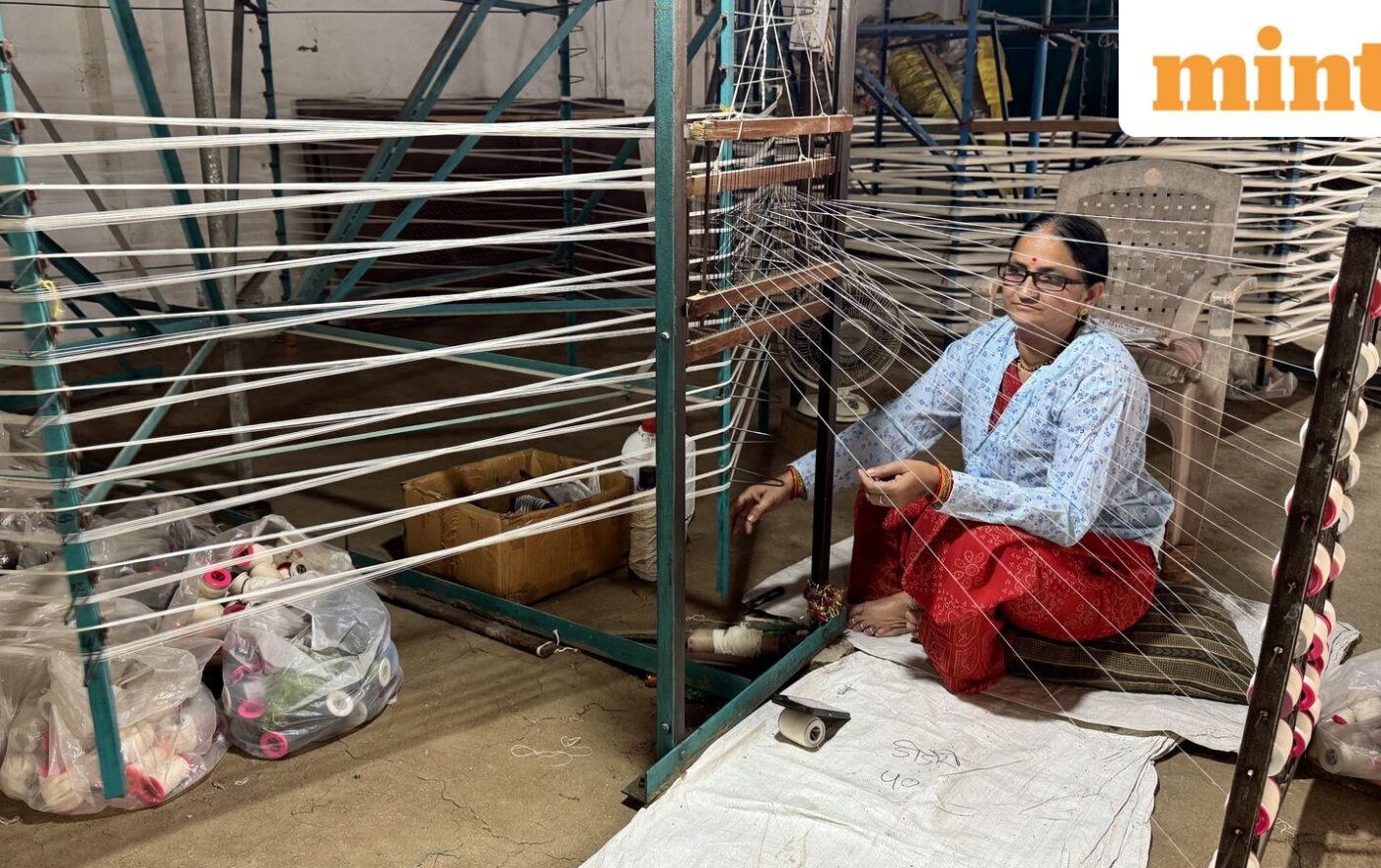
MSME Ministry Seeks ₹6,000 Crore for Khadi and Village Industries Through 2031
Theindiapostdaily.com – The Union Ministry of Micro, Small and Medium Enterprises has proposed an outlay of ₹6,000 crore to keep its Khadi Gramodyog Vikas Yojana running for another five years, through March 2031. The proposal comes as policymakers consider how to maintain support for an ecosystem that provides work and income across rural India.
The programme is designed to assist khadi artisans, village enterprises, women workers, unemployed young people in rural areas and self-help groups. It also supports thousands of small production units whose operations are closely tied to local skills, natural materials and community-based employment.
Its continuation carries both an economic and cultural significance. Khadi remains linked to India’s freedom movement and the idea of self-reliance promoted by Mahatma Gandhi. For many workers, however, the sector is also a practical source of livelihood rather than simply a national symbol.
Khadi and village industries employed about 20.4 million people in fiscal year 2026, highlighting the scale of the sector’s role in rural employment. Government spending under the existing scheme totalled ₹2,374 crore during the three years ending FY26.
Two pillars of support
The Khadi Gramodyog Vikas Yojana has two principal arms. The Khadi Vikas Yojana focuses on promoting and strengthening khadi production. The Gramodyog Vikas Yojana supports village industries through shared facilities, technological upgrades, training programmes and related assistance.
Implementation is supported through the Khadi and Village Industries Commission, or KVIC, a statutory body created under an Act of Parliament in 1956. The commission has long served as a key institution for supporting manufacturing activity in the khadi and village-industry network.
“Discussions are ongoing for the Khadi Gramodyog Vikas Yojana, there are plans to continue the targeted support for that ecosystem,” said a government official.
The proposed funding would provide a longer planning horizon for organisations and producers involved in the sector. Stable programme support can be especially relevant for small enterprises that may not have the financial capacity to invest independently in equipment, training, product development or market access.
Sales and artisan earnings show momentum
Provisional KVIC figures released in May showed that sales of khadi and village-industry products reached ₹1.87 trillion in FY26, a 20% increase from ₹1.55 trillion in the preceding year. Within that total, khadi sales rose to ₹7,869 crore from ₹7,145 crore, representing growth of 10%.
Artisan compensation has also increased over time. KVIC data shows wages reached ₹15 per hank in FY26, compared with ₹4 per hank in FY14. A hank is a measured length of yarn wound into a coil, although its exact length differs across textile types.
These figures point to increased commercial activity, but industry participants say continued progress will require more than budgetary support. Better infrastructure, upgraded production methods and wider market connections remain important for enterprises that often work with limited capital and outside the formal economy.
The challenge is not only to preserve traditional production but to make it viable for contemporary buyers and workers. Customers increasingly expect dependable quality, modern designs and products suited to changing lifestyles. Producers also face pressure to respond to demand for healthier goods, improved textiles and more climate-resilient practices.
Modernisation without losing identity
Industry representatives have argued that India can learn from international approaches while protecting the distinct character of khadi and regional crafts. Japan’s focus on transferring skills between generations, Thailand’s efforts to develop community products for modern markets and France’s recognition of heritage enterprises offer possible reference points.
“International experience offers valuable lessons: Japan’s emphasis on passing skills to the next generation, Thailand’s development of community products for contemporary markets, and France’s recognition of heritage enterprises as businesses of excellence. India can adapt these approaches while protecting the authenticity of khadi, regional craft identities and the interests of producers,” said Vinod Kumar, president of the India SME Forum, an industry lobby group representing around 100,000 MSMEs.
For khadi and village industries, modernisation does not necessarily mean abandoning traditional methods. It can involve access to better common facilities, training in improved processes, stronger branding and closer links between producers and markets. The central concern is whether these changes improve earnings and security for artisans while retaining the authenticity that gives khadi its identity.
Abhay Tilak, director of the Indian School of Political Economy in Pune, said cottage industries should be viewed as partners within broader business networks rather than treated only as small standalone enterprises.
“MSMEs, especially cottage industries, should be looked at as functional partnerships to larger businesses; or as functional relationship builders between the smallest and largest industries, and not just as smaller businesses,” said Tilak.
That perspective places village enterprises within a wider supply-chain and market framework. Small producers can play a role in connecting local craftsmanship with larger commercial opportunities, provided institutions, buyers and policymakers create workable relationships.
Khadi emerged as a powerful expression of independence and self-reliance during British colonial rule, with Gandhi wearing and advocating for it. Its future, though, will depend on whether the sector can meet present-day production and consumer demands while continuing to support the people whose skills sustain it.
“The support provided by KVIC is essential even in today’s world, but the work done to uplift artisans and their businesses needs to adapt,” Tilak added.
The proposed ₹6,000 crore allocation would therefore be more than an extension of an existing scheme. It would be a test of whether policy support can help traditional rural industries retain their heritage while building the capabilities needed for the next phase of growth.
Related Reading
Frequently Asked Questions
What is MSME ministry seeks 6 000 crore?
MSME ministry seeks 6 000 crore is the main topic of this guide. The article explains the context, practical details, and next steps readers should understand.
Why does MSME ministry seeks 6 000 crore matter?
MSME ministry seeks 6 000 crore matters because readers are looking for a useful answer, not just a short summary. Good content should match search intent and help them decide what to do next.