Modi to chair NITI governing council meet amid West Asia crisis
Prime Minister Narendra Modi to Chair NITI Aayog Governing Council Meeting Amid West Asia Crisis Leaders Gather for Strategic Discussions on Economic and Social Priorities Theindiapostdaily.com – Prime Minister Narendra…
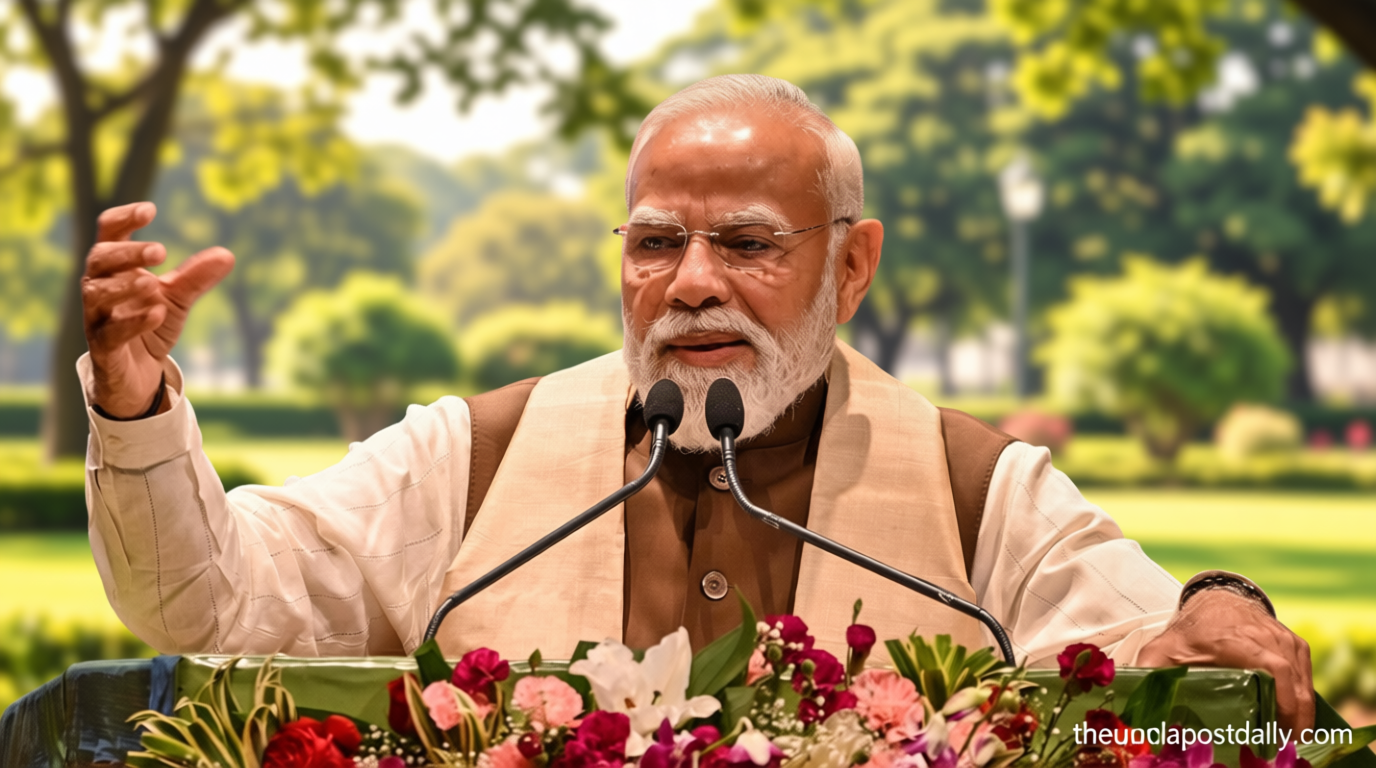
Prime Minister Narendra Modi to Chair NITI Aayog Governing Council Meeting Amid West Asia Crisis
Leaders Gather for Strategic Discussions on Economic and Social Priorities
Theindiapostdaily.com – Prime Minister Narendra Modi is set to chair the upcoming Governing Council meeting of NITI Aayog on Thursday, bringing together chief ministers and lieutenant governors to deliberate on critical national issues. The meeting, held in the backdrop of the ongoing West Asia crisis, underscores the government’s commitment to addressing economic uncertainties while advancing key social development goals. With global markets fluctuating due to geopolitical tensions in the region, Modi’s leadership is expected to focus on how India can maintain stability and foster growth through coordinated policy efforts. The Governing Council, a pivotal body within NITI Aayog, plays a central role in shaping developmental strategies and ensuring alignment between central and state governments. This session will serve as a platform to review progress on initiatives like the Atmanirbhar Bharat campaign and assess their impact on employment and human capital development.
Human Development and Employment at the Core of Agenda
The meeting’s emphasis on human development and employment reflects a strategic shift towards long-term socio-economic resilience. Modi’s government has consistently prioritized these areas, recognizing that a skilled and empowered workforce is essential for sustained growth. In recent years, the administration has launched several programs, including the Skill India Mission and the Mahatma Gandhi National Rural Employment Guarantee Act, to create job opportunities and enhance labor productivity. The discussion will likely cover updates on these schemes, their implementation across states, and ways to address regional disparities. By focusing on human capital, the council aims to build a foundation for India’s economic recovery and strengthen its position in a competitive global market.
As the West Asia crisis intensifies, its ripple effects on India’s economy have become increasingly evident. The conflict has disrupted trade routes, affecting energy prices and agricultural exports, which are vital to India’s economic health. Additionally, the situation has raised concerns about the safety of Indian citizens in the region and the potential for increased geopolitical volatility. Modi’s leadership is expected to address these challenges by exploring diversification strategies for India’s trade partnerships and emphasizing domestic self-reliance. The Prime Minister’s recent emphasis on “Atmanirbhar Bharat” (Self-Reliant India) aligns with the goal of reducing dependency on external markets, a theme likely to be central to the council’s deliberations.
The NITI Aayog Governing Council meeting will also serve as a critical opportunity to evaluate progress on the Sustainable Development Goals (SDGs). With the pandemic and global supply chain disruptions still lingering, the focus on human development remains more urgent than ever. Initiatives like the Jan Dhan Yojana, Ayushman Bharat, and the National Health Mission will be scrutinized for their effectiveness in improving access to healthcare, financial inclusion, and education. Modi’s address to the council is anticipated to highlight the importance of these programs in ensuring inclusive growth and reducing inequality. The Prime Minister has repeatedly stressed that development must be people-centric, and this meeting is expected to reinforce that vision through actionable policy recommendations.
Employment remains a cornerstone of India’s economic strategy, particularly in the context of a labor-intensive economy. The council will likely review the performance of the Pradhan Mantri Rozgar Yojana and other employment schemes, assessing their ability to create sustainable jobs in both urban and rural sectors. With the global labor market facing uncertainties, Modi’s government has sought to position India as a hub for skill development and labor mobility. The meeting may also touch on the role of digital platforms in generating employment opportunities, as well as the need for skilling programs tailored to emerging industries. By integrating employment goals with broader developmental objectives, the council aims to chart a path toward equitable and inclusive growth.
Modi’s leadership during the meeting will be crucial in fostering collaboration between the central and state governments. The Prime Minister has often emphasized the importance of federalism in addressing complex challenges, and this session will provide a platform to reinforce that approach. Discussions may include state-specific strategies for human development, with a focus on leveraging local resources and expertise. The council’s recommendations are expected to guide future policy decisions, ensuring that India’s developmental agenda remains aligned with global trends and domestic needs. As the West Asia crisis continues to impact regional dynamics, the meeting’s outcomes will be closely watched for their implications on India’s economic and social priorities.