‘Misleading and incorrect’: Indian Embassy corrects New York Times, says there’s only ‘Pakistan-occupied Kashmir’
Theindiapostdaily.com – ```html Indian Embassy Challenges New York Times Over Kashmir Terminology The Indian Embassy in the United States has firmly criticized the New York Times for what it described…
Theindiapostdaily.com – “`html
Indian Embassy Challenges New York Times Over Kashmir Terminology
The Indian Embassy in the United States has firmly criticized the New York Times for what it described as a Misleading and incorrect headline regarding Kashmir. The diplomatic mission took to social media platform X to address the publication’s use of the term “Pakistani Kashmir” in its recent article. According to the Embassy’s statement, this terminology fails to accurately represent the disputed region, which should properly be referred to as Pakistan-occupied Kashmir (PoK).
In its official response, the Embassy emphasized that the headline published by the newspaper was both misleading and incorrect. The statement clarified that there is no such entity as “Pakistani Kashmir” in international recognition. Instead, the area in question remains Pakistan-occupied Kashmir, a territory that has been under Pakistani control since the partition of India. The Embassy’s post specifically addressed the @nytimes account, pointing out this fundamental error in geographical terminology.
Historical Context and Territorial Claims
The diplomatic statement went beyond mere terminology correction to reaffirm India’s position on the region. The Embassy declared that the Union Territories of Jammu & Kashmir and Ladakh have always been, continue to be, and will always remain an integral and inalienable part of India. This assertion underscores India’s longstanding claim over the entire region, including areas currently administered by Pakistan.
Furthermore, the Embassy highlighted that Pakistan has illegally occupied portions of these territories. The statement noted that the occupying power is now employing violence against the local population residing in the occupied areas. This additional context provides readers with a clearer understanding of why the terminology matters beyond mere semantics.
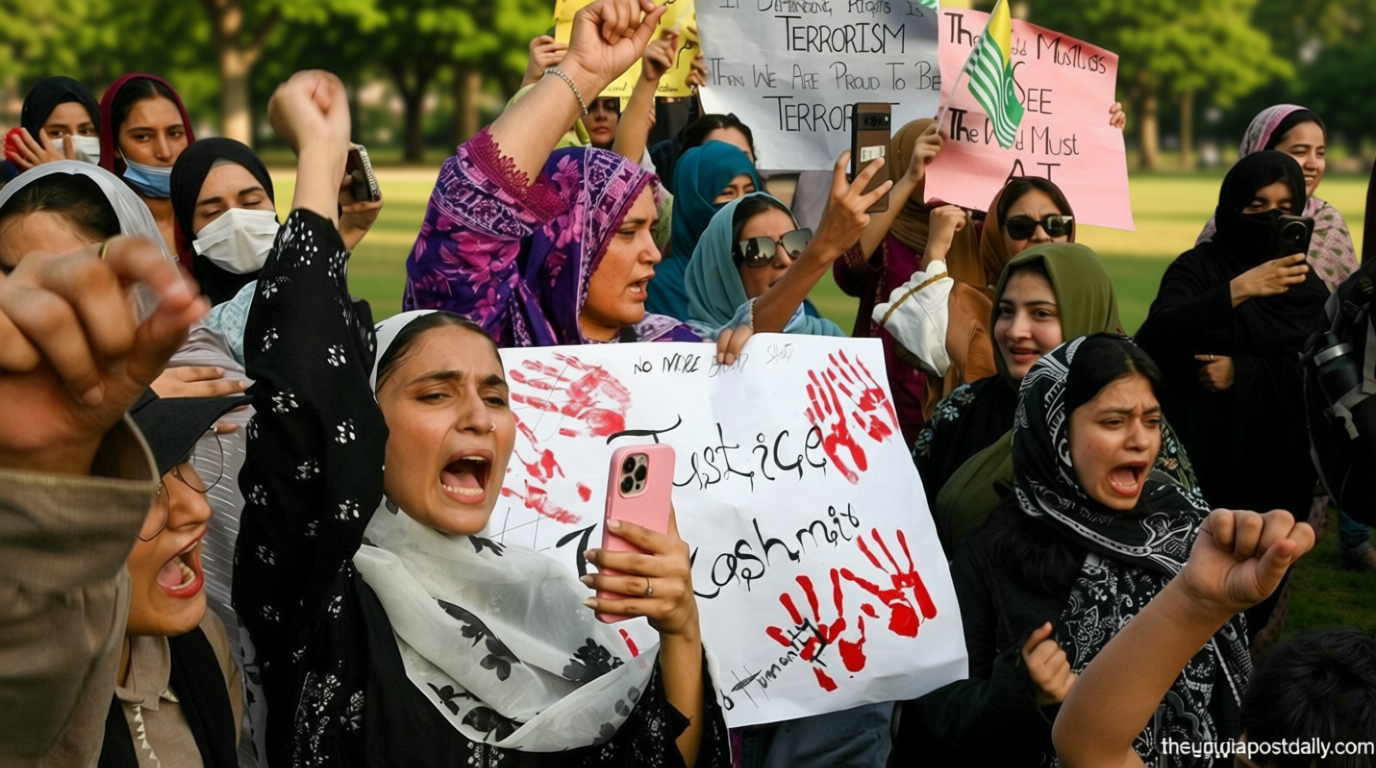
The correction came in response to a New York Times article covering recent violence and unrest in Pakistan-occupied Kashmir. According to the newspaper’s report, clashes erupted in the Mirpur district of PoK between security forces and members of the Joint Awami Action Committee. This civil rights organization had been protesting against alleged police excesses in the region. The incident resulted in two fatalities from gunshot wounds, marking the latest escalation in the area.
Regional Implications and Expert Analysis
The Human Rights Commission of Pakistan has subsequently called for an impartial investigation into the deaths that occurred during the clashes. This development adds another layer to the ongoing situation in the disputed territory.
Meanwhile, former Indian Ambassador to Ukraine, Vidya Bhushan Soni, has offered his perspective on Pakistan’s current challenges. Speaking to ANI, Soni suggested that Pakistani citizens are experiencing growing frustration with their government’s performance on both international and economic fronts. He observed that Islamabad continues to prioritize global issues over domestic concerns.
Soni explained that Pakistanis had initially believed their country could serve as a mediator in regional affairs. They expected this role to bring economic benefits and aid. However, these expectations have not materialized as anticipated. The ambassador noted that this disappointment is manifesting in public demonstrations across Pakistan.
“They are the ones who feel that we must put the pressure because now Pakistan is pushed to the wall,” Soni stated. He described how citizens are taking to the streets to express their frustration, anger, and diminishing patience with the situation. The ambassador concluded that Pakistan needs to address its internal problems before attempting to resolve global issues. “You have to do something about the people, their own people, rather than trying to go and solve the world’s problem; first you solve your own problem back home,” he emphasized in his interview with ANI.