Maharashtra doctors call off strike after HC order: Why they protested, allopathy vs homeopathy explained
Resident doctors in Maharashtra on Thursday called off their indefinite strike after the Bombay High Court directed them to resume work immediately, bringing
Maharashtra doctors call off strike after high court intervention
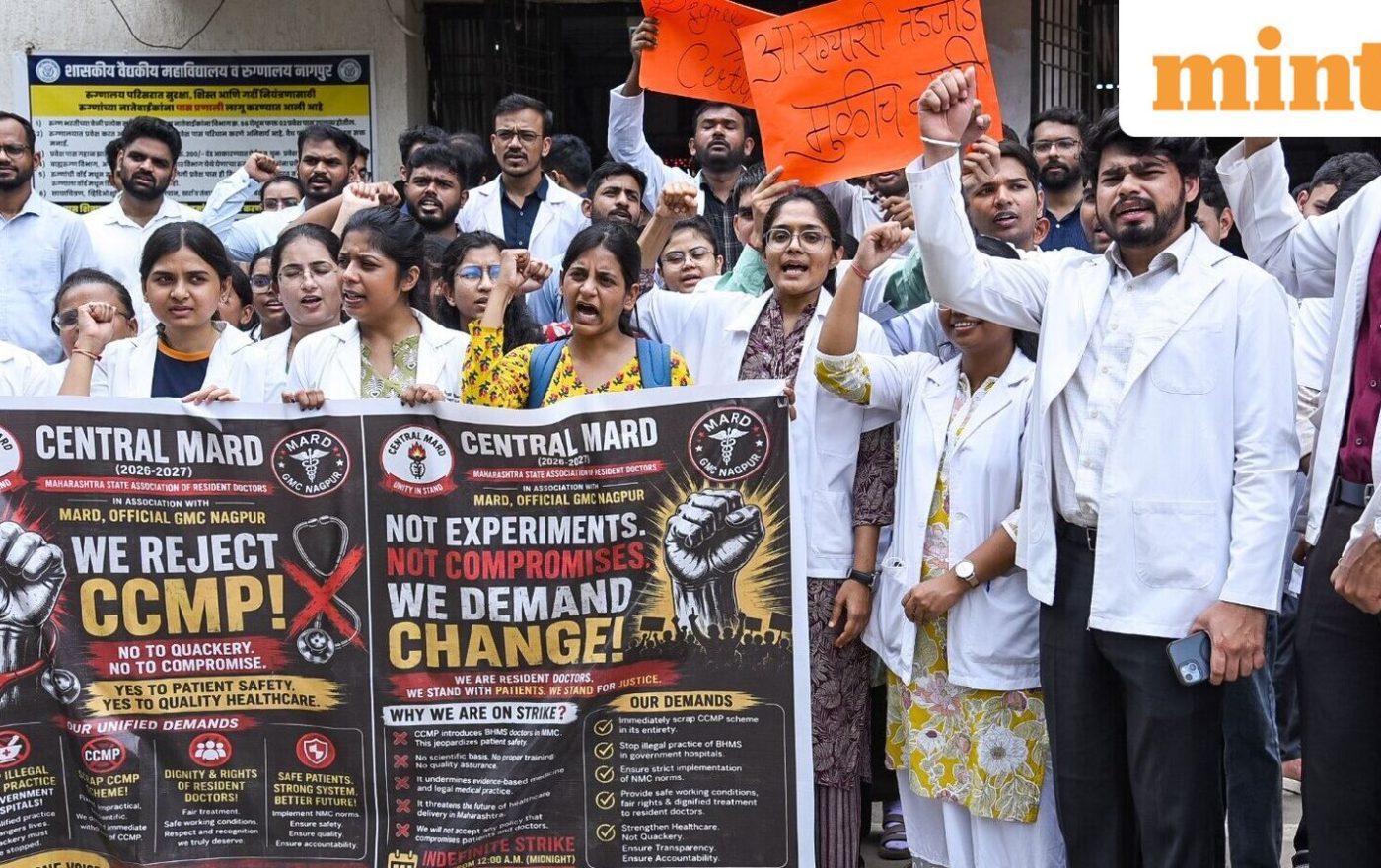
Theindiapostdaily.com – Resident doctors in Maharashtra on Thursday called off their indefinite strike after the Bombay High Court directed them to resume work immediately, bringing relief to public hospitals across the state, PTI reported. The Maharashtra doctors call off strike following this judicial intervention, ending a period of significant disruption to healthcare services that had affected thousands of patients.
The protest, however, has reignited a long-running debate over whether homeopathy practitioners should be allowed to prescribe allopathic medicines and why similar rights granted to ayurvedic practitioners have not sparked comparable opposition. The Maharashtra Association of Resident Doctors (MARD) assured the Bombay High Court that it would withdraw its strike after the court ordered resident doctors to immediately return to duty, expressing concern over the disruption to patient care.
The strike had begun on Wednesday against the Maharashtra government’s decision to allow eligible homeopathy practitioners to register with the Maharashtra Medical Council (MMC). Chief minister Devendra Fadnavis said the state government would comply with the High Court’s directions and urged doctors not to disrupt healthcare services.
“I believe that protests should not be conducted in a manner that disrupts patient care… For the state government, all doctors, regardless of the medical system they practice, are equal,” Fadnavis told reporters.
What the law says
The controversy stems from the Maharashtra Homeopathic Practitioners and Maharashtra Medical Council (Amendment) Act, 2014. The law introduced a one-year bridge course for BHMS graduates. After successfully completing the course, eligible practitioners can prescribe specified allopathic medicines and obtain dual registration with both the Maharashtra Homeopathy Council and the Maharashtra Medical Council.
The legislation has remained tied up in litigation for years. Following directions from the Bombay High Court, the state recently reopened the registration process, prompting resident doctors to launch the strike. According to a TOI report, resident doctors argue that such registration blurs the distinction between modern medicine and homeopathy and could compromise patient safety.
What practitioners say
Homeopathy practitioners argue that they are being treated differently despite seeking rights similar to those already available to ayurvedic practitioners. A Maharashtra Homeopathy Council member questioned why ayurveda and Unani practitioners have long been allowed to prescribe certain allopathic medicines without provoking comparable opposition, according to another TOI report.
Homeopathy representatives maintain that the bridge course equips practitioners to prescribe only specified medicines and that the move would improve access to healthcare, especially in underserved regions. The Maharashtra Medical Council recently registered its first homeopathy practitioner under the amended law, triggering the latest protests.
Impact on healthcare services
Before being withdrawn, the strike affected services at government hospitals across Maharashtra. Around 12,000 resident doctors, including nearly 2,000 from Mumbai’s civic medical colleges, participated in the protest. Routine outpatient departments (OPDs), elective surgeries, laboratory services and non-critical emergency care were disrupted at several hospitals, with senior doctors and interns stepping in to manage patients.
The Indian Medical Association (IMA) also warned that it could launch a nationwide protest if the Maharashtra government does not reverse the decision permitting homeopathy practitioners to prescribe modern medicines. The situation highlights the ongoing tension between traditional and modern medical practices in India’s healthcare system.
Frequently Asked Questions
Why did Maharashtra doctors go on strike?
Resident doctors in Maharashtra went on strike to protest against the state government’s decision to allow eligible homeopathy practitioners to register with the Maharashtra Medical Council and prescribe allopathic medicines after completing a bridge course.
What is the bridge course for homeopathy practitioners?
The one-year bridge course was introduced under the Maharashtra Homeopathic Practitioners and Maharashtra Medical Council (Amendment) Act, 2014. It enables BHMS graduates to prescribe specified allopathic medicines and obtain dual registration.
How many doctors participated in the strike?
Around 12,000 resident doctors participated in the strike, including nearly 2,000 from Mumbai’s civic medical colleges. The strike affected services at government hospitals across the state.
What was the high court’s order?
The Bombay High Court directed resident doctors to resume work immediately. Following this order, the Maharashtra doctors call off strike and assured the court that they would withdraw their indefinite protest.