Indian envoy slams Pakistan at UNGA for raising J&K issue, says Kashmir an integral part of India
During a heated address at the United Nations General Assembly
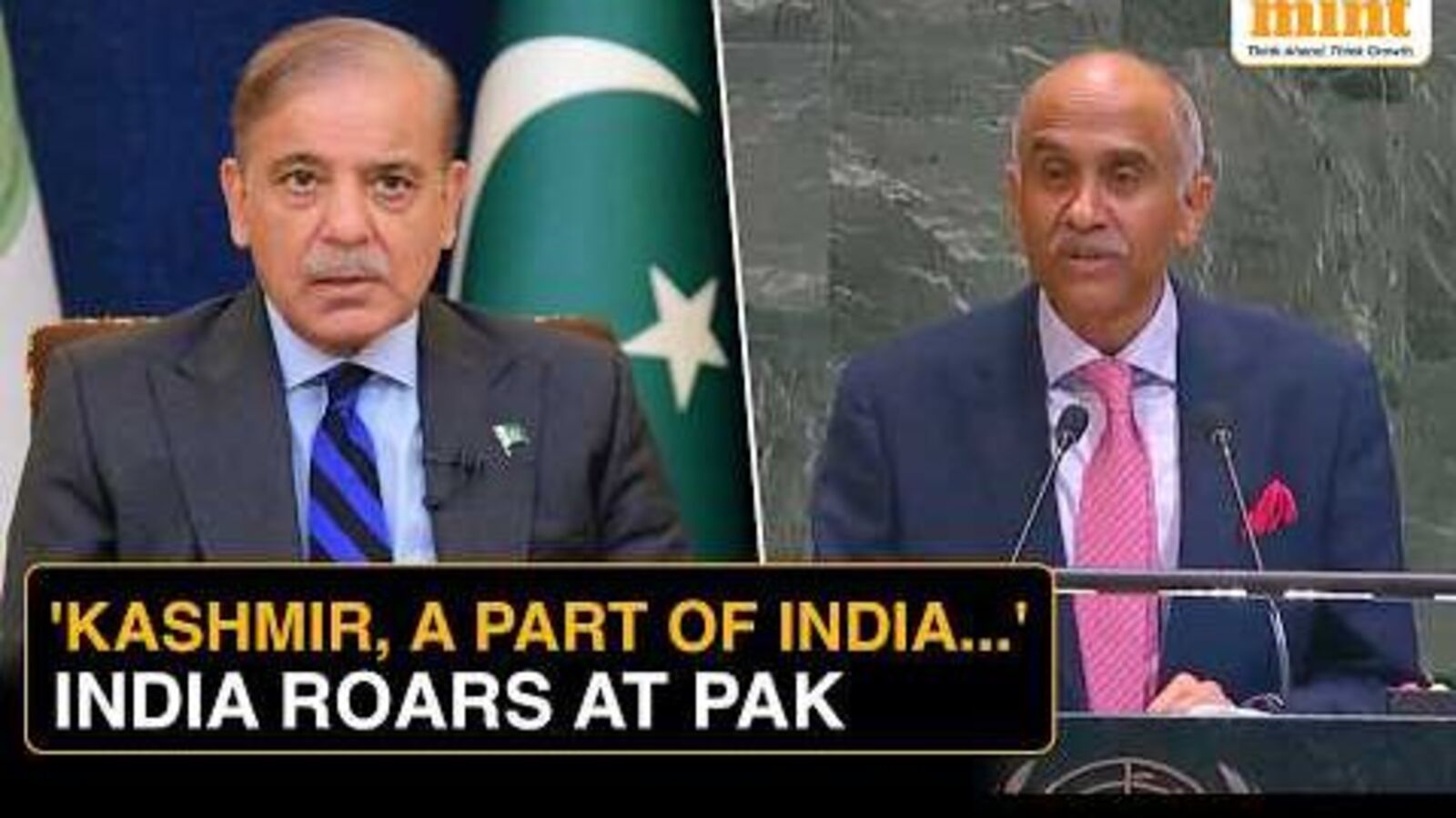
Indian Envoy Slams Pakistan at UNGA Over Kashmir Issue
Theindiapostdaily.com – During a heated address at the United Nations General Assembly (UNGA) on Friday, India’s Permanent Representative, Parvathaneni Harish, directly criticized Pakistan for its repeated attempts to raise the Jammu and Kashmir issue in the global forum. The focus keyword Indian envoy slams Pakistan at UNGA encapsulated the core of his remarks, as he highlighted the strategic and diplomatic implications of Pakistan’s actions. Harish argued that the UNGA is not the appropriate venue for Pakistan to assert its claims on Kashmir, emphasizing that the issue is deeply tied to India’s sovereignty and territorial integrity.
Security Council Misuse Accused
Harish accused Pakistan of leveraging the UNGA as a platform to advance its political agenda, particularly by weaponizing the Kashmir issue to gain international sympathy. He stressed that the Security Council, which holds the authority to address global security matters, should not be used to spread “prejudiced and misleading narratives” about India’s internal affairs. “The reference to Kashmir as a matter of international dispute is an overreach,” Harish stated, calling for a more focused and fact-based approach in multilateral discussions.
“Pakistan’s insistence on elevating the Kashmir issue at the UNGA, despite its status as an internal matter, is a calculated effort to divert attention from its own shortcomings,” Harish said. This statement underscored India’s broader strategy to position the UNGA as a stage for defending its territorial claims. Harish also noted that the Council’s current composition, with five permanent members and ten non-permanent members, has not kept pace with evolving geopolitical realities, further complicating its role in resolving such disputes.
India’s Defiant Position on Kashmir
Throughout the speech, Harish reiterated India’s firm stance that Jammu and Kashmir is an inseparable part of the nation, refuting Pakistan’s historical and political assertions. He cited the region’s integration into India since 1947 and emphasized that its status is supported by international law and historical evidence. “Kashmir has always been a part of India, and any attempt to challenge this is not only unjustified but also politically motivated,” Harish declared. His remarks were aimed at reinforcing India’s narrative and countering Pakistan’s influence in the international arena.
Harish also highlighted the importance of maintaining the UNGA as a neutral ground for dialogue, urging member states to prioritize factual accuracy over emotional appeals. He pointed out that Pakistan’s frequent references to Kashmir in the Council’s sessions have created a pattern of undermining India’s credibility. “The Kashmir issue should not be used as a tool to weaken India’s diplomatic standing,” he said, emphasizing the need for a balanced and objective discourse on the matter.
Reforms to Strengthen the Security Council
Building on the discussion of the Kashmir issue, Harish extended his critique to the structure of the Security Council itself. He argued that the Council’s current framework, unchanged since 1945, has failed to represent the contemporary world order. “The Security Council must evolve to reflect the realities of today’s global governance,” Harish stated, advocating for expanding its membership to include more nations from Africa, Asia, and Latin America. This call for reform aligns with India’s long-standing position to increase the Council’s representation, a goal supported by the G4 nations.
India’s push for Security Council reform has gained momentum in recent years, with Harish pointing out that the nation’s non-permanent membership in the Council from 2021 to 2022 provided a unique opportunity to influence the debate. He noted that the UNGA’s role as a platform for political discourse makes it a critical space to address issues like Kashmir, which Pakistan has consistently sought to frame as a global conflict. Harish’s address thus served dual purposes: defending India’s territorial claims and advocating for a more equitable international governance system.
“The UNGA should be a forum for consensus, not a battleground for unproven narratives,” Harish concluded. His remarks were met with applause, reflecting the international community’s recognition of India’s position on Kashmir. By framing the Indian envoy slams Pakistan at UNGA debate within the context of broader institutional reforms, Harish positioned India as a leader in reshaping global diplomacy. This approach not only strengthens India’s argument but also highlights the strategic importance of the UNGA in shaping international perceptions of the Kashmir issue.
As the UNGA session progressed, the tension between India and Pakistan over Kashmir remained a focal point. Harish’s sharp critique of Pakistan’s tactics reinforced India’s determination to assert its claims on the global stage. The speech also underscored the need for greater transparency and accountability in the Security Council, a theme that resonated with many delegates. With Pakistan’s non-permanent term ending this year, the pressure on the Council to reform has intensified, making the Indian envoy slams Pakistan at UNGA moment a significant turning point in the ongoing geopolitical discourse.