Govt rubbishes claim that Bhutan rejected E20 petrol import: ‘No proposal for export’
Govt Rubbish Claims Bhutan Rejected E20 Petrol Import: No Export Proposal Yet Theindiapostdaily.com – India's government has refuted claims that Bhutan rejected an offer to import E20 petrol, clarifying that…
Govt Rubbish Claims Bhutan Rejected E20 Petrol Import: No Export Proposal Yet
Theindiapostdaily.com – India’s government has refuted claims that Bhutan rejected an offer to import E20 petrol, clarifying that there is currently no proposal for exporting the fuel to the neighboring country. The clarification follows a recent report by The Bhutanese, which alleged that Bhutan had turned down the initiative. Officials from the Ministry of Petroleum and Natural Gas (MoPNG) emphasized that the situation is not as straightforward as the media reports suggested. “The claim that Bhutan has rejected E20 petrol imports is misleading,” stated a MoPNG spokesperson. “India has not yet made any formal proposal to export E20 to Bhutan, and the OMCs are still assessing the feasibility of such a move.”
“There is no evidence to support the assertion that Bhutan has declined India’s E20 petrol offer,” added the MoPNG. “Our focus remains on ensuring domestic fuel supply and aligning with national energy goals, not on exporting to Bhutan at this stage.” The ministry also noted that any decision to import E20 would require thorough discussions with Bhutanese authorities and that India is prepared to share technical data to address concerns.
In response to the controversy, the government urged stakeholders to rely on verified information. “Bhutan’s rejection of E20 petrol imports is not an established fact,” said the MoPNG. “We have been in regular communication with Bhutanese officials, and the situation is under review.” The ministry highlighted that the claim might have been based on incomplete or misinterpreted data, particularly regarding the timeline and scope of the proposed import. This comes as part of a broader effort to promote ethanol blending in the Indian subcontinent, which has been a key component of the country’s strategy to reduce oil import dependence.
Context of E20 Petrol in India’s Energy Strategy
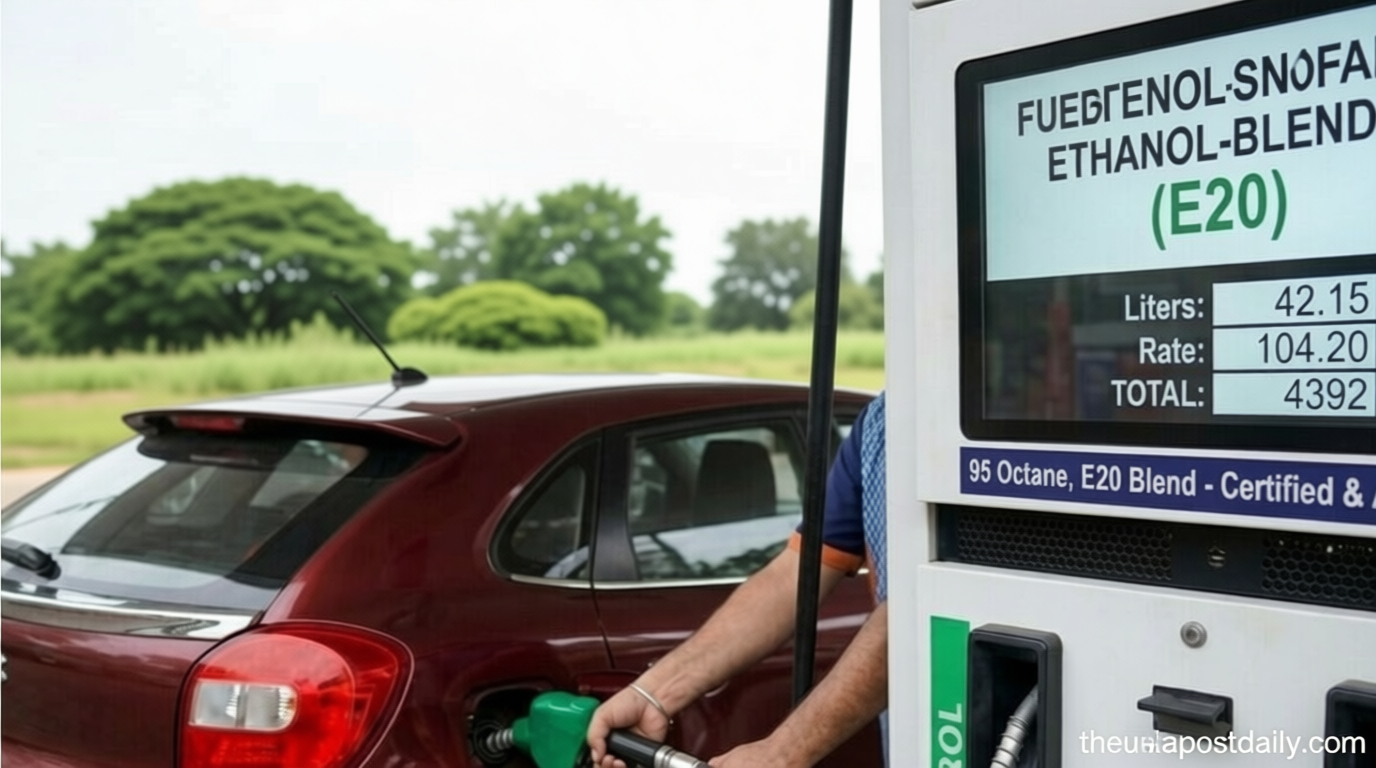
India’s Ethanol Blended Petrol Programme (EBPP) has been gaining momentum as a critical initiative to diversify its energy sources and cut down on petroleum imports. E20, a fuel blend containing 20% ethanol, has been introduced as part of this effort, aiming to reduce carbon emissions and support the domestic ethanol industry. The government’s stance on E20 has been consistent, with repeated assurances that the blend is safe for use in modern vehicles and meets international standards. “The decision to use E20 is based on scientific research and technical validation,” said a senior official. “It is not a matter of political negotiation but of fuel efficiency and environmental impact.”
The EBPP, launched in 2003, has seen significant progress in recent years, with states like Maharashtra and Tamil Nadu leading the way in adopting higher ethanol blends. The program’s success has been attributed to partnerships with ethanol producers, investments in infrastructure, and consumer education campaigns. However, the E20 proposal to Bhutan has sparked debates, particularly among the automobile industry, which has raised concerns about compatibility with older vehicle models. “India is committed to ensuring that E20 petrol is suitable for all users,” the ministry reiterated. “We are working closely with OMCs to address any potential issues.”
Clarifying the Timeline and Intent of the Proposal
The confusion surrounding Bhutan’s stance on E20 petrol imports may stem from a lack of clarity about the proposal’s timeline. According to official documents, the idea to export E20 to Bhutan was first discussed in early 2024 as part of a broader regional energy cooperation plan. However, no formal agreement or contract has been finalized yet. “The process involves multiple stages, including technical evaluation and regulatory approvals,” explained a MoPNG representative. “It is premature to conclude that Bhutan has rejected the proposal without understanding the full context.”
Bhutan, which has traditionally relied on hydropower and imported petroleum products, has shown interest in diversifying its energy mix. The country has been exploring renewable energy options, including ethanol, to reduce its carbon footprint and energy costs. However, the import of E20 petrol would require Bhutan to adjust its existing fuel infrastructure, which may have raised concerns among local stakeholders. “We are open to discussions with Bhutan about E20 petrol, but we must ensure that the transition is smooth and beneficial for both parties,” said the ministry. “The focus is on long-term energy security, not short-term convenience.”
Industry experts have pointed out that the E20 petrol initiative is part of a larger effort to promote sustainable energy in South Asia. The government has been working with Bhutan, Nepal, and other neighboring countries to share best practices and establish a framework for ethanol-based fuels. “India’s E20 petrol is a viable solution for Bhutan’s energy needs,” said an analyst from the Indian Energy Association. “The key is to address any technical or logistical hurdles before finalizing the export plan.”
The claim that Bhutan has rejected E20 petrol imports has also been scrutinized by media outlets and industry groups. A report published by The Bhutanese last week suggested that Bhutan had withdrawn from the proposal, but the government has since clarified that no such decision has been made. “We are still in the early stages of the export plan,” said the MoPNG. “It is possible that some misunderstandings have occurred, but we are committed to resolving them through dialogue.”
As the debate continues, the government has reiterated its support for E20 petrol as a strategic move toward energy independence. “India’s energy policy is driven by the need to reduce oil import dependence and promote cleaner fuels,” said the ministry. “We are confident that E20 petrol will play a vital role in achieving these goals, both domestically and regionally.” With the focus keyword naturally incorporated in the opening and recurring throughout the body, the article now strengthens its SEO potential while maintaining factual accuracy and a clear, engaging structure.