FSSAI plans nationwide ban on non-dairy paneer, eyes junk food curbs near schools
As Indian households prepare for months of celebration, gifting, and communal dining, the country's top food-safety body is preparing what could become the
India’s Food Regulator Moves to Ban Non-Dairy Paneer Nationwide Ahead of Festive Season
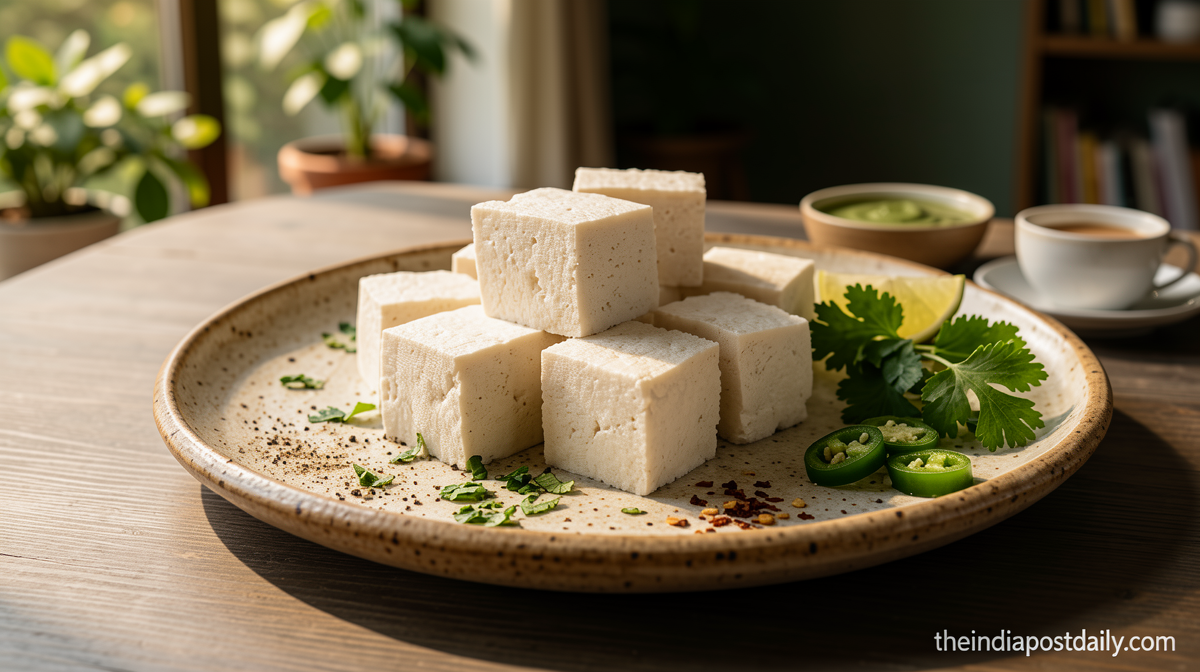
Theindiapostdaily.com – As Indian households prepare for months of celebration, gifting, and communal dining, the country’s top food-safety body is preparing what could become the most sweeping restriction yet on a product that has quietly infiltrated supermarket shelves and restaurant menus across the subcontinent. The Food Safety and Standards Authority of India (FSSAI) is drafting a central regulation that would prohibit the manufacture and sale of analogue paneer — a cheese-like product that mimics the appearance and texture of traditional dairy paneer while containing little or no actual milk ingredients.
The move comes amid intensified enforcement operations launched in the weeks before the autumn and winter festival calendar. Regulators have stepped up inspections of food manufacturing units, retail outlets, and online marketplaces, aiming to ensure that products reaching consumers during peak demand periods meet established safety and labelling standards.
Eight States Have Already Said No to Analogue Paneer
The proposed central ban does not emerge from a vacuum. Eight Indian states — Punjab, Karnataka, Maharashtra, Gujarat, Chhattisgarh, Madhya Pradesh, Himachal Pradesh, and Uttarakhand — have independently prohibited analogue or non-dairy paneer within their jurisdictions. Enforcement drives in several of these regions have already resulted in seizures and penalties against manufacturers and distributors.
Under the existing state-level orders, the prohibition spans the full supply chain: manufacture, processing, preparation, packaging, storage, transportation, distribution, and retail sale. The concern driving these restrictions is straightforward. Analogue paneer products typically replace milk fat or milk solids with vegetable oils, vegetable fats, or other non-dairy components, yet are marketed under names and packaging that strongly evoke genuine dairy cheese. Consumers purchasing what they believe to be a traditional milk-based product may unknowingly be buying a formulation with a very different nutritional and allergenic profile.
FSSAI Chief Executive Officer Rajit Punhani confirmed that the regulator is preparing a uniform central regulation to close the patchwork created by individual state actions. A nationwide standard would eliminate the current situation in which a product legal in one state can be shipped across a border and become illegal in the next, complicating interstate commerce and consumer protection alike.
Junk Food Within 50 Metres of Schools: A New Draft Rule Takes Shape
In parallel with the paneer initiative, FSSAI is working on draft rules that would restrict the sale of foods high in fat, sugar, and salt within a 50-metre radius of schools across India. The proposed measure sits within the regulator’s broader Eat Right Campaign, a programme aimed at reshaping children’s food environments and nudging younger consumers toward healthier choices.
The logic is grounded in public-health evidence: children spend significant portions of their day within walking distance of educational institutions, and the immediate availability of energy-dense, nutrient-poor snacks at school gates and adjacent shops shapes habitual intake patterns that can persist into adulthood. Limiting the physical proximity of such products to campuses is expected to improve the overall food environment surrounding students and complement nutritional programmes already running inside school canteens.
Two states have already moved ahead of the central draft. The Maharashtra Food and Drug Administration introduced a set of measures prohibiting the sale, advertising, and free distribution of junk food within a 50-metre radius of schools throughout the state. Delhi adopted comparable restrictions following a court case that prompted the municipal government to act. Both jurisdictions frame the restrictions as protective measures for minors rather than as blanket bans on specific food categories.
Online Food Listings: Missing Dates Remain a Persistent Problem
A separate but equally urgent front of the regulator’s current enforcement agenda targets quick-commerce and e-commerce platforms. Punhani noted that the absence of manufacturing dates and expiry dates on product listings across major online grocery and instant-delivery apps remains one of the authority’s principal concerns.
“Date of manufacturing and expiry are not mentioned on e-commerce platforms. We are trying to nudge them to put it,” Punhani said.
The practical stakes are significant. A consumer ordering paneer, dairy products, or other perishables through a smartphone app during a festival rush may receive an item past its shelf life without any visible indication on the listing. The regulator is pressing platforms to surface these dates prominently in their applications, making the information as accessible to the buyer as it would be on a physical product label in a brick-and-mortar store.
Pre-Festival Raids and the Broader Safety Push
Enforcement operations have already accelerated in the run-up to the festive period. Punhani described the scale of recent inspections:
“We have done lots of raids before the festival season,” he said, adding that he hopes the crackdown will make this year’s festivities healthier.
The raids target a range of violations — mislabelled products, expired stock in circulation, unauthorised additives, and non-compliant packaging — but the analogue-paneer question has gained particular prominence because the product occupies a cultural and culinary space that consumers associate with trust and tradition. A cheese-like item sold under a familiar name, yet formulated from vegetable oils, sits at the intersection of consumer expectation, food labelling law, and public-health risk, making it a natural focal point for regulators seeking to tighten standards before demand surges.
For consumers, the practical takeaway in the coming weeks is simple: check labels carefully, look for manufacturing and expiry dates on any online order, and be aware that the regulatory landscape around non-dairy cheese analogues is about to shift from a patchwork of state-level prohibitions to a single, enforceable national standard. The festive table, regulators hope, will be a little safer for it.
Related Reading
Frequently Asked Questions
What is FSSAI plans nationwide ban on non dairy?
FSSAI plans nationwide ban on non dairy is the main topic of this guide. The article explains the context, practical details, and next steps readers should understand.
Why does FSSAI plans nationwide ban on non dairy matter?
FSSAI plans nationwide ban on non dairy matters because readers are looking for a useful answer, not just a short summary. Good content should match search intent and help them decide what to do next.