From Smriti Irani to Pralhad Joshi: 12 years, 5 Education Ministers under NDA—a look at their tenures as Pradhan resigns
Dharmendra Pradhan stepped down from his position as Union Education Minister on Saturday, accepting moral responsibility following the NEET-UG 2026
Education Ministry Leadership Under NDA: A Decade of Change Amidst Controversy
Theindiapostdaily.com – Dharmendra Pradhan stepped down from his position as Union Education Minister on Saturday, accepting moral responsibility following the NEET-UG 2026 examination paper leak scandal. His departure comes after sustained demonstrations across the country spearheaded by the Cockroach Janta Party (CJP), which had been demanding accountability for examination irregularities and systemic reforms in education.
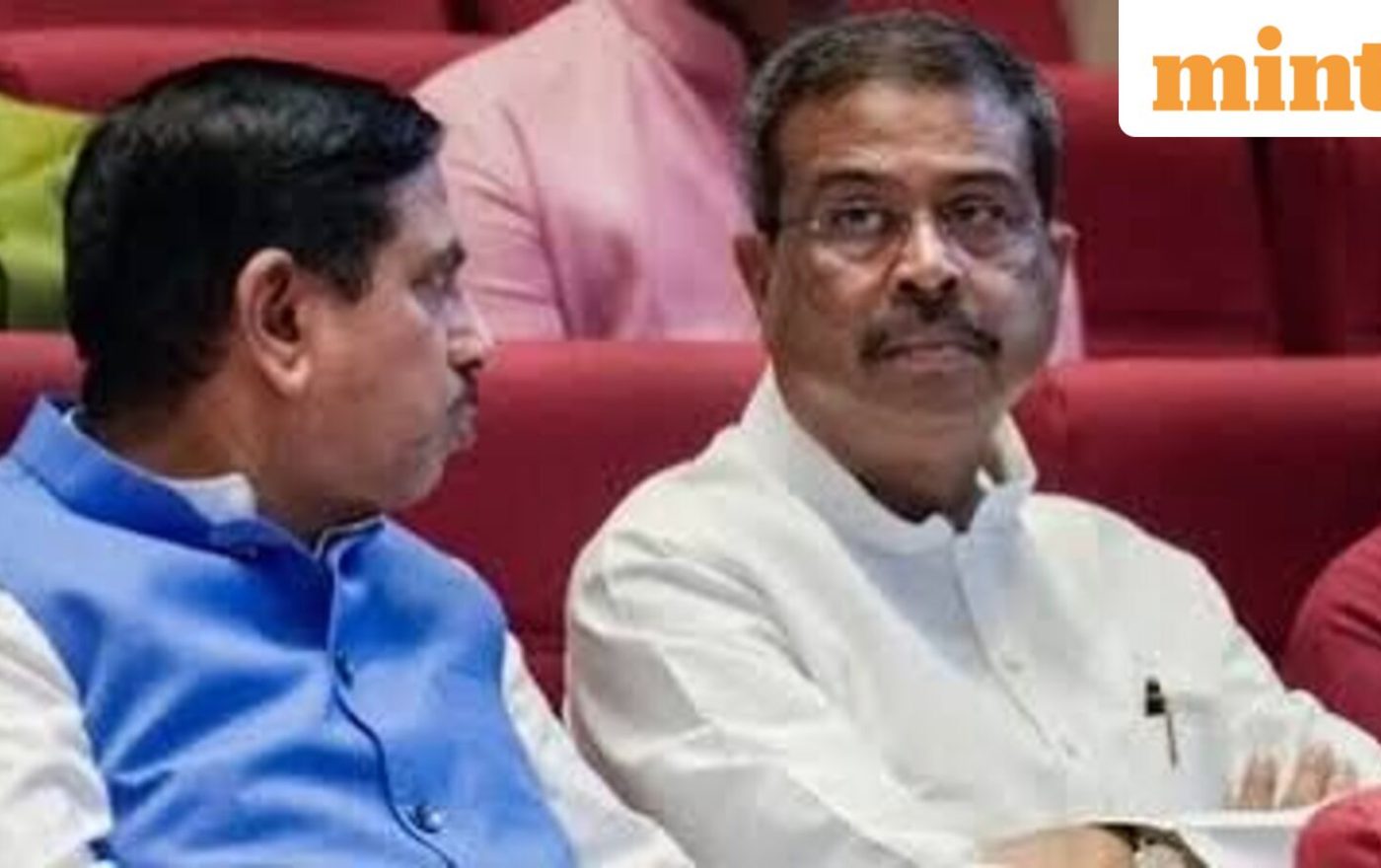
The resignation followed a 37-day period of agitation. In the immediate aftermath, Prahlad Joshi was entrusted with additional responsibilities for the Ministry of Education while maintaining his role as Union Minister for Consumer Affairs.
Pradhan marks the fourth full-time education minister to hold office under Prime Minister Narendra Modi since the NDA assumed power in 2014. Over this twelve-year span, the ministry has managed the implementation of the National Education Policy (NEP) 2020, introduced curriculum modifications, and launched digital learning programs, all while navigating controversies related to board examinations and entrance tests.
Smriti Irani: The Pioneer (May 2014 – July 2016)
When the BJP established its inaugural government in May 2014, Smriti Irani was designated as the Minister of Human Resource Development, making her one of the youngest individuals to oversee this critical portfolio.
Her period in office emphasized broadening access to higher education, enhancing skill development programs, and deploying digital tools within schools and universities. Nevertheless, her tenure encountered political challenges concerning appointments at central universities, discussions around academic independence, and prominent incidents involving Rohith Vemula and JNU that captured national attention.
By July 2016, during the first significant Cabinet reshuffle under the Modi administration, Irani transitioned to the Textiles Ministry.
Prakash Javadekar: Building Foundations (July 2016 – May 2019)
Prakash Javadekar took over from Irani in July 2016 and continued as HRD Minister through the conclusion of the Modi government’s initial term.
Javadekar’s leadership prioritized enhancing learning outcomes in schools, advancing digital education platforms like SWAYAM, increasing online teacher training opportunities, and simplifying higher education regulations. The administration also made substantial progress in formulating a new National Education Policy during this timeframe.
A significant CBSE paper leak scandal emerged in March 2018, affecting both Class 10 Mathematics and Class 12 Economics board examinations. Following revelations that question papers had been shared via WhatsApp prior to the tests, the CBSE organized a nationwide re-examination for the Class 12 Economics paper.
The board initially considered a re-exam for Class 10 Mathematics but subsequently reversed this decision after concluding that the leak’s effects were contained and did not necessitate a comprehensive retest.
Javadekar’s tenure concluded after the BJP secured an expanded mandate in the 2019 Lok Sabha elections.
Ramesh Pokhriyal ‘Nishank’: NEP 2020 Era (May 2019 – July 2021)
Ramesh Pokhriyal, formerly the Chief Minister of Uttarakhand, assumed the HRD Minister position in May 2019.
His tenure is chiefly associated with two transformative achievements. In July 2020, the Union Cabinet endorsed the National Education Policy (NEP) 2020, which superseded the National Policy on Education established in 1986. Concurrently, the ministry underwent a name change from the Ministry of Human Resource Development back to the Ministry of Education, reclaiming its designation from before 1985.
Pokhriyal also guided the education sector through the COVID-19 pandemic, managing online classes, modifying CBSE examination schedules, and promoting digital learning solutions. He tendered his resignation during the July 2021 Cabinet reshuffle.
Dharmendra Pradhan: Navigating Modern Challenges (July 2021 – July 2026)
Dharmendra Pradhan began his term in July 2021 following the Cabinet reshuffle.
Throughout his nearly five-year tenure, the ministry concentrated on executing NEP 2020, modifying the National Curriculum Framework, reinforcing multilingual education, encouraging skill-oriented learning, extending digital education, and reforming national entrance examinations.
However, his concluding years were dominated by recurring controversies surrounding competitive examinations. These began with the NEET-UG and UGC-NET examinations in 2024, when allegations of question paper leaks and compromised examination integrity led the Centre to cancel the UGC-NET exam, initiate a CBI investigation, and announce reforms to the NTA’s operations.
In 2026, new controversies surfaced after the NEET-UG paper leak resulted in the examination’s cancellation, the termination of 47 NTA officials, and criminal proceedings against those allegedly connected to the incident.
Subsequently, allegations regarding a UGC-NET 2026 paper leak further amplified criticism directed at the ministry, culminating in Pradhan’s resignation.