‘Drug cartels don’t respect borders’: India proposes BRICS virtual task force on narcotics
Drug cartels don't respect borders, and India is pushing for a
India Proposes BRICS Virtual Task Force to Combat Drug Cartels
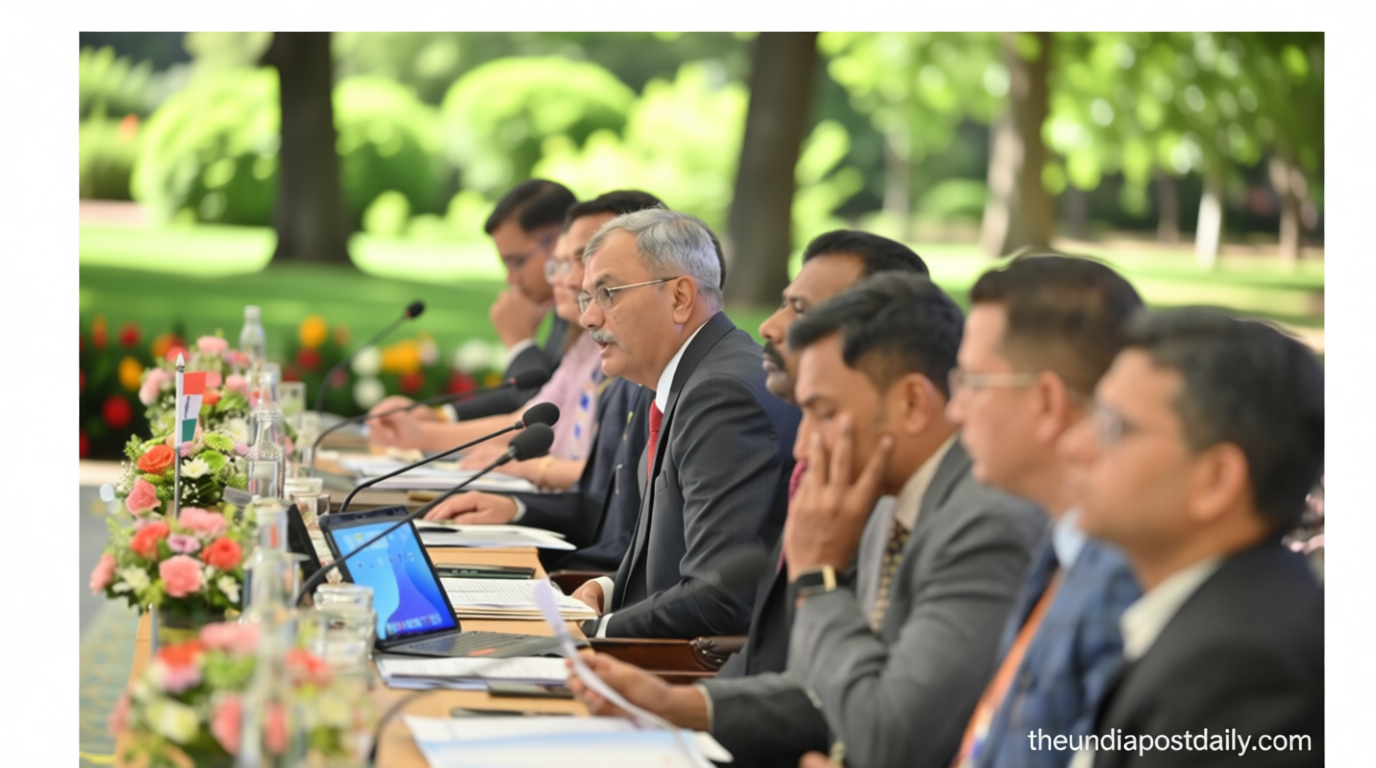
Theindiapostdaily.com – Drug cartels don’t respect borders, and India is pushing for a coordinated response through the BRICS bloc. At a recent summit, representatives from the BRICS nations—Brazil, Russia, India, China, and South Africa—gathered to address the escalating threat of transnational drug trafficking. India, via its Narcotics Control Bureau (NCB), proposed the creation of a BRICS virtual working group to tackle the complex, borderless nature of the narcotics trade. The initiative aims to strengthen intelligence sharing, enhance cross-border operations, and streamline efforts to counter the global spread of illicit drugs.
The NCB’s Director General, Anurag Garg, emphasized that modern drug networks have evolved into a hyper-connected crisis, disregarding traditional national boundaries. “The increasing sophistication of trafficking methods has transformed the problem into a worldwide challenge,” he stated, noting that drug cartels now operate with a level of coordination that demands unified action. The virtual task force is designed to address these trends by fostering real-time collaboration among BRICS members, ensuring that intelligence and resources are leveraged effectively to disrupt the flow of narcotics.
Key Focus Areas of the BRICS Initiative
The summit highlighted three critical focus areas: combating synthetic drugs and precursor chemical diversion, improving intelligence-sharing mechanisms, and enhancing operational coordination. Garg stressed that the task force would serve as a dynamic platform to analyze trafficking patterns, share actionable insights, and execute joint operations swiftly. “This initiative is not just about policy; it’s about creating a framework for rapid, agile responses to the evolving drug trade,” he explained, underscoring the need for a proactive approach to stay ahead of criminal networks.
“I propose the establishment of a BRICS Virtual Working Group to address these rapidly changing dynamics,” Garg said. “This mechanism will enable us to meet regularly, exchange real-time intelligence, and coordinate law enforcement actions seamlessly.” The director general also called for the integration of national and international intelligence agencies, highlighting the importance of a unified Whole-of-Government strategy. Such a system would allow for better tracking of drug routes and faster response times to cross-border incidents.
India’s Strategic Vision for the Task Force
India’s Zero-Tolerance Policy, a cornerstone of its anti-narcotics strategy, will be central to the BRICS task force’s operations. The policy focuses on dismantling trafficking networks, seizing assets to cut off financial resources, and implementing a comprehensive, victim-centric approach to drug addiction. “For India, ‘zero tolerance’ means the complete disruption of trafficking networks and the integration of all intelligence agencies under a unified strategy,” Garg said, emphasizing the need for a holistic approach that combines enforcement with rehabilitation efforts.
The task force will also prioritize the development of specialized training programs for frontline officers, equipping them to handle the challenges posed by drug cartels that don’t respect borders. “Our goal is to create a robust, cross-border law enforcement model that adapts to the demands of the 21st century,” Garg added. This includes leveraging technology for predictive analytics and strengthening partnerships to ensure sustained momentum in the fight against narcotics.
Expanding the BRICS Family
The BRICS bloc has grown significantly since its inception in 2009, now encompassing 11 countries that represent over 49% of the global population, 40% of the world’s GDP, and nearly 26% of global trade. The recent inclusion of Egypt, Ethiopia, Iran, Saudi Arabia, and the UAE in 2024, along with Indonesia in 2025, underscores the bloc’s increasing influence in global affairs. As the task force takes shape, these additional members will bring new perspectives and resources to the fight against drug cartels, particularly in regions where the borderless nature of the trade is most pronounced.
With the expanded BRICS family, the virtual working group will have a broader reach, allowing for the exchange of best practices across diverse regions. This collaboration will be vital in addressing the unique challenges each member country faces, from synthetic drug proliferation in urban centers to the use of darknet platforms for smuggling. By combining the strengths of these nations, the task force aims to create a more resilient network of enforcement and intelligence, capable of countering the ever-evolving tactics of drug cartels that don’t respect borders.