Delhi-Meerut Namo Bharat to get 60% power from ₹450 crore solar plant; when will it start? What does the agreement say?
The Delhi Meerut Namo Bharat to get a dependable, low-carbon electricity supply is moving from policy talk to signed contract. NCRTC has locked in a 25-year
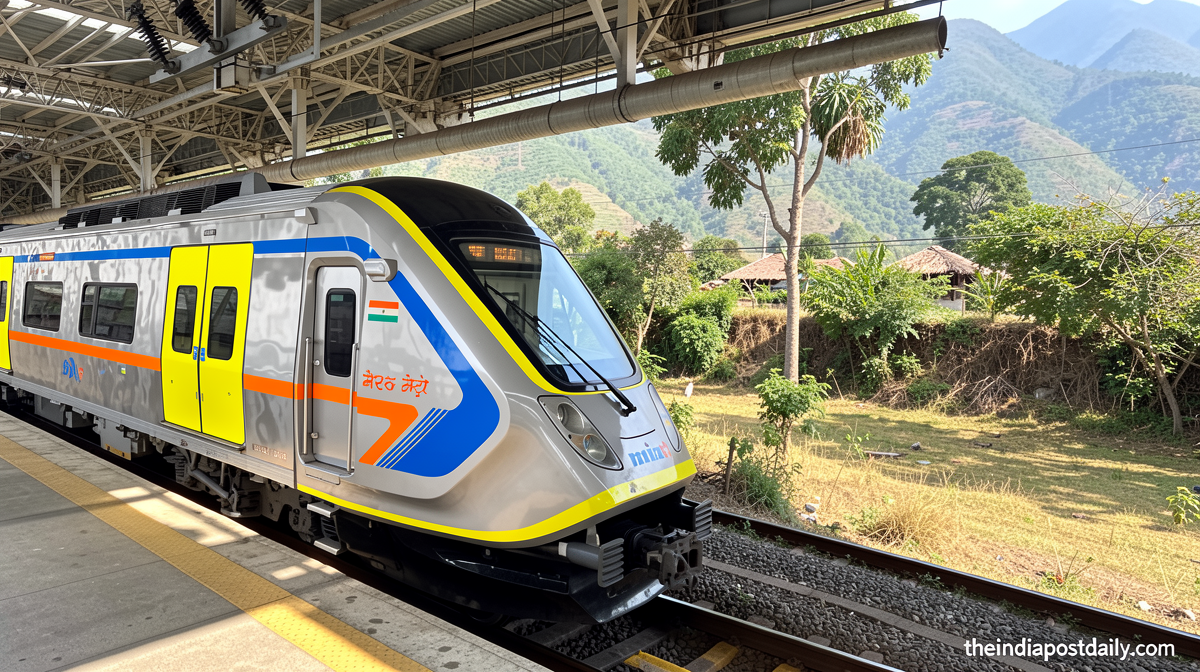
Delhi Meerut Namo Bharat to get 60% solar power
Theindiapostdaily.com – The Delhi Meerut Namo Bharat to get a dependable, low-carbon electricity supply is moving from policy talk to signed contract. NCRTC has locked in a 25-year power purchase agreement for a 110 MW captive solar plant, meaning roughly three-fifths of the corridor’s traction and station power will come from sunlight rather than the thermal grid. The deal, valued at approximately ₹450 crore, is designed to flatten the transit operator’s largest recurring cost line and cut its carbon footprint in one stroke.
The facility will be built at Jaulan in Uttar Pradesh and is expected to reach commercial operation within 24 months of commissioning. Generated power will travel through the UP state transmission grid before feeding NCRTC substations in both Uttar Pradesh and Delhi, from where it distributes along the electrified track.
What the fixed-tariff pact changes for operating costs
Under the agreement, NCRTC commits to buying solar electricity at a pre-negotiated, fixed tariff for two and a half decades. Today, electricity charges absorb between 30% and 35% of the corridor’s total operating spend, making energy procurement one of the single largest budget items. NCRTC estimates the captive plant could trim roughly 25% off annual electricity outlays once fully operational.
The arrangement is explicitly aimed at insulating the corridor from volatile conventional power prices while trimming its carbon footprint. — NCRTC project framing
Beyond the ledger, the plant is projected to keep approximately 1.77 lakh tonnes of CO₂ out of the atmosphere every year, alongside reductions in nitrogen-oxide and sulphur-dioxide emissions tied to fossil-fuel generation.
Who signed, and why the model matters
The power purchase agreement was executed between NCRTC and NIRL NCRTC Renewables Ltd (NNRL), a joint venture pairing the transit operator with NIRL, a wholly owned subsidiary of Neyveli Lignite Corporation. The ceremony drew NCRTC Managing Director Shalabh Goel, NIRL Director (Finance) and designated CMD Prasanna Kumar Acharya, NCRTC Director (Finance) Namita Mehrotra, and Director (Electricals and Rolling Stock) Mahendra Kumar.
NCRTC framed the project as a replicable template: if the Delhi Meerut Namo Bharat corridor can embed captive clean power into its daily operations, other regional rapid-transit and metro networks across India can follow the same playbook, reducing sector-wide exposure to fossil-fuel price swings and regulatory uncertainty.
Ridership context and the next stretch
The solar deal lands as the corridor scales rapidly. Since the full route entered service in February of this year, daily ridership has climbed to roughly one lakh passenger trips, pushing cumulative journeys past the four-crore mark. A single-day record fell on August 28 — the Raksha Bandhan holiday — when more than 1.68 lakh passengers rode in one day, the highest figure logged since full-route operations began. That growth trajectory is precisely why locking in a fixed-tariff solar supply now positions the corridor to absorb future demand without proportional energy-bill inflation.
Separately, NCRTC has released station-level details for the proposed 72.44-km Ghaziabad-Jewar corridor, which would link Ghaziabad station on the existing line to Noida International Airport. The alignment includes 11 stations designated for Namo Bharat services and 18 providing metro interchange. Approximately 71.5 km is planned as elevated track with 1.29 km underground; the project remains in the Detailed Project Report preparation stage.
Frequently asked questions
When will the solar plant begin supplying power? NCRTC projects commercial operation within 24 months of commissioning. Exact dates depend on land handover, grid-connection approvals, and equipment delivery timelines.
How much of the corridor’s electricity will come from the plant? At full capacity the 110 MW installation is expected to cover roughly 60% of the corridor’s total electricity demand, with the remainder sourced from the conventional grid.
What tariff structure applies? The agreement fixes a pre-negotiated per-unit tariff for the full 25-year term, shielding the operator from spot-market and fuel-price volatility.
Where is the plant located? The facility will be sited at Jaulan, Uttar Pradesh, with power transmitted through the UP state grid to NCRTC substations in both UP and Delhi.