‘Deeply offensive’: MEA on JD Vance’s ‘indentured servants’ remark on H-1B workers, clarifies impact on work visa
India has strongly objected to remarks describing H-1B visa holders as “indentured servants”, with the Ministry of External Affairs calling the language
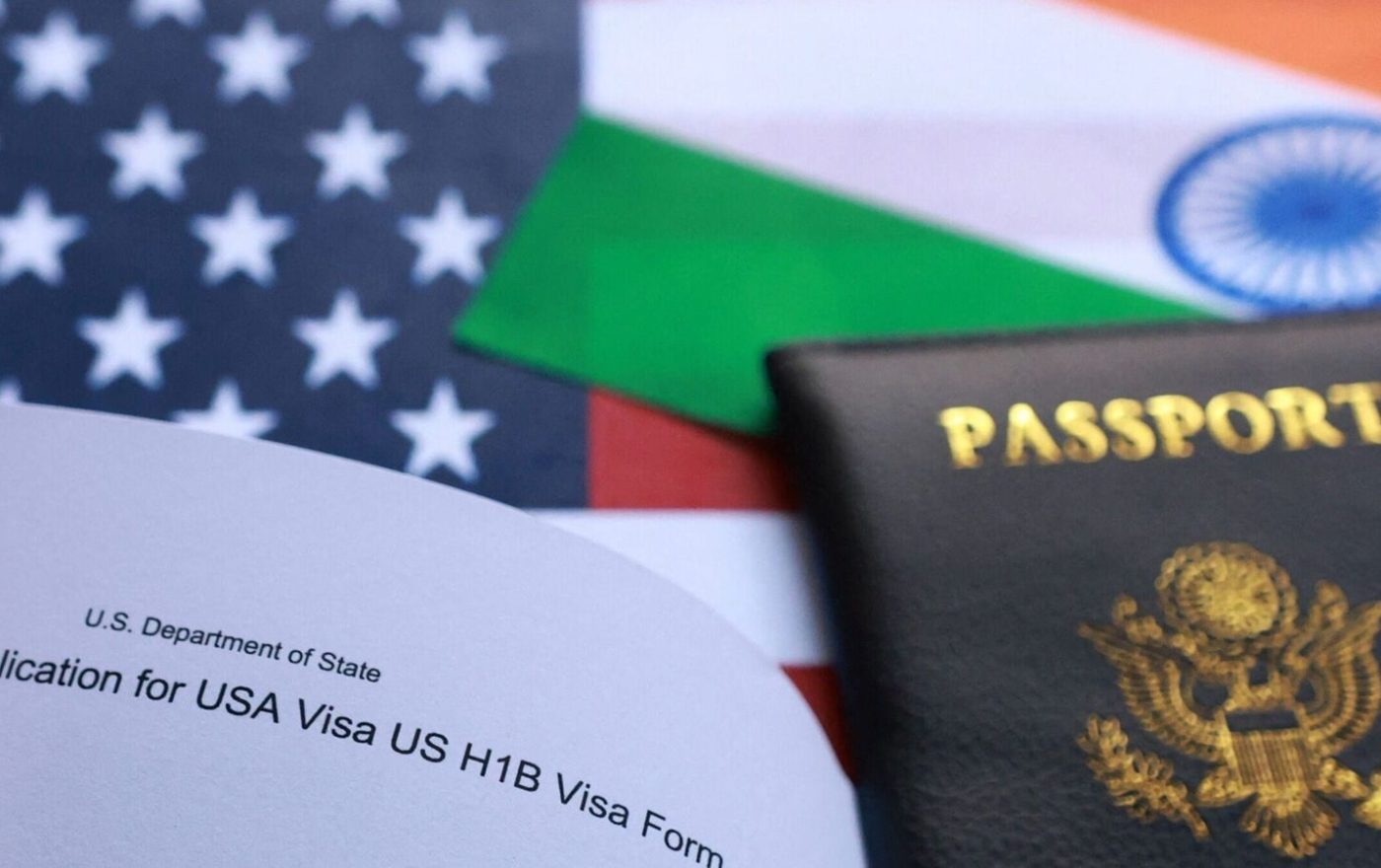
India Pushes Back on ‘Indentured Servants’ Description of H-1B Professionals
Theindiapostdaily.com – India has strongly objected to remarks describing H-1B visa holders as “indentured servants”, with the Ministry of External Affairs calling the language deeply offensive while also clarifying the consequences of a US decision involving permanent-residency applications.
The response came after the US Department of Labor took action concerning the Permanent Labor Certification, or PERM, programme for certain companies. Indian officials sought to distinguish that development from the separate H-1B visa system, stressing that people already working in the United States on valid H-1B visas are not automatically affected by the PERM suspension.
“We are aware of the U.S. Department of Labour’s decision concerning the Permanent Labour Certification (PERM) programme for certain companies.”
PERM is an employment-certification stage commonly used by employers sponsoring eligible workers for permanent residency, often referred to as a Green Card. It is not the same as the H-1B programme, which permits US employers to hire foreign professionals in specialty occupations for temporary work.
H-1B Status Remains Separate From PERM Process
The Ministry of External Affairs said the pause in PERM applications should not be read as a cancellation or invalidation of existing H-1B status. That distinction is particularly important for Indian professionals and their families, since an H-1B visa and an employment-based permanent-residency case operate through different processes.
“It should be noted that PERM is distinct from the H-1B visa programme. The suspension of PERM applications does not, by itself, affect the validity of existing H-1B visas or the status of H-1B visa holders and their dependents, though there could be some impact on the permanent-residency/Green Card process of eligible employees of the affected companies.”
In practical terms, workers with valid H-1B visas and their dependents do not lose their immigration status merely because their employer’s PERM filing is caught by the announced action. However, employees whose route to a Green Card depends on a PERM application could face delays or uncertainty in progressing through the permanent-residency process.
That difference matters because the H-1B programme is tied to temporary employment authorization, while permanent residency involves a longer process that may include labor certification and additional immigration filings. A disruption at the PERM stage can therefore affect a worker’s future immigration planning without necessarily changing their current right to remain employed under a valid H-1B visa.
MEA Highlights Mutual Economic Stakes
India also used its statement to underline the broader economic role of skilled mobility between the two countries. The ministry said professional movement creates benefits for India and the United States, rather than serving the interests of only one side.
“It should also be clear that talent mobility adds value to both economies. While it creates opportunities for Indians, it equally helps US companies with cutting-edge talent, innovation, research, productivity, competitiveness and job creation, besides creating shareholder wealth in the US.”
The ministry said this makes the issue one of substantial shared interest. Indian professionals working in technology and other specialist fields have long formed an important part of the US skilled-worker pipeline, while American companies use international recruitment to fill roles requiring particular expertise.
For workers and employers, policy changes affecting the Green Card pathway can have consequences beyond individual applications. They may influence long-term staffing plans, family decisions, career mobility and the ability of companies to retain experienced employees. The government’s clarification is therefore aimed at separating immediate visa-status concerns from longer-term questions surrounding permanent residency.
Objection to JD Vance’s Remarks
The Ministry of External Affairs separately addressed comments by JD Vance that characterized H-1B workers as “indentured servants”. India described that terminology as deeply offensive.
The objection reflects the sensitivity surrounding public descriptions of highly skilled migrant workers. H-1B holders are employed through a US immigration framework that links their authorization to a sponsoring employer, and debates over the programme frequently focus on wages, labor protections, employer dependence and the availability of skilled talent. India’s position is that such workers contribute meaningfully to innovation and economic activity in the United States.
The ministry argued that talent mobility should be viewed through the lens of mutual benefit, including gains for US companies in research, productivity, competitiveness and employment creation. It also noted the resulting value for shareholders in the United States.
“This is therefore an area of tremendous mutual benefit for the two countries and our expectation is that all stakeholders in this process can appreciate this fact. The steps announced by the US do not advance the shared ambitions of both countries.”
India’s statement does not suggest that the PERM action directly ends the H-1B programme. Instead, it draws attention to the possible effect on eligible employees at affected companies who are seeking permanent residency. For those workers, the immediate issue is likely to be the timing and continuity of their Green Card pathway rather than the validity of their existing H-1B visa.
The distinction will remain central for affected employees and their dependents: current work authorization under H-1B remains a separate matter, while the route toward permanent residency may face consequences from changes to the PERM process.
Related Reading
Frequently Asked Questions
What is Deeply offensive?
Deeply offensive is the main topic of this guide. The article explains the context, practical details, and next steps readers should understand.
Why does Deeply offensive matter?
Deeply offensive matters because readers are looking for a useful answer, not just a short summary. Good content should match search intent and help them decide what to do next.