Crowds swell at Jantar Mantar ahead of CJP’s Parliament march tomorrow, Police invoke Section 163
Crowds Swell at Jantar Mantar Ahead of CJP's Parliament March Theindiapostdaily.com – As the Monsoon Session of Parliament approaches, the Jantar Mantar protest site in central Delhi has seen a…
Crowds Swell at Jantar Mantar Ahead of CJP’s Parliament March
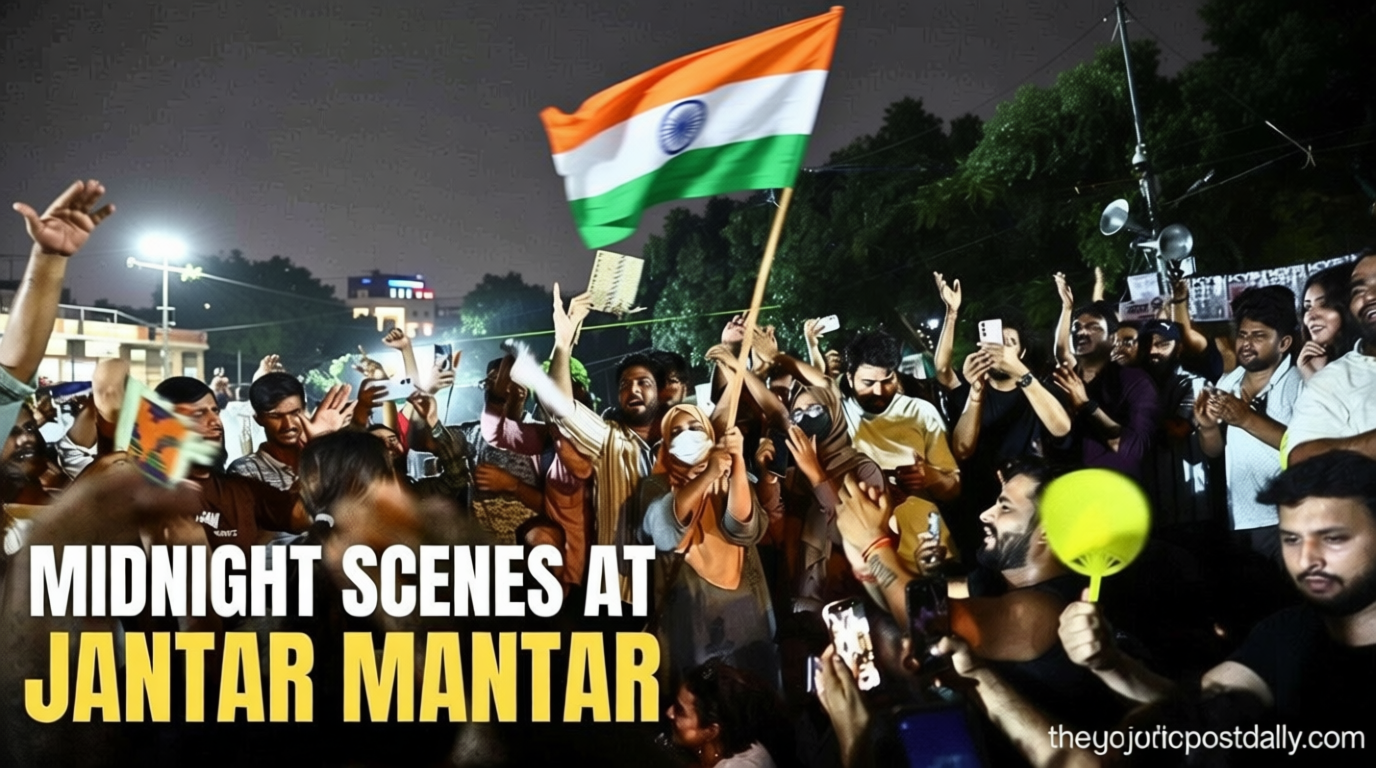
Theindiapostdaily.com – As the Monsoon Session of Parliament approaches, the Jantar Mantar protest site in central Delhi has seen a dramatic increase in demonstrators, with thousands gathering in anticipation of the Cockroach Janta Party (CJP)’s planned march to the legislative assembly. The focus keyword “crowds swell at Jantar Mantar” has become central to the growing public demand for accountability, particularly concerning the alleged irregularities in the NEET examination and the need for broader education system reforms. With political tensions rising, the protest has evolved into a symbolic event for students, activists, and citizens united in their call for justice.
Delhi Police Enforce Section 163 to Control the Situation
In response to the swelling numbers at Jantar Mantar, Delhi Police have invoked Section 163 of the Bharatiya Nagarik Suraksha Sanhita (BNSS), replacing the earlier Section 144 of the Criminal Procedure Code (CrPC). This decision reflects the authorities’ concern over the protest’s scale and potential disruption to the Monsoon Session. Roadblocks and heightened security measures have been implemented around the site, underscoring the urgency of the situation. The move has sparked debate about the balance between maintaining order and protecting the right to peaceful assembly.
Section 163, which allows for the detention of individuals suspected of causing unrest, has been a key tool in managing the crowd. However, activists argue that it has been used to suppress dissent rather than merely regulate movement. As the rally progresses, the focus on the “crowds swell at Jantar Mantar” trend continues to gain traction, drawing both support and criticism from different political factions. The police’s strategy highlights the growing significance of the protest as a focal point for public grievances.
Protest Leadership and Public Solidarity
Abhijeet Dipke, the founder of the Cockroach Janta Party, has called on supporters to maintain a large presence at Jantar Mantar to ensure the Parliament march remains impactful. “The crowd at Jantar Mantar is not just a number—it’s a statement of our collective demand for transparency and justice,” he emphasized in a recent address. This sentiment is echoed by CJP chief spokesperson Saurav Das, who declared on social media: “With over 20,000 people at and around Jantar Mantar, the time for action is now. Dharmendra Pradhan’s day of reckoning has arrived.”
Political leaders and public figures have increasingly joined the cause, amplifying the visibility of the “crowds swell at Jantar Mantar” phenomenon. Actors like Shabana Azmi and Prakash Raj, along with Trinamool Congress MP Mahua Moitra, have been seen at the protest site, showing solidarity with the student-led movement. Their presence highlights the cross-section of support for the cause, from grassroots activists to national celebrities. This convergence of voices reinforces the gravity of the situation and the widespread nature of public dissatisfaction.
Student Leaders and the Hunger Strike
At the heart of the Jantar Mantar demonstrations are student leaders who have maintained their hunger strike for over 22 days. Neha, Manish, and Aameen, key figures in the AISA protest, have remained steadfast in their demands for education accountability. Despite repeated attempts by police to detain them, supporters have formed a human chain to safeguard their presence. “Without our unity, the message of the crowd at Jantar Mantar may be lost,” Neha stated, highlighting the symbolic importance of the students’ endurance.
The hunger strike has become a powerful visual representation of the protest’s intensity, drawing attention to the plight of educators and students affected by the NEET controversy. Sonam Wangchuk, a prominent activist, continues to inspire the movement, though his wife, Gitanjali J Angmo, noted that his participation may depend on political leaders’ commitment to addressing the issue. “If leaders visit Sonam at Safdarjung Hospital and pledge to tackle education reforms in Parliament, the crowd at Jantar Mantar will remain united,” Angmo assured, emphasizing the conditional nature of the strike’s continuation.
Public Reaction and Media Coverage
The “crowds swell at Jantar Mantar” phenomenon has sparked a wave of public discourse, with social media platforms becoming a battleground for opinions. Hashtags like #JantarMantarMovement and #NEETScandal have trended, showcasing the protest’s reach beyond Delhi’s streets. Analysts note that the event has drawn both praise and condemnation, with some viewing it as a necessary stand against bureaucratic inertia while others criticize its potential to disrupt daily life.
Media outlets have extensively covered the gathering, highlighting the strategic use of Jantar Mantar as a historical symbol of resistance. The site, known for its role in past demonstrations, has once again become a hub for collective action. With the “crowds swell at Jantar Mantar” trend intensifying, the event underscores the power of public mobilization in shaping political narratives and demanding accountability. As the Parliament march looms, the focus remains on the scale and resolve of the demonstrators.
Implications for the Monsoon Session and Political Dynamics
The swelling crowd at Jantar Mantar is expected to significantly influence the Monsoon Session of Parliament, where key issues like education reforms and government accountability will be debated. Political parties are under pressure to respond to the movement’s demands, with the “crowds swell at Jantar Mantar” serving as a reminder of public discontent. Analysts suggest that the march could force lawmakers to prioritize the concerns of citizens, especially students affected by the NEET controversy.
Meanwhile, the invocation of Section 163 has raised questions about the government’s approach to managing protests. Critics argue that the measure is being used to control dissent, while supporters claim it ensures stability. The dynamic between the protest and police actions continues to shape the narrative, with the “crowds swell at Jantar Mantar” trend remaining a focal point for media and political discourse. As the situation develops, the long-term impact on the Monsoon Session and India’s political landscape remains a key topic of discussion.