CJP Protests Day 1: 7000 detained including four ex-CMs, metro shutdowns and CJI’s intervention; how it unfolded
Delhi was placed under an extensive security arrangement on Saturday as police moved to prevent a protest called by the Cockroach Janta Party (CJP) near
Delhi Sees Mass Detentions as CJP Protest Draws Heavy Security Response
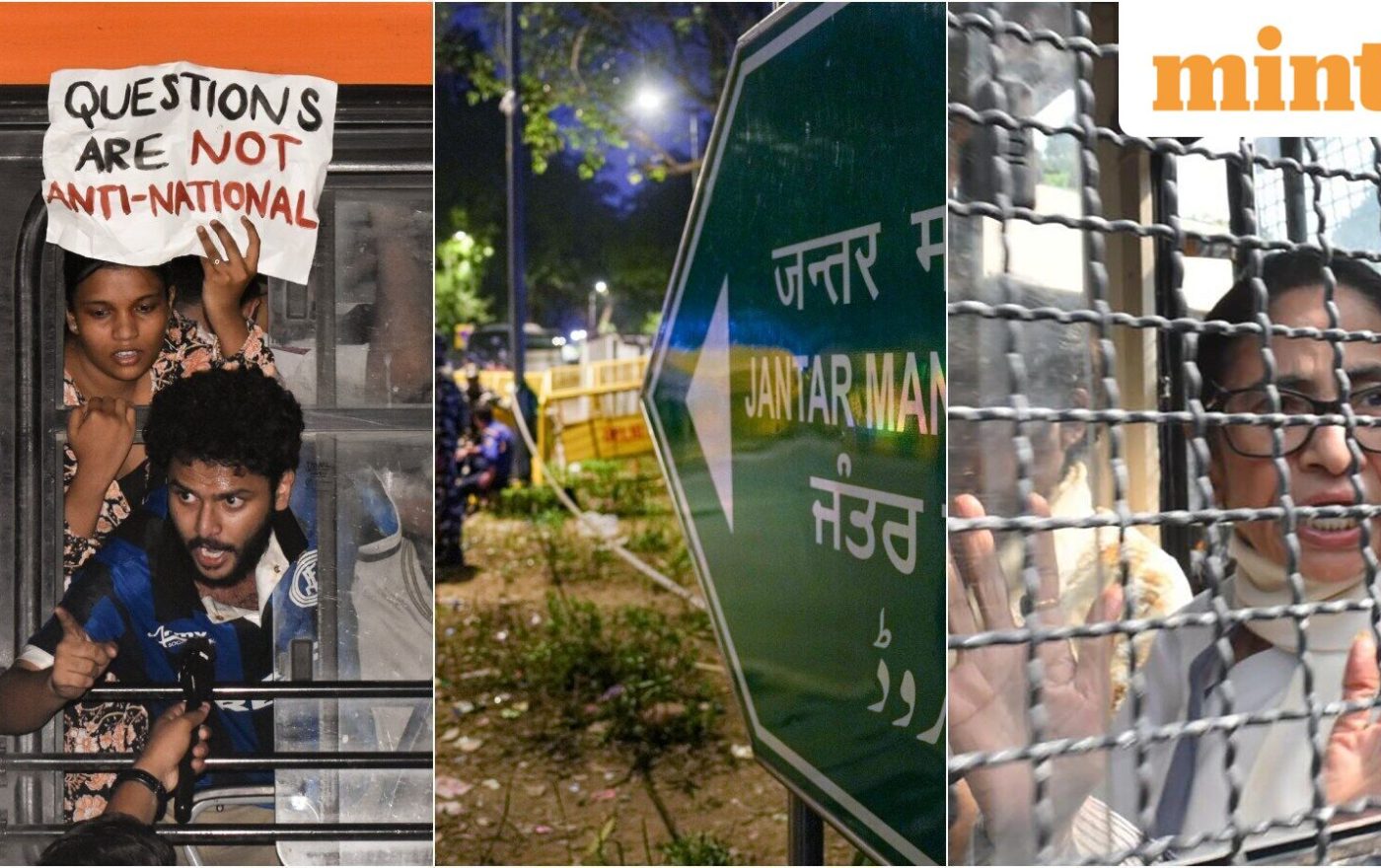
Theindiapostdaily.com – Delhi was placed under an extensive security arrangement on Saturday as police moved to prevent a protest called by the Cockroach Janta Party (CJP) near Jantar Mantar. The demonstration was announced in response to allegations concerning Chief Election Commissioner Gyanesh Kumar and the Special Intensive Revision (SIR) of electoral rolls.
Authorities installed barricades at key locations, including the Ghazipur border, while access restrictions affected the Metro network. Gates at 45 Metro stations remained shut during the day, disrupting movement across the capital and intensifying criticism from opposition leaders, who described the measures as an assault on democratic freedoms.
More than 7,000 detained during the day
More than 7,000 people were detained in Delhi as police intercepted individuals travelling towards the planned protest location. Most of those held were released later that night. Senior CJP leaders, however, remained in Delhi Police custody after the broader releases began.
Among those detained were Abhijeet Dipke, Sourav Das and Ashutosh Ranka. The three leaders were taken into custody from inside an aircraft after arriving in the national capital. The CJP has written to the Delhi Police commissioner seeking their immediate release, information about where they are being held, and prompt access for their legal representatives.
The detention of Dipke carried an additional personal dimension. He was informed that his grandmother had died on Saturday after a prolonged illness in Santuk Pimpri village in Maharashtra’s Hingoli district. He was also told about the timing of the funeral and offered assistance to travel home.
Former chief ministers among politicians held
The police action extended to several opposition figures. Four former chief ministers — Pinarayi Vijayan, Manik Sarkar, Arvind Kejriwal and Mamata Banerjee — were detained over the course of the day. AISA president Neha Bora was also taken into custody.
Vijayan condemned the police operation as a “ruthless crackdown on democracy” and alleged that journalists, too, were being detained. Kejriwal released a video after being held, saying that young people across the country had awakened and would not be frightened into silence.
The detentions turned the protest into a wider political confrontation. What began as a mobilisation around concerns over electoral-roll revision quickly became a test of how far authorities could go in restricting movement, public assembly and access to central Delhi.
Congress leaders accuse government of weakening democracy
Leader of the Opposition Rahul Gandhi responded with a challenge to the government, urging the Prime Minister to detain opposition leaders and young people if it chose to do so. He wrote on X that the Opposition would not retreat from its position.
“Arrest all the leaders. Arrest all the young people. Arrest us all.”
The Congress has also announced a separate protest for October 12. Priyanka Gandhi Vadra accused the government of eroding democratic values and made a sharp allegation against Prime Minister Narendra Modi and Home Minister Amit Shah.
“India is not a democracy anymore. It is a dictatorship being run by Mr. Narendra Modi and Mr. Amit Shah.”
Congress president Mallikarjun Kharge said the government was changing the country from the “Mother of Democracy” into a “Muzzled Democracy.” The party’s reaction underlined the likelihood that Saturday’s events will remain a central point of opposition criticism in the days ahead.
BJP says dissent cannot become disorder
The Bharatiya Janata Party rejected the opposition narrative and argued that the action was necessary to maintain order. BJP president Nitin Nabin accused opposition groups of attempting to destabilise the country, claiming their activities were influenced by “foreign forces.”
Union Minister Sukanta Majumdar voiced a similar view, calling the movement an effort to destabilise the nation. He said questions remained over the source of the CJP’s funding and organisational strength.
BJP spokesperson Sambit Patra praised the security response at a press conference, saying the events in Delhi showed that democratic order had prevailed over “mob rule.” He described the day’s policing as controlled and said those he termed anarchists had failed.
“Democracy has triumphed over mob rule. The way democracy has been demonstrated in Delhi today, and the way everything is under control, is commendable. I would like to reiterate one thing: the anarchists have failed.”
Defence Minister Rajnath Singh said that dissent was protected in a democracy but maintained that no one had the right to create anarchy.
“I acknowledge that in a democracy, every individual has the right to express dissent. However, one must not forget that spreading anarchy is not anyone’s right.”
Chief Justice intervenes over detained advocates
The developments also reached the Supreme Court after the Supreme Court Bar Association informed Chief Justice of India Surya Kant that advocates had been detained. The lawyers were released after the Chief Justice personally intervened.
The Supreme Court is scheduled to hold a special sitting on Sunday to consider a contempt petition. The petition alleges that authorities, including the Union Home Secretary, deliberately failed to comply with an apex court direction that prohibited a complete shutdown of public transport before Saturday’s protest.
The special hearing places the focus not only on the detentions but also on the legal limits of preventive restrictions during major political demonstrations. Questions surrounding transport access, police powers and the ability of citizens to assemble are expected to remain at the centre of the dispute as the matter moves before the court.
Related Reading
Frequently Asked Questions
What is CJP Protests Day 1?
CJP Protests Day 1 is the main topic of this guide. The article explains the context, practical details, and next steps readers should understand.
Why does CJP Protests Day 1 matter?
CJP Protests Day 1 matters because readers are looking for a useful answer, not just a short summary. Good content should match search intent and help them decide what to do next.