Chhota Rajan convicted as CBI court sentences him to 7 years in fake passport case; here’s what the probe revealed
A special CBI court in Chennai has sentenced the notorious gangster to seven years in prison for passport fraud. This conviction marks a significant

Chhota Rajan Convicted as CBI Court Hands Down 7-Year Sentence
Theindiapostdaily.com – A special CBI court in Chennai has sentenced the notorious gangster to seven years in prison for passport fraud. This conviction marks a significant development in the long-running legal case against the Mumbai-based criminal who has been evading authorities for decades.
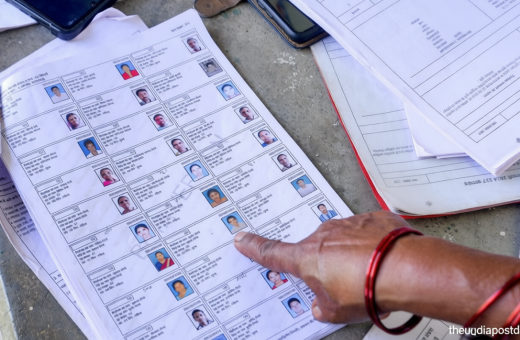
The verdict brings closure to more than twenty years of judicial proceedings. During this extensive period, investigators successfully proved that Rajan obtained his travel document by impersonating another individual and presenting forged paperwork to the Regional Passport Office in Chennai.
How the Investigation Unfolded
The Central Bureau of Investigation began its probe on March 19, 2002, after registering a First Information Report against the accused. The initial complaint alleged that Rajan had deceived officials by submitting fraudulent documents to secure an Indian passport under a different identity.
CBI officials revealed that the gangster applied for the passport using the name Vijaya Kadam. Through thorough investigation, authorities established that this name belonged to Rajendra, better known as Nana or Chhota Rajan, who is the son of Sadashiv and resides in Mumbai.
“The investigation revealed that the accused, Chota Rajan, applied for an Indian passport in the name of Vijaya Kadam by submitting false documents… It was also found that the real name of Vijaya Kadam was Rajendra alias Nana alias Chota Rajan, s/o Sadashiv, a resident of Mumbai,” the CBI spokesperson explained during the proceedings.
The agency filed its chargesheet against Rajan on January 22, 2004, completing this crucial phase within two years of initiating the investigation. This timeline demonstrates the thoroughness of the CBI’s approach to building a comprehensive case against the accused.
Legal Status and Recent Developments
Chhota Rajan is currently being held in Tihar Jail in New Delhi, where he is already serving a life sentence of rigorous imprisonment for other offenses. His incarceration has been ongoing for several years as he faces multiple charges across different cases.
In a separate matter, Chhota Rajan was acquitted in May 2025 by a special court in a case involving alleged threats made to a real estate builder. This acquittal came nearly two decades after the initial charges were brought against him, highlighting the complexity of the evidence presented.
Special MCOCA court judge AM Patil noted that the prosecution’s key witness showed uncertainty regarding whether Chhota Rajan was the person who had made the threatening phone call to the builder. This doubt proved significant in the court’s final decision.
The CBI had previously claimed that real estate developer Nandkumar Harchandani received several threats attributed to Rajan, demanding payment of pending dues to certain businessmen. Prosecutors contended that Harchandani had angered Rajan over a financial dispute, leading the gangster to intimidate the builder through his network.
“The most reliable witness against the present accused is Irshad Shaikh, who received Rajan’s alleged call about the threat. But, during his cross-examination, he admitted that he is not certain whether the person who made the call was ‘Chhota Rajan’ or somebody else. This is the crucial admission given by this witness, which goes to the very roots of the case,” the judge observed.
The court further emphasized that testimonies from two eyewitnesses examined by the prosecution contained no incriminating information against Rajan. “In sum and substance, it can be said that the prosecution has failed to prove the guilt of the accused,” the court concluded in its judgment.
This builder threat case traces back to a September 2004 incident where seven unidentified men allegedly entered Harchandani’s office and fired shots at his accountant, who managed to escape unharmed. The connection between these events helped establish the broader context of the threats made against the real estate developer.