Centre raises rural job guarantee wages under VB–G RAM G Act; floor rate set at ₹300 from 1 July
Centre Raises Rural Job Guarantee Wages to ₹300 under VB-G RAM G Act Theindiapostdaily.com – The Union government has announced a significant increase in rural job guarantee wages, raising them…
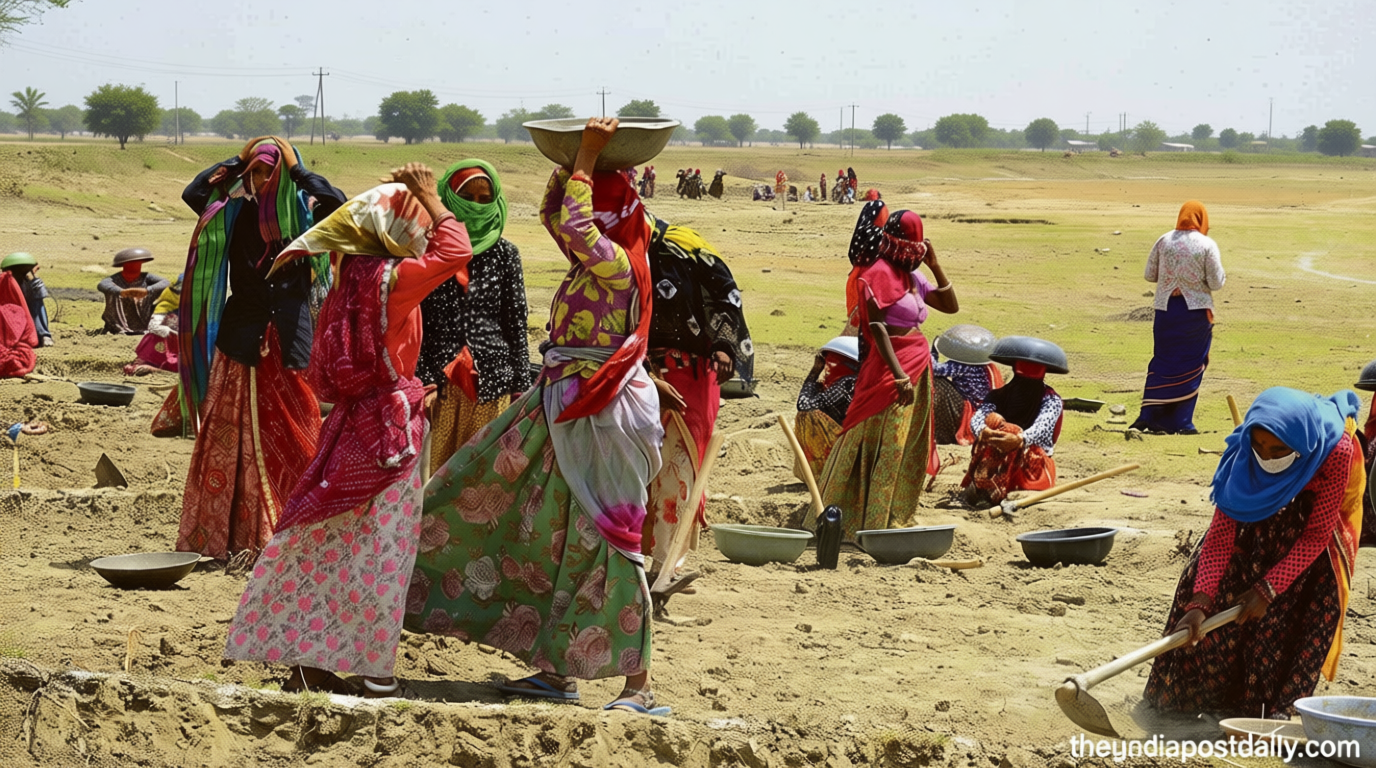
Centre Raises Rural Job Guarantee Wages to ₹300 under VB-G RAM G Act
Theindiapostdaily.com – The Union government has announced a significant increase in rural job guarantee wages, raising them to a minimum of ₹300 per day starting 1 July 2026 under the Viksit Bharat–Guarantee for Rozgar and Ajeevika Mission (Gramin) Act. This move marks the introduction of a uniform wage floor for all states, union territories, and wage regions, replacing the earlier Mahatma Gandhi National Rural Employment Guarantee Act (MGNREGA) framework. The focus keyword, “Centre raises rural job guarantee,” is central to this initiative, which aims to uplift rural livelihoods and create more equitable employment opportunities across the country.
Wage Adjustments and Regional Uniformity
The revised wage structure ensures that no state or union territory will offer wages below the new benchmark of ₹300. Previously, the lowest wage rate in the MGNREGA framework was ₹241, but the new act elevates this to a national average of ₹327.4 per day. This translates to a 10% increase in daily wages, which will help in reducing regional disparities and improving the standard of living for millions of rural workers. The implementation of this wage floor is expected to have a transformative impact on rural economies, especially in states where labor costs were historically lower.
“The VB-G RAM G Act is a critical step toward achieving inclusive growth and ensuring that rural workers receive fair compensation,” said Union Rural Development Minister Shivraj Singh Chouhan during the announcement. The minister emphasized that this overhaul aligns with the government’s broader vision of Viksit Bharat @2047, aiming to create sustainable employment and empower marginalized communities.
Extended Employment Guarantee and Economic Benefits
Under the updated framework, the guaranteed employment period has been extended from 100 days to 125 days for every eligible rural household. This extension is designed to provide greater financial stability, allowing families to manage expenses more effectively and invest in their long-term development. The economic implications of this change are far-reaching, as increased wages are projected to boost rural purchasing power and stimulate local markets.
The government anticipates that the new wage standards will not only improve the livelihoods of workers but also contribute to broader economic goals. By ensuring a minimum wage of ₹300, the initiative seeks to create a more predictable and equitable labor market, which could attract more investments in rural infrastructure and agriculture. Additionally, the higher wages are expected to encourage better labor participation and reduce migration to urban areas, fostering balanced regional development.
State-Specific Revisions and Regional Variations
While the national wage floor of ₹300 applies uniformly, states with lower wage rates have seen more substantial increases. Uttar Pradesh, Bihar, Jharkhand, West Bengal, Assam, and Himachal Pradesh will implement hikes between 15% and 25%, reflecting the need for targeted improvements in regions where rural incomes were previously stagnant. Meanwhile, states like Arunachal Pradesh and Nagaland will witness nearly 24.5% increases, addressing historical gaps in compensation.
Higher-wage regions have also received adjustments, with Haryana leading the pack at ₹409 per day, followed by Goa (₹406) and Kerala (₹401). Sikkim’s high-altitude gram panchayats have been allocated ₹450 per day, acknowledging the unique challenges and costs associated with such areas. These state-specific revisions ensure that the VB-G RAM G Act’s rural job guarantee framework is adaptable yet consistent, providing a fair standard across diverse geographical and economic contexts.
Implementation and Funding Support
To facilitate a smooth transition, the government has allocated ₹95,692.31 crore as an interim fund for states and union territories. This financial support is crucial for ensuring that wage disbursements continue uninterrupted, with existing e-KYC-verified job cards remaining valid until new Gramin Rozgar Guarantee Cards are issued. The funding also covers administrative costs, training programs, and the development of infrastructure projects, which are key to the act’s success.
Officials have confirmed that 29 states and union territories have already made budgetary provisions, with 24 finalizing their state-specific schemes. The gradual rollout of the VB-G RAM G Act is expected to minimize disruptions while allowing states to adapt to the new wage structure. By maintaining access to employment and timely wage payments, the government aims to sustain the momentum of rural development and ensure long-term compliance with the revised standards.