Bihar: Train services on Patna outskirts disrupted after youth mob gathered on tracks, police resort to lathi-charge
outh Mob at Patna Station Bihar's train services near Patna were temporarily halted after a youth mob gathered on railway tracks, prompting police to deploy
Bihar Train Services Disrupted by Youth Mob at Patna Station
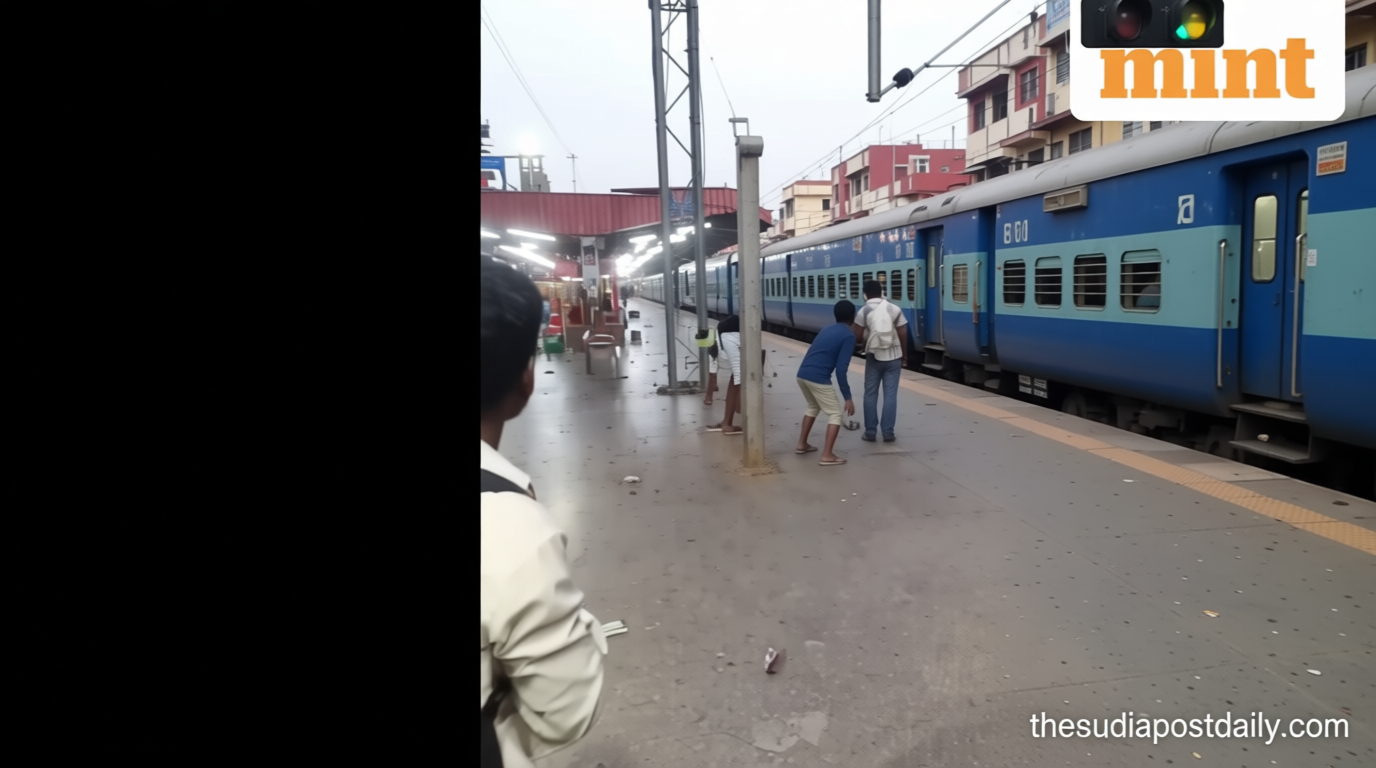
Theindiapostdaily.com – Bihar’s train services near Patna were temporarily halted after a youth mob gathered on railway tracks, prompting police to deploy lathi charges and tear gas to restore order. The incident, which occurred late Saturday night, disrupted transportation for commuters and highlighted tensions in the state’s public infrastructure management. According to a senior official, the disruption was caused by over 200 protesters who accused railway authorities of inadequate preparations for an important exam day.
Exam Logistics as the Spark for Protests
Amresh Kumar, Inspector General of the Railway Protection Force (RPF) for the East Central Zone, revealed that the unrest began around midnight at Pataliputra railway station. The protesters, identified as students preparing for exams organized by the Excise Department, argued that insufficient train services were causing delays. They occupied the tracks to demand a dedicated service for their travel needs. Kumar emphasized that the group was not acting in a random manner but was specifically targeting the logistics of the examination schedule.
“The trains had been ferrying students across the state for the Excise Department’s exams on Sunday. The protesters claimed arrangements were insufficient and took to the tracks, demanding a dedicated service to reach their destinations on time,” Kumar explained.
Despite the arrival of a special train by 2 a.m., the protesters remained steadfast, refusing to vacate the tracks. This led to a standoff that escalated into a physical confrontation. As police attempted to clear the area, some individuals reportedly threw stones at security personnel, prompting the use of tear gas and a lathi charge to disperse the crowd.
Operational Disruptions and Emergency Measures
The incident caused significant delays, with two passenger trains and a goods train being stranded for several hours. Commuters faced inconvenience as services passing through Pataliputra station were rerouted until the situation stabilized. Kumar noted that the police had to implement tight security measures to ensure the safe resumption of rail operations. “Normalcy was regained by 3 a.m. after enforcing strict security protocols, though we had to resort to tear gas and lathi charges as a final step,” he added.
“We are coordinating with the Government Railway Police (GRP) and railway officials to file an FIR related to this incident. Those involved will be identified through CCTV evidence and held accountable for their actions,” Kumar said, highlighting the collaborative effort to investigate the disturbance.
Patna Zone IG Jitendra Rana confirmed that the RPF and GRP have partnered with local police to track the individuals responsible for the chaos. CCTV footage from the station will play a crucial role in pinpointing the protesters and assessing the extent of damage to railway infrastructure. The authorities are also reviewing the incident to prevent similar disruptions in the future.
Public Reaction and Political Response
Bihar Deputy Chief Minister Bijendra Prasad Yadav addressed the incident, expressing disappointment over the disruption on the eve of a competitive exam. “It’s regrettable that such an incident occurred on the eve of a competitive exam. The youth should also be aware of maintaining decorum during critical days,” Yadav remarked. His comments underscored the importance of public order and the need for students to adhere to regulations when protesting.
The event sparked mixed reactions on social media, with some criticizing the police for their use of force and others supporting the measures taken to protect rail traffic. Local residents expressed concern over the impact on daily commutes, particularly for those reliant on train services for work or education. Meanwhile, railway officials are now under scrutiny to evaluate whether the incident was a result of poor planning or a coordinated protest.
Analysts suggest that the disruption reflects growing frustration among Bihar’s youth with the state’s administrative efficiency. With exams and daily travel needs overlapping, the protests highlight a potential disconnect between government services and public expectations. The Bihar government is expected to address these concerns in the coming days, possibly through enhanced communication with students or improved scheduling of exam-related transportation.