India can’t see The Odyssey the way Christopher Nolan intended — and that’s a shame
portunity: The Odyssey's Theatrical Vision Unfulfilled A Vision Forged in Theaters India can t see The Odyssey the way Christopher Nolan intended, leaving a
India’s Missed Opportunity: The Odyssey’s Theatrical Vision Unfulfilled
A Vision Forged in Theaters
Theindiapostdaily.com – India can t see The Odyssey the way Christopher Nolan intended, leaving a significant gap in the cinematic experience. For nearly two decades, Nolan has advocated for the unique power of theatrical cinema, pushing against the rise of streaming platforms and digital formats that he believes dilute the storytelling magic. *The Odyssey* is a testament to his belief, combining visual grandeur with emotional depth to create a narrative that transcends the typical epic. Yet, despite its artistic ambition, Indian audiences are unable to access the full version of the film as Nolan envisioned, missing out on a pivotal element of its immersive design.
Nolan’s approach to *The Odyssey* is both innovative and nostalgic. By translating Homer’s ancient tale into a modern, introspective journey, he reimagines Odysseus not as a legendary warrior but as a man grappling with the emotional weight of war and loss. The film’s landscapes—vast coasts, volcanic terrains, and sweeping vistas—serve as more than just backdrops; they are symbolic of the hero’s inner turmoil and his longing for home. This deliberate choice to prioritize atmosphere over action is a hallmark of Nolan’s storytelling, but it’s only fully realized in the 70mm theatrical format, which is absent in India.
The Format as a Narrative Tool
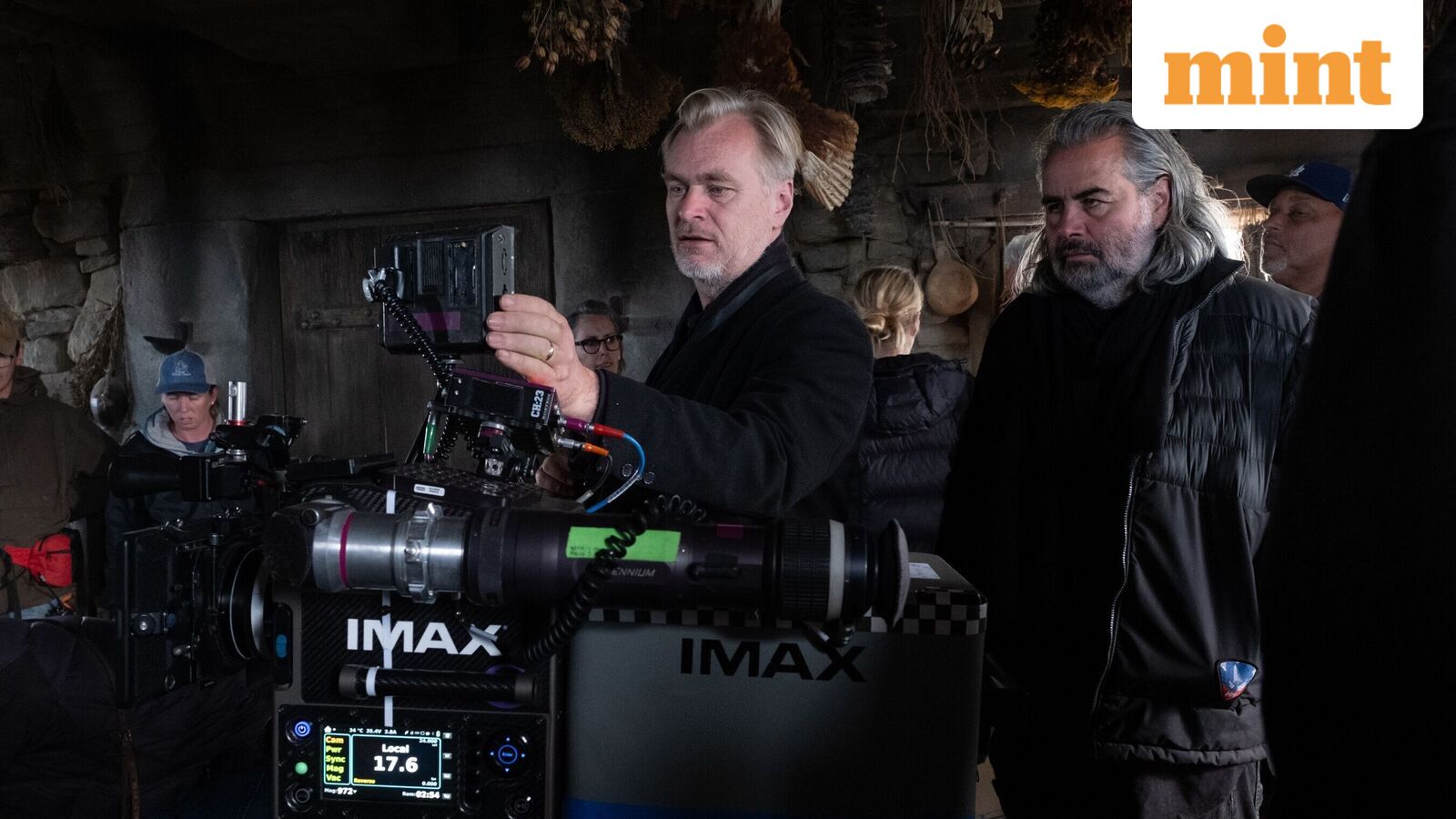
Throughout his career, Nolan has emphasized the importance of film format in shaping the audience’s experience. *The Odyssey* was shot using IMAX 5-perf/70mm cameras, a technical feat he has long pursued to create unparalleled visual clarity and scale. This format allows for a deeper connection to the film’s grandeur, with each frame capturing the subtle textures and vast landscapes that define its emotional core. However, India’s current IMAX infrastructure relies heavily on digital projections, which, while visually impressive, cannot replicate the tactile depth and immersive quality of 70mm film.
Nolan’s choice of 70mm is not arbitrary. It’s a deliberate effort to ground the audience in a sensory-rich environment that mirrors the epic’s themes of exploration and longing. The camera lingers on these expansive scenes, giving viewers time to absorb the beauty and solitude of Odysseus’s journey. This technique, central to the film’s artistic integrity, is only possible with the physical characteristics of 70mm film, which offers a level of detail and dynamic range that digital formats struggle to match.
India’s IMAX Experience
India’s growing cinematic landscape has embraced large-format screenings, with IMAX theaters becoming a popular choice for blockbuster films. These venues provide enhanced screen sizes, superior sound systems, and brighter visuals, making them appealing for a wide range of movies. However, the absence of 70mm film prints for *The Odyssey* means that Indian viewers are not able to experience the film’s technical and artistic ambitions in their entirety. The result is a version that, while enjoyable, fails to deliver the full sensory impact Nolan sought to create.
This limitation is particularly striking when compared to other Nolan films that have found success in India. Titles like *Interstellar*, *Inception*, and *The Dark Knight Rises* have been widely appreciated, even in digital formats, for their ability to captivate audiences through visual spectacle and narrative depth. But *The Odyssey* is different—it’s a film that demands a specific format to convey its essence. Its omission from Indian theaters highlights a broader issue: the reliance on digital platforms has prioritized convenience over the cinematic experience that Nolan has championed for years.
The Cost of Compromise
While digital IMAX has proven to be a viable option for many films, *The Odyssey* is an exception that underscores the importance of format in storytelling. The film’s sweeping vistas and immersive scale are not just visual elements—they are integral to its emotional resonance. Without the 70mm format, these moments lose some of their power, leaving viewers with a less complete understanding of the hero’s isolation and the vastness of his journey. This compromise may not be significant for some films, but for *The Odyssey*, it’s a critical loss.
The absence of the 70mm version in India also raises questions about the country’s ability to support Nolan’s vision. As a major market for large-format films, India has shown a strong appetite for cinematic experiences that prioritize scale and immersion. However, the lack of 70mm projection capabilities in most theaters means that *The Odyssey* is being delivered in a format that feels secondary to its artistic goals. This gap between intent and execution is not just a technical issue—it’s a