Govt tables law amendment to check exam paper leaks, moots ₹10 cr penalty, wider ambit
Govt tables law amendment to check examination irregularities as the Public Examinations (Prevention of Unfair Means) Amendment Bill, 2026 was introduced in
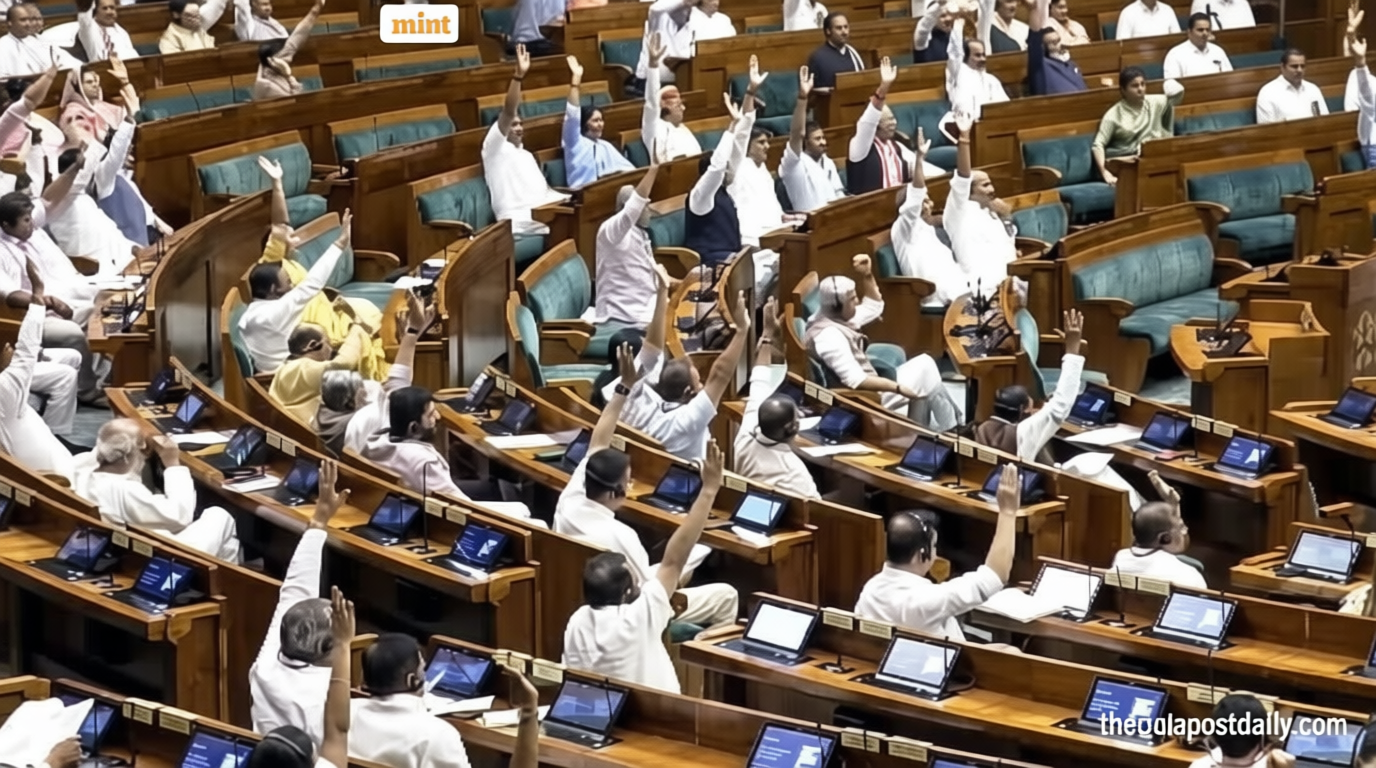
Govt Tables Law Amendment to Check Paper Leaks with ₹10 Cr Penalty
Theindiapostdaily.com – Govt tables law amendment to check examination irregularities as the Public Examinations (Prevention of Unfair Means) Amendment Bill, 2026 was introduced in the Lok Sabha on Monday. This significant legislative development comes at a crucial time when student protests across India have intensified over recurring paper leak scandals. The bill was presented shortly after Education Minister Dharmendra Pradhan resigned on Saturday amid mounting pressure from demonstrators demanding stronger action against cheating in competitive exams.
Expanded Scope and Higher Penalties
Introduced by Jitendra Singh, Minister of State in the Department of Atomic Energy, the amendment seeks to substantially strengthen the existing Public Examinations (Prevention of Unfair Means) Act, 2024. The most prominent feature of this new legislation is the dramatic increase in financial penalties for those involved in examination fraud. Under the revised provisions, individuals caught leaking papers or engaging in organized cheating operations could face penalties as high as ₹10 crore, marking a tenfold increase from the existing ₹1 crore limit for such offenses.
Another critical aspect of the amendment is the widening of its jurisdictional scope. While the original Act applied only to central government examinations, the amended version will now cover all public examinations conducted by both central and state authorities. This comprehensive approach addresses years of demands for standardized anti-cheating measures across all levels of examination systems in India.
Stricter Legal Consequences
The proposed legislation introduces more severe classifications for examination-related offenses. Violations will now be treated as cognizable, non-bailable, and non-compoundable offenses, significantly reducing the likelihood of accused individuals obtaining bail or settling cases through compromise arrangements. Convicted offenders employing dishonest means during examinations will face imprisonment terms of five to ten years, up from the previous three to five year range. Financial penalties have also been substantially increased, rising from a maximum of ₹10 lakh to ₹50 lakh for individual offenders.
Service providers playing crucial roles in examination delivery face equally stringent consequences. These entities may be penalized up to ₹5 crore, ordered to refund examination fees, and prohibited from participating in public assessments for eight years. For institutional fraud cases, the legislation empowers authorities to attach and forfeit properties, impose minimum fines of ₹10 crore, and mandate imprisonment periods ranging from seven to ten years.
Streamlined Investigation and Trial Process
The amendment grants the government enhanced powers to conduct investigations through any central investigative agency or by forming a dedicated special task force specifically for examination fraud cases. Investigators are mandated to complete their inquiries within two months of receiving the initial complaint. To ensure swift justice delivery, each state and union territory will, after consultation with the chief justice of the respective high court, designate a session court as a special fast-track court. These specialized courts will resolve cases under the act within three months of chargesheet filing. Special public prosecutors will be appointed to handle these expedited proceedings efficiently.
Political Context and Implementation Timeline
This legislative initiative follows Prime Minister Narendra Modi’s video address to protesting students on Thursday evening, where he pledged to introduce stronger anti-leak measures during Parliament’s Monsoon Session. The original Act, which became effective on June 21, 2024, was initially designed to tackle cheating concerns in major examinations including NEET and UGC-NET tests.
Currently, the legislation governs assessments conducted by organizations such as the Union Public Service Commission, Staff Selection Commission, Railway Recruitment Boards, Institute of Banking Personnel Selection, and the National Testing Agency. It also covers recruitment processes managed by various central ministries. The law addresses numerous violations including unauthorized access to question papers, answer sheet tampering, security protocol violations, cyber attacks on examination systems, creation of fake examination portals, and conducting fraudulent tests for commercial gain.
The timing of this amendment is particularly significant given the political implications of recent paper leak incidents. Student demonstrations, some ending in tragic circumstances, have underscored the pressing need for comprehensive safeguards against organized examination fraud. With the Govt tables law amendment to check these vulnerabilities, stakeholders across the education sector await its passage through both houses of Parliament.