‘Biryani is dinner, not consent’: Zomato breaks silence on viral ‘ ₹370’ screenshot
Zomato Denies Tying Itself to Viral '₹370' Biryani Screenshot Theindiapostdaily.com – The phrase "Biryani is dinner, not consent" has sparked widespread online discourse, with Zomato stepping in to clarify its…
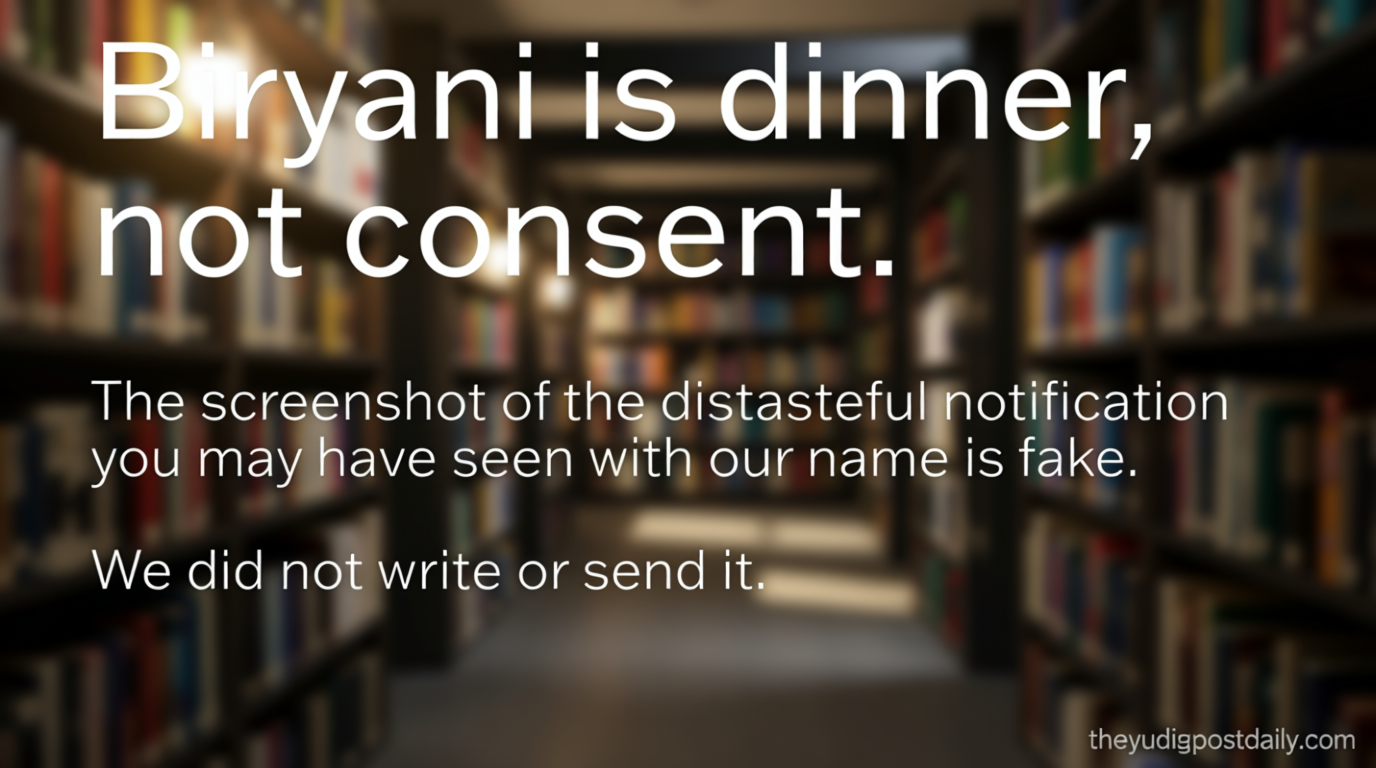
Zomato Denies Tying Itself to Viral ‘₹370’ Biryani Screenshot
Theindiapostdaily.com – The phrase “Biryani is dinner, not consent” has sparked widespread online discourse, with Zomato stepping in to clarify its connection to a viral image circulating on social media. The screenshot, which featured a message suggesting that a ₹370 chicken biryani could be interpreted as a transactional gesture in a romantic relationship, led to accusations of the food delivery platform endorsing a potentially demeaning view of consent. In response, Zomato issued a statement to distance itself from the image, emphasizing that it was not affiliated with the message or its spread.
Origins of the Controversial Screenshot
The controversy began with a clip from comedian Pranit More’s stand-up performance, where an audience member shared a dating anecdote involving a ₹370 biryani meal. The individual joked:
“Maine kaha ki ₹370 lage hain to use to wasool to karunga hi.”
This comment, taken out of context, was interpreted by some as implying that spending ₹370 on a biryani dish could justify an expectation of intimacy or submission. The clip quickly gained traction on platforms like X, where it was shared and reinterpreted by users, leading to a broader debate about cultural norms and the concept of consent in relationships.
Zomato’s Statement and Social Media Reaction
Zomato’s official clarification, posted on X, clarified that the image with the message “Biryani is dinner, not consent” was a fabricated graphic, not an actual notification from the platform. The company stressed that it had no role in creating or disseminating the content, which had been misattributed to their brand. Despite this, the statement was met with mixed reactions. While some praised Zomato for taking responsibility, others questioned whether the platform should have been more proactive in addressing the implications of the phrase.
The debate intensified as users began analyzing the visual elements of the screenshot, pointing out the use of Zomato’s branding in the image. This led to discussions about how social media platforms can inadvertently amplify messages when they are associated with recognizable logos or brand names. The phrase “Biryani is dinner, not consent” became a central point in these conversations, with some users defending it as a lighthearted take on dating dynamics, while others condemned it as a reductionist view of consent.
Cultural Context and Broader Implications
Amid the controversy, the phrase “Biryani is dinner, not consent” was dissected in the context of Indian dining culture and gender dynamics. Biryani, a popular dish often associated with shared meals and social bonding, was used as a metaphor for relationships where financial transactions might be seen as a sign of affection or control. The term “dinner” in the phrase was interpreted by critics as a euphemism for a romantic or intimate setting, potentially suggesting that spending money on a meal could be equated to giving consent for further actions.
The discussion also highlighted the power of viral content in shaping public perception. While the original clip from Pranit More was meant as humor, the removal of context allowed the message to be reshaped by social media users. This led to a broader conversation about how memes and short clips can carry unintended meanings when shared widely. Zomato’s involvement, even if accidental, underscored the importance of brand accountability in the digital age.
Impact on the Individual and Public Discourse
The individual who made the ₹370 biryani remark faced backlash from audiences, with some calling for their removal from the platform. This sparked a conversation about the role of comedians in shaping societal attitudes and whether humor can be used to normalize problematic behaviors. Meanwhile, the phrase “Biryani is dinner, not consent” was adopted by various groups as a rallying cry in debates about consent, autonomy, and the expectations placed on individuals in relationships.
As the discussion evolved, it also prompted reflection on how cultural symbols like biryani can be weaponized in debates about gender roles. The viral image and its associated message became a microcosm of larger issues, illustrating how a single line from a stand-up performance could ignite a movement or a controversy. Zomato’s clarification, while timely, could not fully quell the debate, which continued to unfold across online platforms, influencing conversations about dating norms and the role of social media in amplifying or distorting messages.
Reactions and the Role of Media in Shaping Narratives
News outlets and social media users alike weighed in on the incident, with some framing it as a critique of traditional dating practices and others as a misinterpretation of a humorous comment. The phrase “Biryani is dinner, not consent” was often repeated in tweets and posts, serving as a memorable and shareable element of the discourse. This repetition, while helping to spread the message, also raised questions about the balance between humor and sensitivity in public conversations.
Zomato’s statement, which clarified the platform’s stance, was seen by many as a strategic move to maintain its brand image. However, it also highlighted the challenges of managing reputation in an era where digital content can rapidly gain or lose traction. The debate surrounding the ₹370 screenshot demonstrated how a single image, when paired with a catchy phrase, could become a powerful symbol in online culture. As the conversation continues, the phrase is likely to remain a topic of discussion, reflecting the complex interplay between food, relationships, and societal expectations.