‘Fool has run out of steam!’ — Iranian media trolls Trump after he calls off strikes
The phrase "Fool has run out of steam" became the rallying cry among Iranian media outlets following President Donald Trump's unexpected announcement to delay
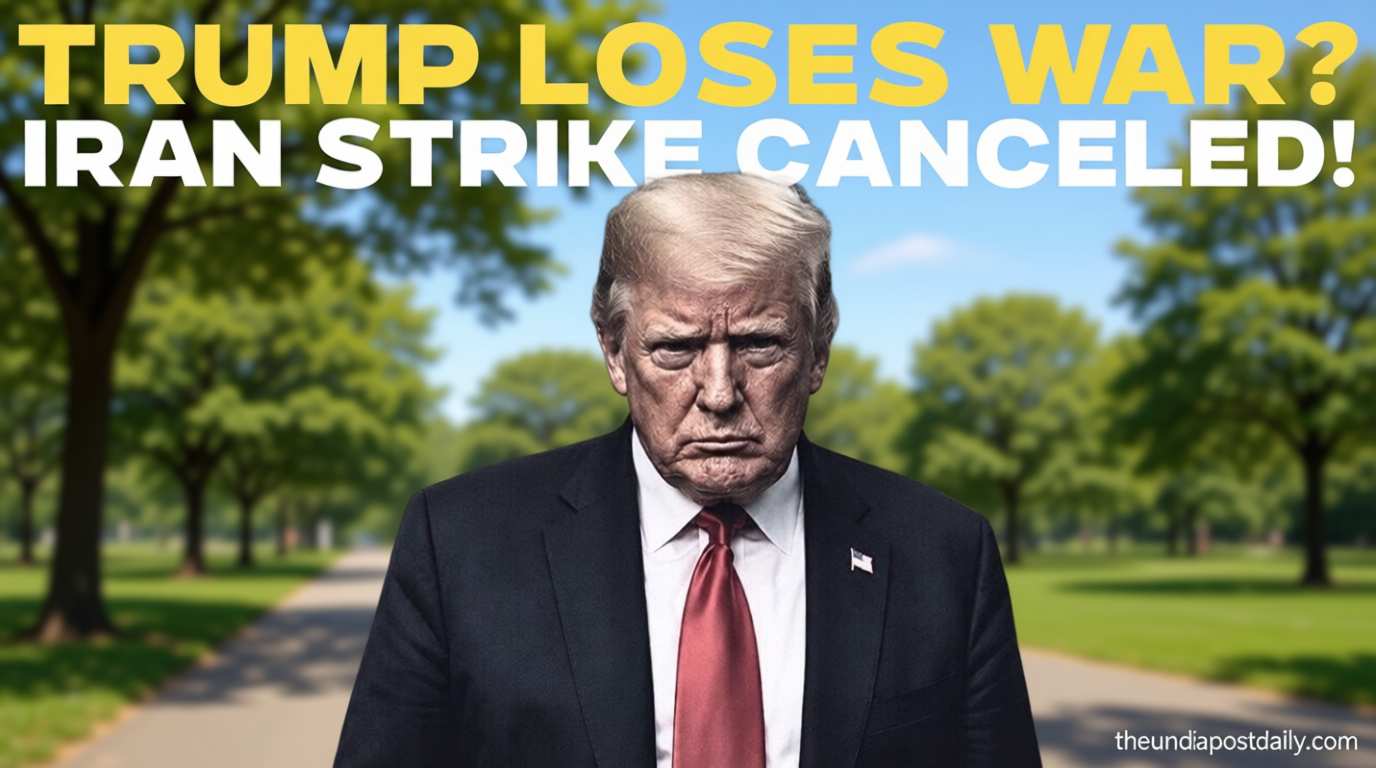
Trump’s Strike Pause: ‘Fool Has Run Out of Steam’ — Iranian Media Response
Theindiapostdaily.com – The phrase “Fool has run out of steam” became the rallying cry among Iranian media outlets following President Donald Trump’s unexpected announcement to delay further military action against Iran. The US leader shared his decision on Truth Social, explaining that multiple nations had requested a temporary pause in hostilities. This declaration sent ripples through Iranian state media, which quickly mobilized to critique what they viewed as a strategic retreat by the American president.
“We have just been asked by Iran, and other Middle Eastern Countries, to hold off any attack in that the perimeters of a deal has been agreed to,” Trump wrote. “This would include the Immediate, Complete, and Total OPENING OF THE HORMUZ STRAIT.”
Despite Trump’s claims that Tehran had requested the suspension of attacks, Iranian state media found no evidence supporting this assertion. Instead, Iranian outlets portrayed the situation as a significant retreat by the American president, with many commentators noting that the “Fool has run out of steam” after weeks of aggressive posturing.
Media Reactions Pour In
Iran’s semi-official Fars news agency led the mockery with a headline declaring: “Trump the fool has run out of steam!” Political commentator Morteza Semiari echoed similar sentiments, invoking a traditional Persian saying: “The Americans’ mountain gave birth to a mouse once again.” This cultural reference resonated deeply with Iranian audiences, reinforcing the narrative of American weakness.
KayhanOnline, which operates under the direction of Iran’s Supreme Leader, noted that Trump had “backed away from his positions once again after about a week of boasting and threats against Iran, claiming that an agreement was close.” The publication emphasized that this pattern of escalation followed by retreat was characteristic of Trump’s diplomatic approach.
The Mehr news agency firmly rejected the notion that Iran had requested the strike pause. “Trump once again backed away from his hollow threats and presented his retreat to the world as a favour,” Mehr stated. Citing military sources, the agency characterized Trump’s assertion as “nothing but a new lie,” while confirming that Iran’s armed forces remained “on high alert and ready for any eventuality.”
Alternative Explanations for the Pause
Iranian news organizations also highlighted Western media reports suggesting that dwindling supplies of American air defense missiles played a significant role in Trump’s decision. The semi-official Tasnim news agency reported this shortage as “one of the main factors behind Donald Trump’s decision to halt the attack on Iran.” This military dimension added credibility to the Iranian narrative that the “Fool has run out of steam” not just diplomatically, but materially as well.
Nevertheless, following discussions with Saudi Arabia’s crown prince, Trump maintained that the United States remained prepared for military action. He insisted the US was “locked and loaded and ready to go against the Islamic Republic of Iran,” while simultaneously reiterating that Middle Eastern nations had requested the temporary suspension.
Conflict Continues Amid Uncertainty
After more than five months of warfare that commenced on February 28 with coordinated US-Israeli strikes on Tehran, observers see no imminent resolution. A prior ceasefire agreement featuring comparable provisions, including the reopening of the Hormuz Strait, ultimately collapsed. Since then, Iran has strengthened its control over the critical shipping route as both nations resumed their attacks.
Fars news agency, referencing a source connected to Iranian negotiators, indicated that the Strait would stay closed “as long as the United States maintains its hostile actions.” The renewed fighting has pushed global oil prices upward after they had declined during the earlier ceasefire period, adding economic pressure to the diplomatic stalemate.
This diplomatic maneuvering arrives approximately three months before America’s midterm elections, potentially creating complications for Trump’s Republican Party. The timing suggests that domestic political considerations may have influenced the decision to pause military operations.
Frequently Asked Questions
What does “Fool has run out of steam” mean in this context?
This phrase, used by Iranian media to describe Trump’s decision to pause strikes, suggests that the American president’s aggressive momentum has diminished. It implies that despite earlier threats and posturing, Trump has exhausted his options and is now retreating from his previous positions.
Did Iran actually request the strike pause?
According to Iranian state media, no. Multiple Iranian news agencies, including Mehr and Fars, rejected Trump’s claim that Tehran had requested the suspension of attacks. They characterized this assertion as “nothing but a new lie” and confirmed that Iran’s military remained on high alert.
What role did missile shortages play in Trump’s decision?
Iranian news organizations highlighted Western reports suggesting that dwindling supplies of American air defense missiles were a significant factor. The semi-official Tasnim news agency reported this shortage as “one of the main factors behind Donald Trump’s decision to halt the attack on Iran.”
How long has the conflict been ongoing?
The warfare has been ongoing for more than five months, commencing on February 28 with coordinated US-Israeli strikes on Tehran. A prior ceasefire agreement featuring comparable provisions ultimately collapsed, leading to the resumption of hostilities.
What are the implications for American domestic politics?
This diplomatic maneuvering arrives approximately three months before America’s midterm elections, potentially creating complications for Trump’s Republican Party. The timing suggests that domestic political considerations may have influenced the decision to pause military operations.