Pakistan signals invitation to PM Modi for SCO Summit 2027 in Islamabad, says ‘this is an obligation on….’
Islamabad has indicated that Prime Minister Narendra Modi will receive an official invitation to participate in the 2027 Shanghai Cooperation Organisation
Pakistan Confirms SCO Summit 2027 Invitation for Modi, Calls It a Host Obligation
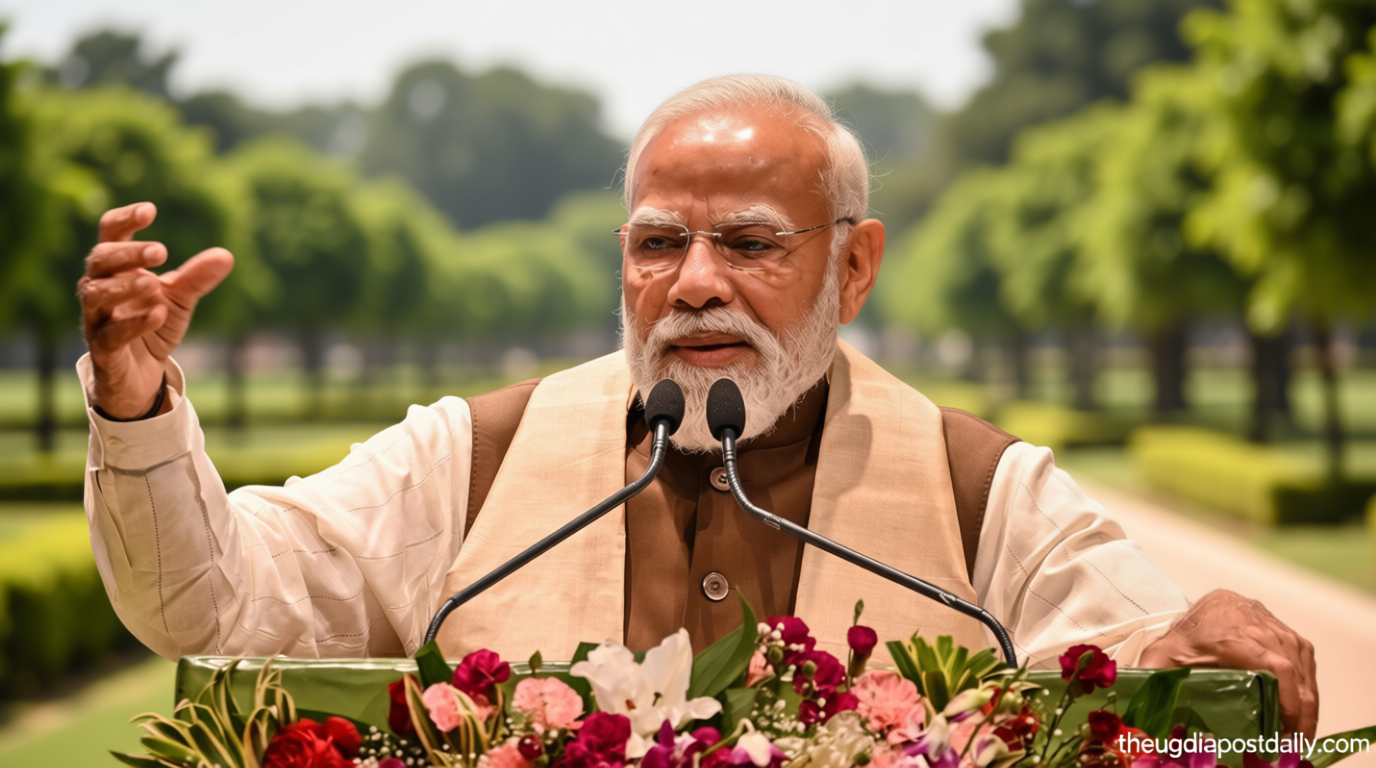
Theindiapostdaily.com – Islamabad has indicated that Prime Minister Narendra Modi will receive an official invitation to participate in the 2027 Shanghai Cooperation Organisation summit, which will take place in the Pakistani capital. According to diplomatic sources, the invitation will follow the bloc’s standard protocol, ensuring every member nation is included in the proceedings.
This development emerged after a reporter inquired whether the Indian Prime Minister would be included in next year’s prestigious gathering. The confirmation arrives during a period of ongoing strain between New Delhi and Islamabad, particularly following a significant military clash in May 2025 that erupted after the Pahalgam terrorist incident.
“All member states of the Shanghai Cooperation Organisation will be invited at the level of the Heads of State or Government, should they wish to attend at the level of the Head of Government,” the Pakistani Ministry of Foreign Affairs declared in an official statement.
The ministry further emphasized that extending invitations represents a formal duty for Pakistan as the host country. “Invitations will obviously be extended, and this is an obligation on the part of Pakistan as the host. We will invite all Heads of States and Government to the Summit meeting,” the statement concluded.
Jaishankar’s Meeting Request Under Scrutiny
During questioning, the ministry was also asked whether External Affairs Minister S Jaishankar had approached his Pakistani counterpart, Ishaq Dar, for discussions. These talks were reportedly considered during the Quad Foreign Ministers’ Meeting, which occurred alongside the ASEAN framework events.
“I am not aware of any meeting request from India on the sidelines of the ARF in Manila. I cannot comment,” the Pakistan ministry stated when asked about potential bilateral discussions.
Historical Context of Bilateral Relations
India-Pakistan ties have experienced significant deterioration following several major terrorist incidents over the decades. These include the 2001 Parliament assault, the 2008 Mumbai bombings, the 2016 Uri attack, and the 2019 Pulwama suicide bombing. In response to these threats, India conducted cross-border military operations, notably the 2016 surgical strikes and the 2019 Balakot airstrikes.
Sustained bilateral negotiations have remained elusive since New Delhi halted the composite dialogue process after the 2008 Mumbai attacks, which claimed 166 lives. India attributed those attacks to Lashkar-e-Taiba, a militant organization based in Pakistan.
While both nations have periodically attempted to restore diplomatic channels, these efforts have frequently been interrupted by terrorist incidents that India consistently links to Pakistan-based groups.
Post-Pahalgam Measures and SCO Background
In the wake of last year’s Pahalgam terror attack, India implemented multiple diplomatic and economic sanctions. These included four days of military strikes against what New Delhi described as terrorist facilities within Pakistan, alongside the suspension of the 1960 Indus Waters Treaty.
The SCO traces its origins to the Shanghai Five, a coalition formed in 1996 comprising China, Kazakhstan, Kyrgyzstan, Russia, and Tajikistan. The organization was officially established in Shanghai during June 2001 when Uzbekistan joined the original five members, aiming to enhance political, economic, and security collaboration.
Membership grew substantially in June 2017 when India and Pakistan became full members. Iran subsequently joined in July 2023, with Belarus following suit in July 2024. Beyond full members, the SCO maintains several observer states and dialogue partners. The most recent summit convened in Tianjin, China, during September 2025.
The organization’s primary decision-making authority is the Heads of State Council, which meets annually. Additionally, the Regional Anti-Terrorist Structure operates as a key mechanism dedicated to strengthening cooperation against terrorism, separatism, and extremism across member nations.