E20 petrol can reduce fuel economy by 2-6%: Nitin Gadkari
New Delhi, July 30 (PTI): The introduction of petrol mixed with 20 percent ethanol—known as E20—could lead to a fuel economy decline ranging between 2 and 6
E20 Fuel Blend May Lower Mileage by 2-6%, Gadkari Tells Parliament
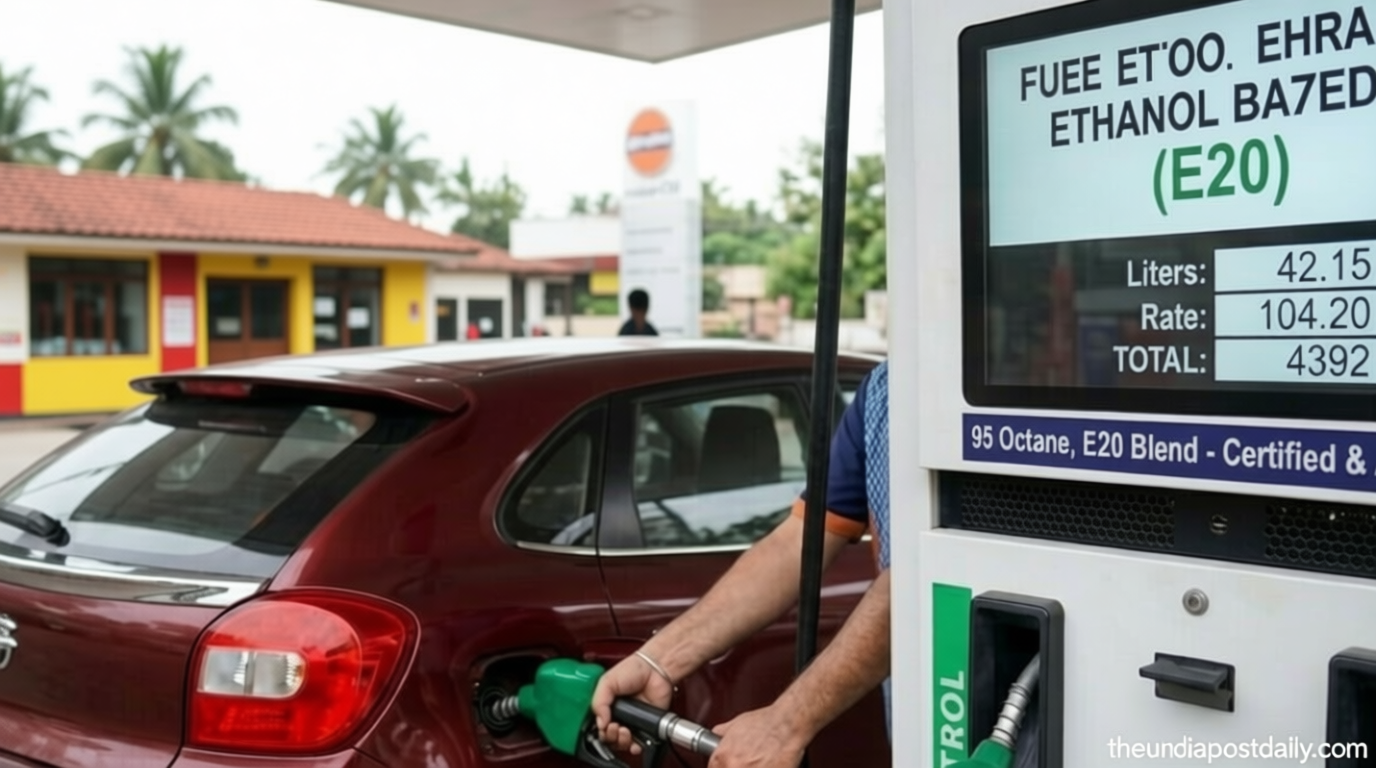
Theindiapostdaily.com – New Delhi, July 30 (PTI): The introduction of petrol mixed with 20 percent ethanol—known as E20—could lead to a fuel economy decline ranging between 2 and 6 percent, depending on the type and age of the vehicle. This information was shared by Road Transport and Highways Minister Nitin Gadkari during a parliamentary session on Thursday.
Despite the potential drop in mileage, the Union Minister emphasized that comprehensive testing has not revealed any engine failures. Both dynamometer assessments and real-world road trials have demonstrated that E20 does not cause mechanical issues.
Benefits Beyond Fuel Efficiency
In a written response submitted to the Lok Sabha, Gadkari highlighted several advantages of E20 over the traditional E10 blend. He noted that vehicles running on E20 experience enhanced acceleration and smoother ride quality. Additionally, carbon dioxide output drops by roughly 30 percent when using the newer fuel formulation.
“The fuel efficiency of vehicles may be reduced by 2 to 6 per cent depending on the vehicle category and vintage. The tests for engine durability on a dynamometer and vehicle tests on road have not shown any failures due to E20,” the minister stated.
Comprehensive Testing Framework
A collaborative research initiative involving the Automotive Research Association of India (ARAI), the Society of Indian Automobile Manufacturers (SIAM), and Indian Oil Corporation Ltd (IOCL) evaluated how E20 affects different vehicle segments. The investigation covered BS-III, BS-IV, and BS-VI compliant two-wheelers and four-wheelers that previously operated on E10 gasoline.
The assessment utilized both standard certification procedures and specialized test protocols created in partnership with Original Equipment Manufacturers (OEMs). These customized approaches ensured thorough evaluation across various vehicle types.
Addressing Consumer Concerns
The nationwide deployment of E20—which consists of 80 percent petrol combined with 20 percent ethanol—has faced scrutiny from opposition lawmakers and consumer advocacy organizations. Critics have questioned whether older vehicles, not originally engineered for 20 percent ethanol mixtures, can handle the fuel without problems.
Key concerns include potential decreases in fuel efficiency, increased maintenance expenses, and uncertainty regarding responsibility if engine or fuel system complications occur. In response, the government has stressed that the transition follows a gradual timeline supported by rigorous testing. Automobile producers have also confirmed they continue to fulfill warranty commitments for customers using E20.
Historical Progress of the EBP Programme
Gadkari outlined that the Ethanol Blended Petrol (EBP) initiative evolved through a methodical, evidence-based approach involving multiple stakeholders. These include NITI Aayog, automotive manufacturers, Oil Marketing Companies (OMCs), ARAI, SIAM, the Indian Institute of Petroleum (IIP), and various technical bodies.
The programme began with a pilot project in 2001, followed by the introduction of E5 in 2006. Although blending levels hovered around 1.53 percent during 2013-14, subsequent years saw steady increases as production capabilities, infrastructure, and regulatory structures were established.
“Manufacturer service data confirm that there is no abnormal corrosion, wear or reduction in vehicle life due to E20 fuel,” he added, noting that warranty obligations remain intact for E20 users.
According to the minister, E15 has been widely utilized for more than three and a half years, while E19-E20 variants have served vehicles for over two and a half years. He pointed out that more than 20 crore two-wheelers and over 3 crore petrol automobiles have operated on these blends without documented instances of widespread engine failure or breakdowns linked to ethanol content.
BS, or Bharat Stage, represents India’s emission control standards that establish permissible limits for pollutants including carbon monoxide (CO), nitrogen oxides (NOx), hydrocarbons (HC), and particulate matter (PM).
Disclaimer: This story has been published from a wire agency feed without modifications to the text.