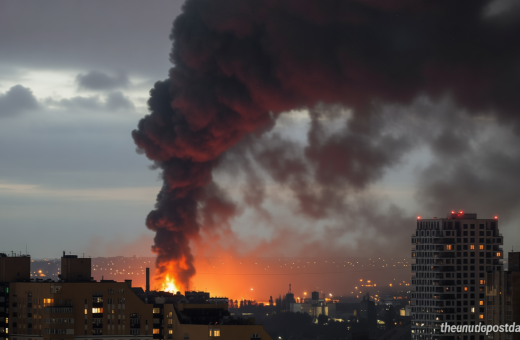
Houthi attack on Saudi oil tankers opens new Red Sea front in Iran conflict: 10 things to know
The Houthi attack on Saudi oil tankers has opened a potentially dangerous new front in the escalating US-Iran conflict. Yemen's Iran-backed Houthi rebels

Houthi Attack on Saudi Oil Tankers: New Red Sea Front in Iran Conflict
Theindiapostdaily.com – The Houthi attack on Saudi oil tankers has opened a potentially dangerous new front in the escalating US-Iran conflict. Yemen’s Iran-backed Houthi rebels claimed responsibility for striking two Saudi oil tankers in the Red Sea, raising concerns over global oil supplies and maritime security. This development marks a significant escalation in regional tensions, with the risk of disruption at another critical shipping chokepoint.
Key Details of the Maritime Strike
The Houthis stated they targeted two Saudi-owned tankers — Encelia and Layla — using a combination of ballistic missiles, cruise missiles, and drones. The group described the operation as a “qualitative military operation,” noting that both vessels caught fire during the assault. Saudi Arabia confirmed that the tanker Encelia came under attack while sailing in the Red Sea. Authorities reported that the strike caused a fire at the bow of the vessel, but all crew members were safely evacuated with no casualties.
“The attack was part of our newly announced maritime embargo against Saudi Arabia. We vowed to continue enforcing what we call a ‘siege for a siege’ strategy.”
This assault followed Saudi strikes on Sanaa airport, which occurred days earlier after reports that an Iranian aircraft linked to Mahan Air had landed in Houthi-controlled territory. The rebel group said the attack was part of its newly announced maritime embargo against Saudi Arabia. It accused Riyadh of maintaining a years-long blockade on Yemen and vowed to continue enforcing what it called a “siege for a siege” strategy.
Global Implications and Market Response
The Bab el-Mandeb Strait has emerged as a second conflict hotspot following the Houthi attack on Saudi oil tankers. This strategic waterway links the Red Sea to the Gulf of Aden, with approximately 12% of global trade and roughly one-fourth of the world’s container traffic passing through the chokepoint. The attacks have pushed Brent crude briefly above $100 a barrel, marking its highest level in nearly two months.
Analysts warned that disruption at both the Strait of Hormuz and Bab el-Mandeb could significantly tighten global energy supplies. Since the disruption in the Strait of Hormuz, Saudi Arabia has diverted millions of barrels of crude daily through its Red Sea port of Yanbu. A prolonged Houthi campaign in the Red Sea could threaten this key alternative export route, compounding existing supply concerns.
US President Donald Trump blamed Iran for backing the Houthis and warned that any future attacks on shipping would trigger “major military punishment” against both the Houthis and Iran. This statement has raised fears of a broader regional conflict. Maritime security experts caution that even limited attacks could force shipping companies to avoid the Bab el-Mandeb Strait, increasing insurance costs and forcing vessels to take longer routes around Africa.
The Houthi attack on Saudi oil tankers comes as the US carries out its 12th consecutive night of strikes on Iran, while Tehran continues targeting regional infrastructure and shipping. The opening of a second maritime front has heightened concerns that the conflict could expand further, affecting global energy markets, trade, and regional security. Shipping companies now face growing uncertainty as they navigate these increasingly volatile waters.