From police action to Nadda’s assurance and Dipke’s apology: Top updates from the CJP protest in New Delhi
From Police Action to Nadda’s Assurances: Key Developments in Delhi’s CJP Protest From police action to Nadda s assurance - The ongoing protests by the
From Police Action to Nadda’s Assurances: Key Developments in Delhi’s CJP Protest
Theindiapostdaily.com – The ongoing protests by the Cockroach Janta Party (CJP) in New Delhi have taken a dramatic turn, with the incident evolving from a peaceful demonstration to a tense confrontation marked by police intervention. The protests, which began during the 2026 Monsoon Session, initially gathered momentum as thousands of supporters marched toward Parliament, demanding accountability and transparency in governance. However, the situation escalated when Delhi Police deployed force, leading to widespread injuries among both demonstrators and officers. The clash highlighted the growing tensions between the protest leaders and law enforcement, setting the stage for a series of critical updates involving key figures like Union Minister JP Nadda and CJP founder Abhijeet Dipke.
July 20: The Spark of the Protest
On July 20, the CJP initiated its march from Jantar Mantar, a historic protest hub in Delhi, toward the Lok Sabha. The protest began with a sense of unity, but as the crowd grew, the police action intensified. Officials stated that the gathering had not been officially sanctioned, prompting the deployment of barricades and the closure of several metro stations to manage the flow of people. The use of lathi charges and tear gas during the clash was justified by authorities as a necessary measure to restore order. Despite the escalation, the protest leaders maintained their stance, arguing that the force used was disproportionate.
According to preliminary reports, 118 police officers and 60 protesters were injured during the confrontation. The incident drew immediate attention from social media users, with many questioning the police’s response and the motives behind the crackdown. The CJP’s demand for a thorough review of governance practices was central to the protest, and the police action was seen as a pivotal moment in their campaign. As the dust settled, the focus shifted to the next steps in the protest’s trajectory, with key figures like Nadda playing a central role in addressing the concerns raised.
July 21: FIRs and Nadda’s Promises
By the following day, Delhi Police had filed five First Information Reports (FIRs) across various stations, including Connaught Place and Parliament Street. The FIRs outlined the incidents of violence and property damage that occurred during the protest, emphasizing the need for legal action. Meanwhile, CJP leaders engaged in discussions with Union Minister JP Nadda, who assured them of an internal review of the protest’s demands. Nadda’s promise came as a significant development, as it signaled the government’s willingness to engage with the protest movement.
“We had a cordial discussion, and the delegation submitted a written petition to me around 4 PM,” Nadda stated during the meeting. His assurance to review the protest’s demands was met with cautious optimism by CJP supporters, who had long criticized the administration for its lack of responsiveness. The protest site at Jantar Mantar remained occupied overnight, with volunteers working to clear the area. This period of sustained presence underscored the group’s determination to keep the issue in the public eye, even as the political narrative around the event continued to develop.
BJP’s Criticism and the Role of Student Groups
Amid the growing momentum of the protests, the BJP launched a sharp critique, blaming left-leaning student organizations for inciting violence. The party accused groups like the All India Students’ Association (AISA) and Students’ Federation of India (SFI) of orchestrating the chaos, painting the incident as a deliberate effort to destabilize the government.
“Today’s events were not a student movement but anarchy disguised as protest, supported by political entities aiming to disrupt governance,” claimed BJP’s IT cell chief Amit Malviya on social media. His statement fueled debates about the role of political alignment in shaping the protest’s dynamics.
Authorities attributed the damage to public property to the protesters, citing that 15 to 20 government vehicles were affected during the incident. While the police maintained that the action was necessary to control the situation, the accusations against student groups added another layer to the controversy. This narrative framed the protest as a clash between grassroots activism and political machinations, with Nadda’s role in mediating the situation becoming a focal point in the discourse.
Dipke’s Apology and the Human Impact
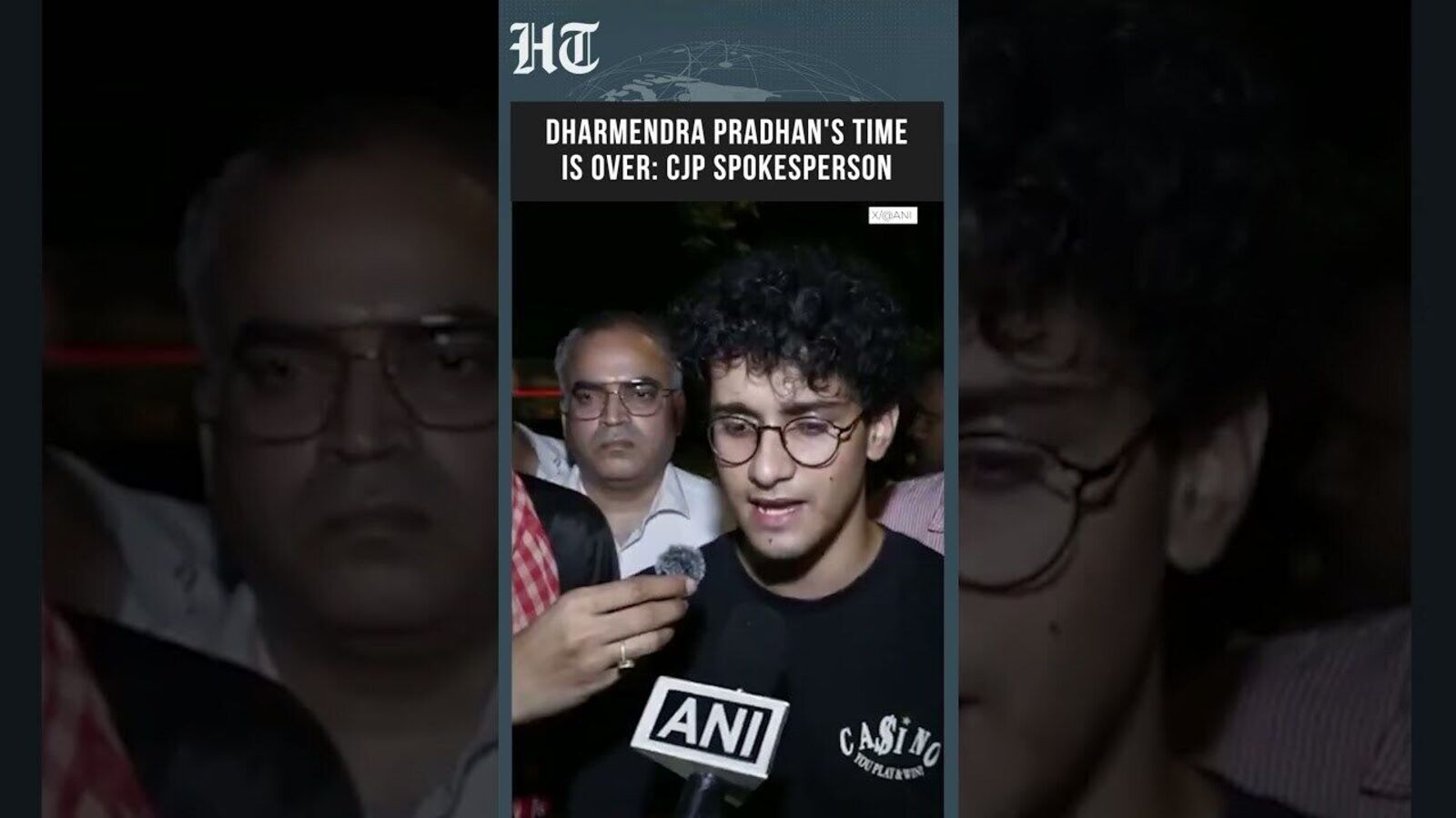
As the protests continued, CJP founder Abhijeet Dipke issued an apology, acknowledging the harm caused to protesters during the police action. His statement, shared on social media, emphasized the need to protect young demonstrators from excessive force.
“Delhi Police brutalized children, and male officers targeted young girls with merciless force,” Dipke told ANI. His words resonated with many, as the incident highlighted the vulnerability of the protesters, particularly the youth.
Dipke also criticized the government for prioritizing the protection of figures like Dharmendra Pradhan, who was linked to the student deaths, over the safety of the protesters. This critique underscored the perception of a political bias in the handling of the situation. By taking personal responsibility and vowing to continue advocacy for the affected, Dipke sought to reframe the narrative and rally public support for his cause.
Public Reaction and Broader Implications
The events of the CJP protest have sparked widespread public discourse, with social media platforms becoming a battleground for opinions. While some praised the police for maintaining order, others condemned the use of force against civilians. The situation has also drawn comparisons to previous protests, with analysts pointing to the recurring theme of governance scrutiny and political resistance. The transition from