What happened to Sonam Wangchuk on Saturday? From Jantar Mantar to hospitalisation, here’s how the day unfolded
What Happened to Sonam Wangchuk on Saturday? From Jantar Mantar to Hospitalisation What happened to Sonam Wangchuk on Saturday sparked widespread concern as
What Happened to Sonam Wangchuk on Saturday? From Jantar Mantar to Hospitalisation
Theindiapostdaily.com – What happened to Sonam Wangchuk on Saturday sparked widespread concern as the climate activist was removed from Delhi’s Jantar Mantar protest site and admitted to Safdarjung Hospital. The incident unfolded during his ongoing 21-day hunger strike, which had already drawn attention for its symbolic significance in the fight against environmental degradation. Protesters and supporters were left stunned when Wangchuk was abruptly taken into custody, with reports suggesting he was forced into the ambulance without prior warning. This event not only highlighted the tensions between activists and authorities but also raised questions about the transparency of the medical procedures involved.
Delhi Police’s Justification and Court Orders
The Delhi Police maintained that Sonam Wangchuk’s removal was a necessary medical intervention, citing deteriorating health conditions as the reason. According to official statements, the decision was made under the guidance of healthcare professionals and in compliance with court directives. The Delhi High Court had earlier mandated regular medical evaluations for protesters, including Wangchuk, who had been fasting since June 28. “As per orders of the Hon’ble High Court and on expert medical advice, due to the worsening health condition of Sh. Sonam Wangchuk, he has been shifted to the hospital for essential medical care,” a police spokesperson said, as reported by PTI.
The police emphasized that the action was taken to ensure Wangchuk’s well-being, particularly after his prolonged fast. However, the timing of the hospitalisation, just days after the 21-day strike began, led to speculation about the motives behind the move. Some reports suggested that the hospitalisation was a strategic step to address public pressure and provide an opportunity for medical oversight, while others viewed it as an attempt to end the protest.
Protesters’ Accounts of the Forcible Removal
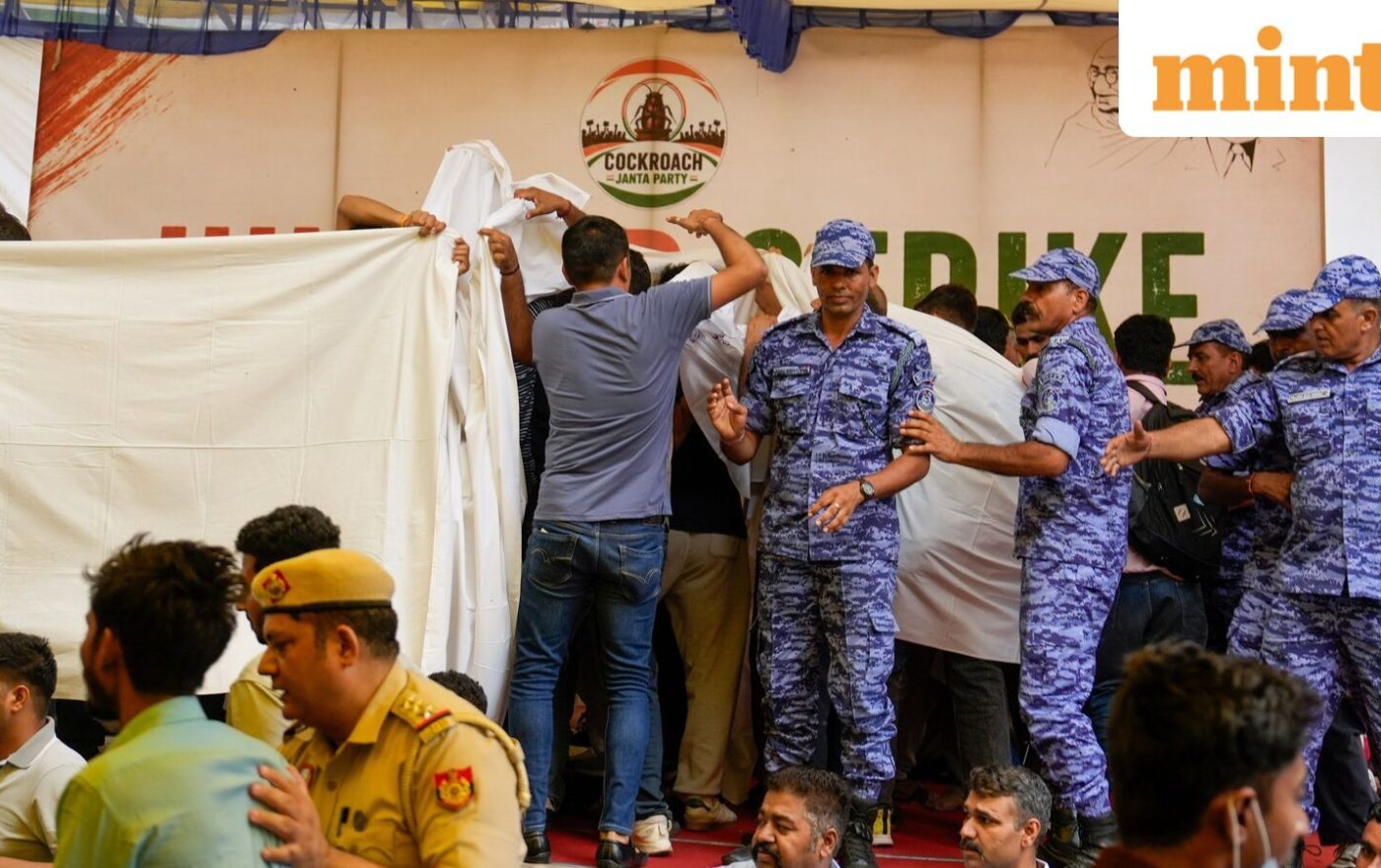
Witnesses at Jantar Mantar described a swift and coordinated effort to remove Wangchuk from the protest area. The event occurred between 7 am and 8 am, during which Delhi Police personnel, including officers in plain clothes, created a security barrier around the activist. Protesters claimed that a group of officers surrounded his sleeping space, using a white bedsheet to obscure the view before lifting him into an ambulance. This method of concealment raised alarms among onlookers, as it limited the ability to document the process in real-time.
“They used the bedsheets to block our sight, preventing us from recording the incident,” said a protester, according to PTI. The statement underscored the protesters’ belief that the removal was not a medical necessity but a calculated move to control the narrative. The presence of paramilitary forces during the operation added to the controversy, with some observers suggesting that it was a way to escalate the situation and justify the intervention.
Discrepancies in Accounts of the Removal
Conflicting narratives emerged regarding the force used during Wangchuk’s removal. While some protesters alleged that lathi charges were deployed, the Delhi Police categorically denied the use of any such force, stating that the operation was conducted peacefully. New Delhi DCP Sachin Sharma, quoted by Times Of India, confirmed that no lathi charges were used, though he acknowledged the presence of a security team to ensure the safety of the activists.
Despite the police’s assertions, videos and photographs shared on social media suggested a more aggressive approach. These visuals showed officers moving quickly to secure Wangchuk, with some witnesses reporting that he was physically restrained. The debate over the use of force intensified as supporters called for transparency, arguing that the situation could have been managed without direct confrontation.
Medical Condition and Hospital Procedures
At Safdarjung Hospital, Sonam Wangchuk was reported to be conscious and stable upon admission, with normal pulse, blood pressure, and oxygen levels. However, his dehydration and refusal to accept intravenous fluids, coconut water, or medication despite doctors’ recommendations became a focal point of the discussion. The hospital noted that his condition remained under constant monitoring, but the absence of family consent in certain treatments raised concerns about the autonomy of the activist.
“His potassium level is reported as 2.9, but yesterday it was 4.3. They are not allowing me to get a second opinion or take his blood sample in my presence,” said Gitanjali J. Angmo, Wangchuk’s wife. Her comments highlighted the family’s unease with the hospital’s handling of his medical care. The couple had requested immediate discharge to transfer him to a preferred facility, but this was not granted, further fueling public scrutiny.
Healthcare professionals and activists alike pointed to the importance of timely medical intervention. Wangchuk’s prolonged fast had already placed him at risk, and his hospitalisation was seen as both a precaution and a potential way to manage his health. However, the lack of transparency in the treatment process sparked a broader conversation about the rights of protest participants and the role of medical institutions in political contexts.
Public Reaction and Ongoing Concerns
The incident triggered a wave of reactions from the public and media, with many questioning the circumstances of Wangchuk’s removal and hospitalisation. Social media platforms became a battleground for opinions, with supporters of the protest condemning the actions as a suppression tactic, while others defended the police for ensuring his health. The event also reignited discussions about the treatment of hunger strikers in political movements, drawing comparisons to past incidents in India.
As the debate continued, the focus remained on the events of Saturday and the implications for the movement. Sonam Wangchuk’s hospitalisation was not just a medical event but a pivotal moment that could influence the trajectory of the protest. His wife’s demands for transparency and the police’s assurances added layers to the narrative, keeping the public engaged and highlighting the emotional toll of the activism.